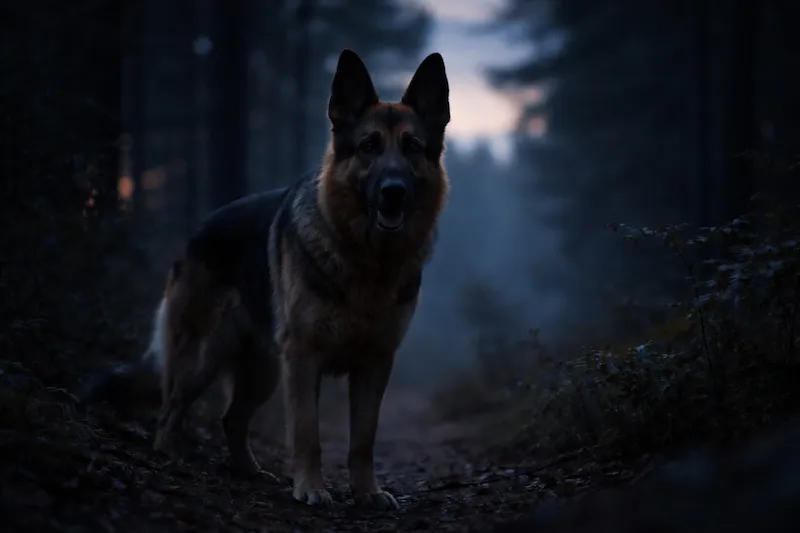
Can Dogs See In The Dark? (Dog Night Vision Explained)
Dogs cannot see in complete darkness, but they see much better than humans in low light. Their eyes have more light-sensitive cells and a reflective layer called the tapetum lucidum, which helps them detect movement and shapes more clearly at night.
In this guide, we will clearly explore how canine vision works, what dogs actually see at night, and why darkness affects them differently than it does humans.
Do Dogs See in Complete Darkness?
No, Dogs cannot see in complete darkness. Vision requires light. If a room has absolutely zero light, no moonlight, no streetlight, no hallway glow, your dog cannot form images. In that situation, they rely on smell, hearing, and memory rather than sight.
However, dogs need very little light to function. Even dim moonlight is often enough for them to move comfortably.
How Much Light Do Dogs Need?
Dogs have more rod cells in their eyes than humans. Rods are responsible for detecting light and motion. Because of this, dogs can:
- Notice movement in dim rooms
- Recognize large shapes in low light
- Adjust faster in dusk conditions
If you can barely make out furniture in a dark living room, your dog can likely identify outlines and movement more easily. But once light disappears completely, vision stops working for both species.
Night Vision Myth vs Reality:
Dog night vision is based on three main advantages:
1. Larger Pupils:
A dog’s pupil opens wider than a human’s. A wider opening allows more light to enter the eye, increasing visibility in dark areas.
2. More Rod Cells:
Dogs have more rods and fewer cones.
- Rods = light and motion
- Cones = color and detail
This gives dogs:
- Strong low-light detection
- Faster motion tracking
- Reduced color sensitivity
- Softer detail clarity
Their visual sharpness is estimated at around 20/75 compared to the human average of 20/20. That means they do not see fine details as clearly, but they perform better in dim light settings.
3. The Tapetum Lucidum:
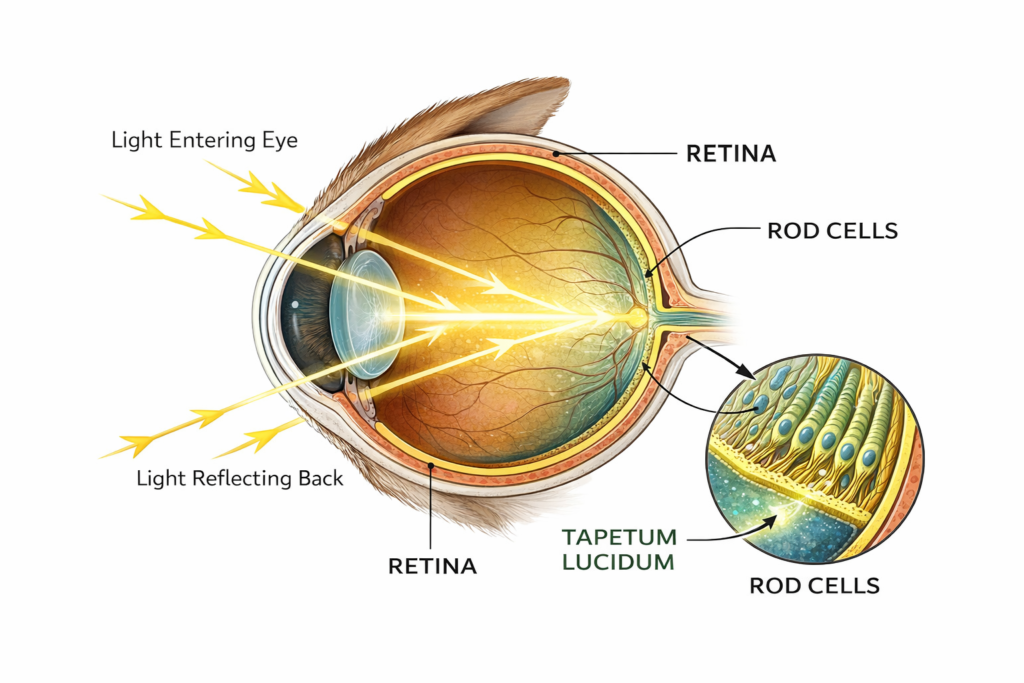
Dogs have a reflective layer behind the retina called the tapetum lucidum. You see it when their eyes glow in car headlights.
This layer reflects incoming light through the retina, giving photoreceptor cells a second chance to detect it. That extra reflection increases sensitivity in low light.
This adaptation comes from their wolf ancestors, who hunted during dawn and dusk.
According to the American Kennel Club (AKC), this reflective layer significantly improves a dog’s ability to detect movement in low-light environments. You can read their full veterinary-backed explanation here:
Dogs vs Humans: Night Vision Comparison:
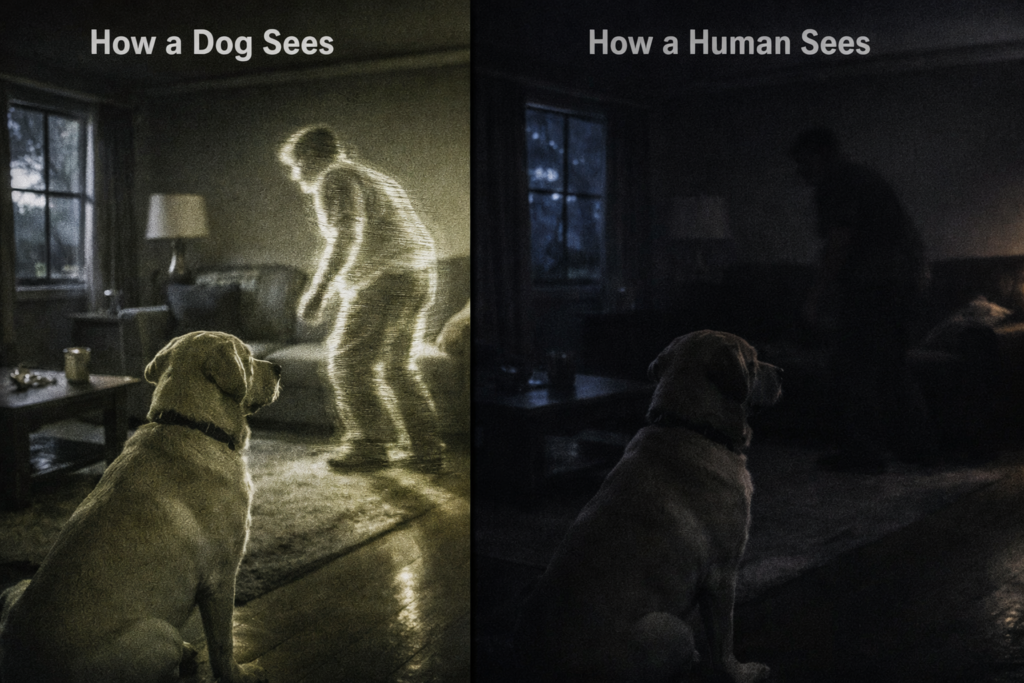
Here is a simple comparison:
| Feature | Dogs | Humans |
| Low-light sensitivity | High | Moderate |
| Complete darkness vision | No | No |
| Motion detection | Excellent | Good |
| Color range | Limited (blue/yellow tones) | Wide spectrum |
| Visual sharpness | Lower | Higher |
| Peripheral vision | Wider (up to ~240° in many breeds) | Around 180° |
Dogs detect motion faster in dim light, while humans see clearer detail in bright conditions.
What Do Dogs See at Night?
In low light, dogs mainly see:
- Large shapes
- Movement
- Contrast between light and shadow
- Outlines of objects
Fine details such as facial expressions or small stationary objects become harder to distinguish.
Color also becomes less important at night. Dogs primarily see blue and yellow tones in daylight. In dim conditions, most objects appear grayish with faint blue or yellow hints.
Why Dogs Have Better Low-Light Vision?
The reason is evolutionary.
Dogs descend from the Gray wolf. Wolves are crepuscular hunters, meaning they are most active at dawn and dusk. Over thousands of years, their eyes adapted to function well when light is limited.
Modern domestic dogs still carry this biological advantage.
Their night awareness is not about seeing perfectly in darkness. It is about detecting movement efficiently when light is scarce.
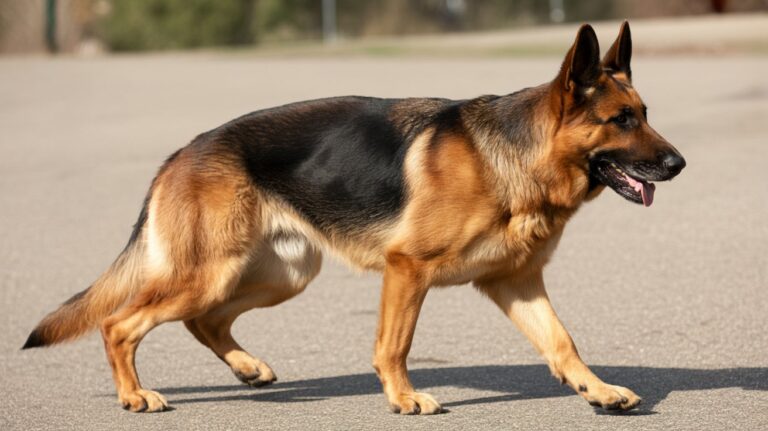
Do German Shepherds See Better at Night?
The German Shepherd is known for strong environmental awareness, including low-light alertness.
This breed was developed for guarding and working roles. Many police and military units use German Shepherds partly because they respond quickly to subtle movement in dim conditions.
This sharp awareness is one reason they excel in working roles. If you’re curious about their intelligence and service abilities, read our detailed guide on Are German Shepherds Good Service Dogs?
However, their eye structure is not fundamentally different from that of other healthy dogs. The advantage comes from:
- High focus
- Strong motion detection
- Training
- Alert temperament
Most healthy dogs share the same basic night-vision biology.
Limits of Dog Night Vision:
Despite their advantages, dogs have clear limitations.
No Vision in Total Darkness:
Without light, the eye cannot create images. Dogs face the same physical limits as humans.
Reduced Detail:
Dogs sacrifice sharp detail for light sensitivity. At night, detail decreases further.
Environmental Barriers:
Dogs may struggle with:
- Thick fog
- Heavy rain
- Completely unlit rooms
- Areas with poor contrast
If your dog suddenly hesitates in dim conditions, vision issues could be developing.
Signs of Poor Night Vision in Dogs:
Watch for:
- Bumping into furniture at dusk
- Avoiding dark hallways
- Startling easily at night
- Difficulty locating toys in low light
These signs may indicate declining vision.
Common causes include:
- Progressive retinal atrophy
- Cataracts
- Eye trauma
- Age-related degeneration
Older dogs often lose night vision first. If behavior changes suddenly, a veterinary eye exam is recommended.
If you notice frequent health-related behavior changes, you may also want to check whether Do German Shepherds Get Sick Easily? to understand broader health patterns.
How Dogs Navigate in the Dark?
Even when vision weakens, dogs rarely panic.
They combine:
- Smell
- Hearing
- Spatial memory
- Whisker sensitivity
In familiar environments, memory plays a major role. That is why many dogs move confidently around your home at night without turning on lights.
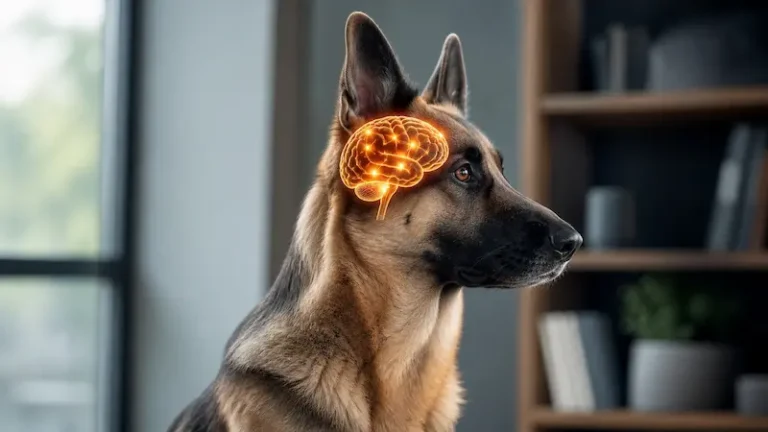
Their brain integrates multiple senses to compensate when vision is limited.
How to Help Your Dog at Night?
You do not need bright lighting, but small adjustments improve safety.
For Walks:
- Use a leash in poorly lit areas
- Attach a reflective collar
- Carry a small flashlight
- Avoid uneven terrain
At Home:
- Install soft night lights in hallways
- Keep pathways clear
- Avoid sudden full darkness for senior dogs
For Older Dogs:
- Maintain consistent furniture placement
- Schedule regular eye exams
- Monitor behavior changes
Small environmental changes can significantly increase confidence.
Dogs see primarily blue and yellow wavelengths because they possess two cone types instead of three like humans.
Regular outdoor activity also improves spatial awareness. If you own this breed, check our guide on How Much Exercise Does a German Shepherd Need?
FAQ’s:
Can dogs see in complete darkness?
No, Dogs cannot see in complete darkness because vision always requires some level of light.
Do dogs see better than humans at night?
Yes, Dogs are more sensitive to low light and detect movement better than humans in dim conditions.
Does the Tapetum lucidum help dogs see at night?
Yes, The Tapetum lucidum reflects light through the retina, increasing light sensitivity in low-light environments.
What colors do dogs see at night?
Dogs mainly see shades of gray with faint blue or yellow tones, as color vision becomes weaker in low light.
Why do dogs’ eyes glow in the dark?
The glow comes from the Tapetum lucidum reflecting light, which improves night sensitivity but reduces fine detail.
Conclusion:
Do dogs see in complete darkness? No, they do not. Dogs see very well in low light because of their eye structure, but they still need some light to see. If your dog struggles at night, improve lighting and consult your veterinarian to rule out vision problems early.