What Is a DDR German Shepherd? History, Traits, Temperament & Care Guide!
A DDR German Shepherd is a working-line German Shepherd developed in former East Germany. These dogs were bred for strength, intelligence, endurance, and protection work. They are known for their strong build, loyalty, high energy, and excellent working ability compared to many modern show-line German Shepherds.
This guide explains the real history, temperament, physical traits, health concerns, and care needs of DDR German Shepherds in a beginner-friendly way.
What Does DDR Mean in German Shepherds?
DDR stands for Deutsches Demokratische Republik, which translates to the German Democratic Republic, also known as the former East Germany.
DDR German Shepherds were developed in East Germany after World War II. Unlike many modern show-line dogs, these German Shepherds were bred mainly for working ability, mental stability, endurance, intelligence, and physical strength.
East German breeding programs followed extremely strict standards. Dogs with weak nerves, poor health, or unstable temperaments were usually removed from breeding programs. Because of this, DDR bloodlines became respected for producing reliable and capable working dogs.
What Is a DDR German Shepherd?
A DDR German Shepherd is a working-line German Shepherd that was developed in East Germany between 1949 and 1990.
These dogs were commonly used for:
- Border Patrol work
- Military service
- Police duties
- Search and rescue
- Protection work
Unlike modern show-line German Shepherds that are often bred heavily for appearance, DDR dogs were developed mainly for stamina, working ability, and strong temperament.
Many people also refer to them as East German Shepherds.
DDR German Shepherd History:
After Germany was divided following World War II, East Germany created its own controlled breeding programs for German Shepherds.
The government wanted dependable working dogs that could handle physically demanding jobs in difficult conditions. Breeders carefully selected dogs with:
- Strong bone structure
- Stable temperament
- High intelligence
- Excellent endurance
- Strong working drive
Dogs with poor health or unstable behavior were usually excluded from breeding.
Because of these strict standards, DDR bloodlines became famous for consistency, durability, and trainability.
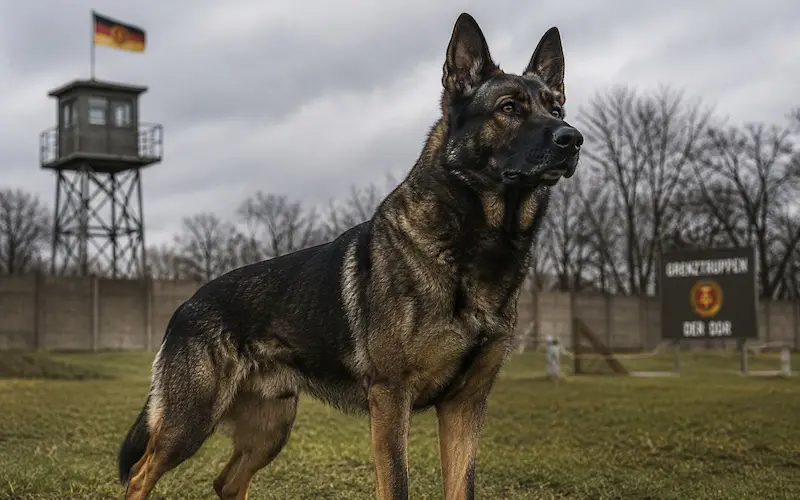
Many DDR German Shepherds worked alongside East German border patrol units during the Cold War, including in areas around the Berlin Wall. Their ability to stay focused under pressure made them valuable working dogs.
Why Were DDR German Shepherds Bred?
DDR German Shepherds were bred to create dependable working dogs capable of performing difficult tasks in stressful environments.
East German breeders focused heavily on qualities such as:
- Obedience
- Courage
- Physical strength
- Endurance
- Trainability
- Strong guarding instincts
The goal was never to produce flashy show dogs with exaggerated features. Instead, breeders wanted athletic dogs with sound minds, strong nerves, and reliable working ability.
Even today, many working-dog enthusiasts admire DDR lines because of their balanced structure and strong work ethic.
What Makes DDR German Shepherds Different?
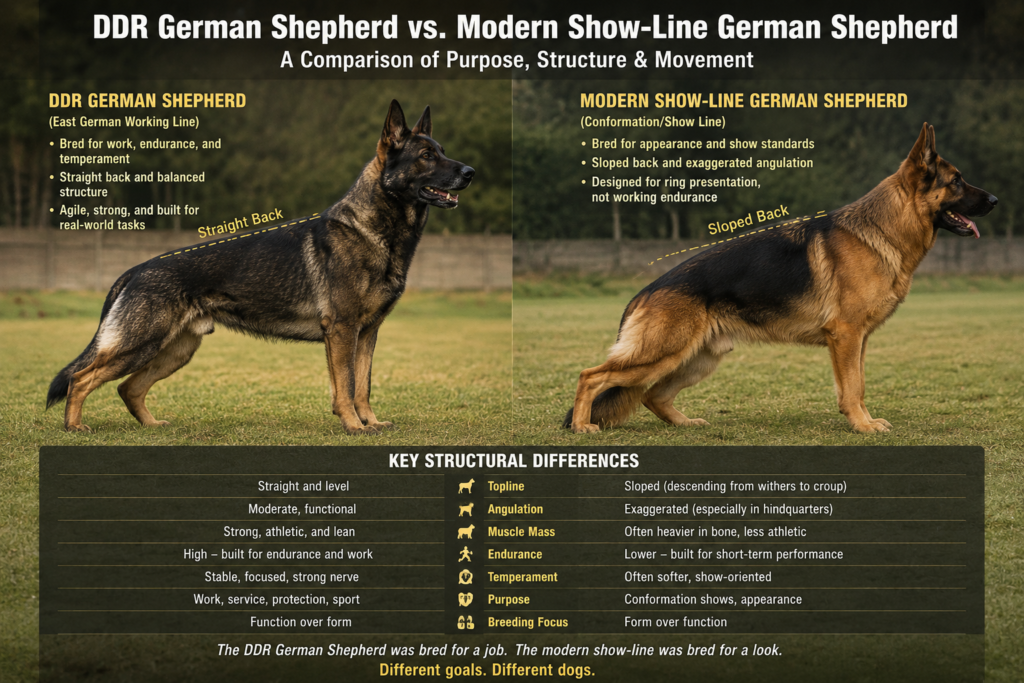
DDR German Shepherds stand out from many modern bloodlines because they were developed under strict working standards.
Some of their most recognizable traits include:
- Heavy bone structure
- Large head shape
- Muscular body
- Straighter back
- High stamina
- Strong protective instincts
- Excellent working drive
Compared to many show-line German Shepherds, DDR dogs often appear more rugged, athletic, and physically powerful.
They are also known for their serious personality and strong focus during training.
DDR German Shepherd Appearance:
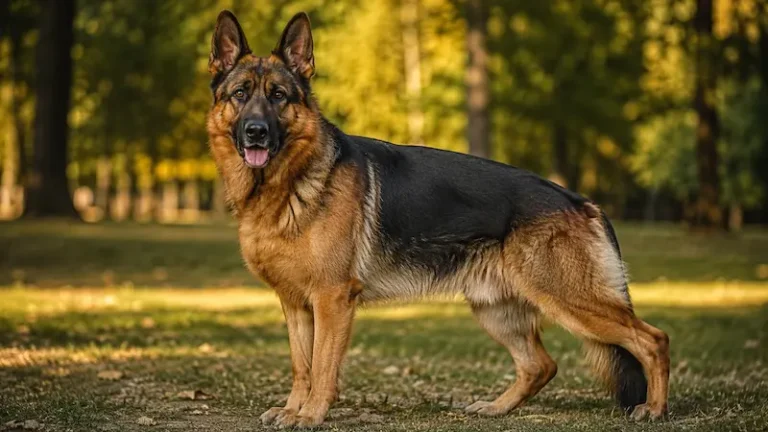
DDR German Shepherds usually have a more solid and rugged appearance than standard German Shepherds.
Common physical features include:
- Broad chest
- Thick neck
- Dense double coat
- Strong legs
- Deep body structure
- Large paws
- Dark pigmentation
Their overall body structure was designed for endurance and long hours of physical activity.
Many DDR dogs also have a more natural-looking body shape compared to heavily sloped show-line German Shepherds.
DDR German Shepherd Size:
Most DDR German Shepherds are medium-to-large working dogs with strong muscle development.
Male Size:
- Height: 24 to 26 inches
- Weight: 75 to 95 pounds
Female Size:
- Height: 22 to 24 inches
- Weight: 60 to 80 pounds
Some working-line dogs may become heavier depending on genetics, conditioning, and training activity.
DDR German Shepherd Colours:
DDR German Shepherds are known for darker coat colours and rich pigmentation.
Common coat colors include:
- Black
- Sable
- Dark sable
- Black and tan
- Bi-color
East German breeding programs often preferred darker dogs because they were associated with strong working lines.
Sable coats are especially common in working-line German Shepherds.
Are Black DDR German Shepherds Rare?
Solid black DDR German Shepherds are less common than sable or black-and-tan dogs, but they are not extremely rare.
Many people are attracted to black DDR dogs because of their striking appearance and powerful working-dog look.
However, coat color alone does not determine a dog’s quality. Temperament, genetics, health, and working ability are far more important than appearance.
Do DDR German Shepherds Have Straight Backs?
DDR German Shepherds generally have straighter backs than many modern show-line German Shepherds.
This body structure is often connected with:
- Better athletic movement
- Improved endurance
- Reduced stress on joints
- Greater working ability
Many dog owners prefer this more balanced structure because it supports physical activity and long-term mobility.
However, not every DDR dog has a perfectly straight back since genetics can vary between bloodlines and breeders.
DDR German Shepherd Temperament:
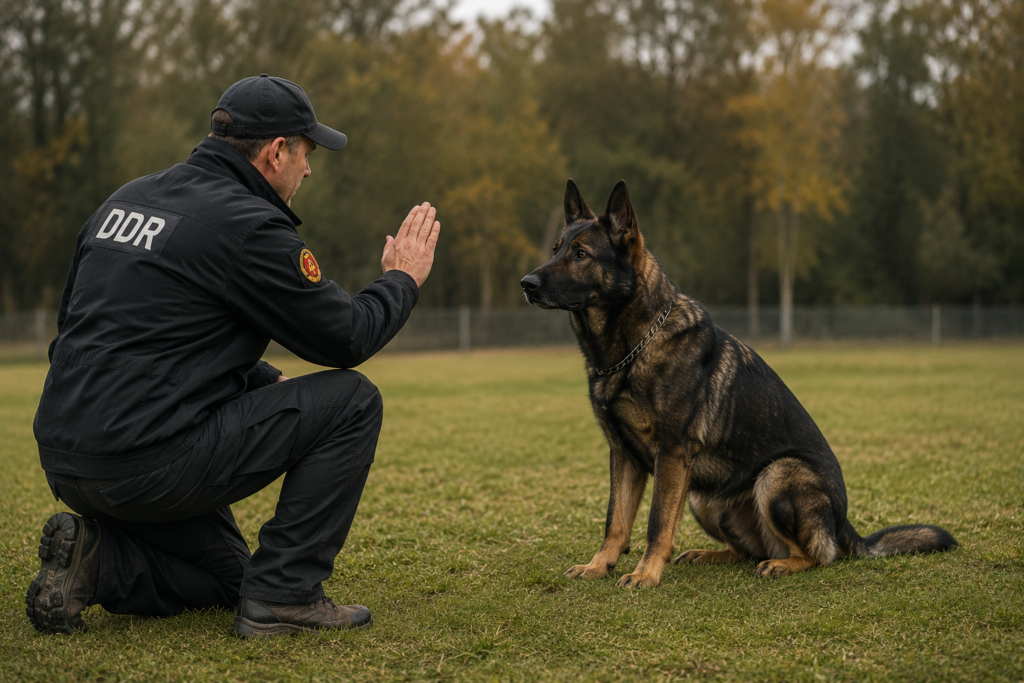
DDR German Shepherds are known for being intelligent, loyal, confident, and highly alert.
Typical temperament traits include:
- Protective
- Courageous
- Focused
- Energetic
- Highly trainable
- Strongly bonded to family
These dogs usually develop deep loyalty toward their owners and naturally stay cautious around strangers.
Because of their strong working instincts, they need regular training, structure, and mental stimulation. Without enough activity, they may become frustrated or overly reactive.
A well-trained DDR German Shepherd is usually calm, confident, and dependable.
Are DDR German Shepherds Aggressive?
A properly trained DDR German Shepherd should not be unnecessarily aggressive.
However, they are naturally protective dogs and can become reactive if poorly trained, neglected, or improperly socialized.
Early socialization is extremely important. Exposing the dog to different people, environments, sounds, and situations from a young age helps build a balanced temperament.
Responsible ownership matters a lot with this bloodline because these dogs are intelligent, powerful, and highly driven.
Are DDR German Shepherds Good Family Dogs?
DDR German Shepherds can become excellent family dogs in the right environment.
They usually do best with owners who:
- Have previous dog experience
- Provide daily exercise
- Use consistent training
- Understand working breeds
- Spend time with their dog regularly
These dogs are often affectionate and deeply loyal to their families.
However, they are not ideal for inactive households where they are left alone for long periods without physical or mental stimulation.
Are DDR German Shepherds Good With Kids?
Many DDR German Shepherds can be very good with children when raised properly.
They are naturally loyal and protective toward family members. With proper training and supervision, they often become gentle companions around kids.
However, these are large and energetic dogs. Small children should always be supervised during interactions.
It is also important to teach children how to interact respectfully with dogs.
Are DDR German Shepherds Easy to Train?
DDR German Shepherds are highly intelligent and usually respond extremely well to structured training.
They often excel in:
- Obedience training
- Protection sports
- Search and rescue
- Police work
- Agility activities
- Advanced working tasks
Because they learn quickly, consistency and leadership are important.
If these dogs become bored or under-stimulated, they may develop destructive habits such as excessive barking, chewing, or digging.
Positive reinforcement combined with firm structure usually works best.
Do DDR German Shepherds Have High Prey Drive?
Yes, many DDR German Shepherds have strong prey drive because of their working heritage.
This means they may instinctively chase:
- Small animals
- Fast movement
- Toys
- Running objects
Early training and socialization help manage these instincts.
Owners should also use caution around smaller pets unless the dog has been properly introduced and trained.
DDR vs Czech German Shepherd:
DDR and Czech German Shepherds are both respected working-line dogs, but they have some noticeable differences.
DDR German Shepherd:
- Heavier bone structure
- More controlled temperament
- Strong guarding instincts
- Dark pigmentation
- Balanced working style
Czech German Shepherd:
- Higher energy levels
- Faster movement
- Intense drive
- Often preferred for sports work
- Extremely high motivation
Both bloodlines are intelligent, athletic, and highly trainable.
The best choice depends on the owner’s lifestyle and training goals.
DDR vs American German Shepherd:
American German Shepherds are often bred more for appearance and companionship, while DDR German Shepherds were developed mainly for working ability.
Compared to many American lines, DDR German Shepherds are usually:
- More muscular
- More energetic
- More protective
- More work-driven
- More physically durable
Americans may have calmer personalities that fit casual family lifestyles better.
DDR dogs usually require more structure, training, and activity.
DDR German Shepherd Health Problems:
DDR German Shepherds are generally considered healthier than some exaggerated show lines, but they can still develop certain health problems.
Possible concerns include:
- Hip dysplasia
- Elbow dysplasia
- Degenerative myelopathy
- Bloat
- Allergies
Responsible breeders perform health testing before breeding their dogs.
Regular veterinary care, proper exercise, and maintaining a healthy weight can also reduce the risk of some health issues.
Although DDR bloodlines are often healthier than some show lines, owners should still understand: Do German Shepherds Have Hip Problems? and other common joint concerns.
DDR German Shepherd Lifespan:
Most DDR German Shepherds live between 10 and 13 years.
Several factors can influence lifespan, including:
- Genetics
- Diet
- Exercise
- Veterinary care
- Weight management
- Overall lifestyle
Dogs that stay physically active and mentally stimulated often maintain a better quality of life as they age.
DDR German Shepherd Exercise Needs:
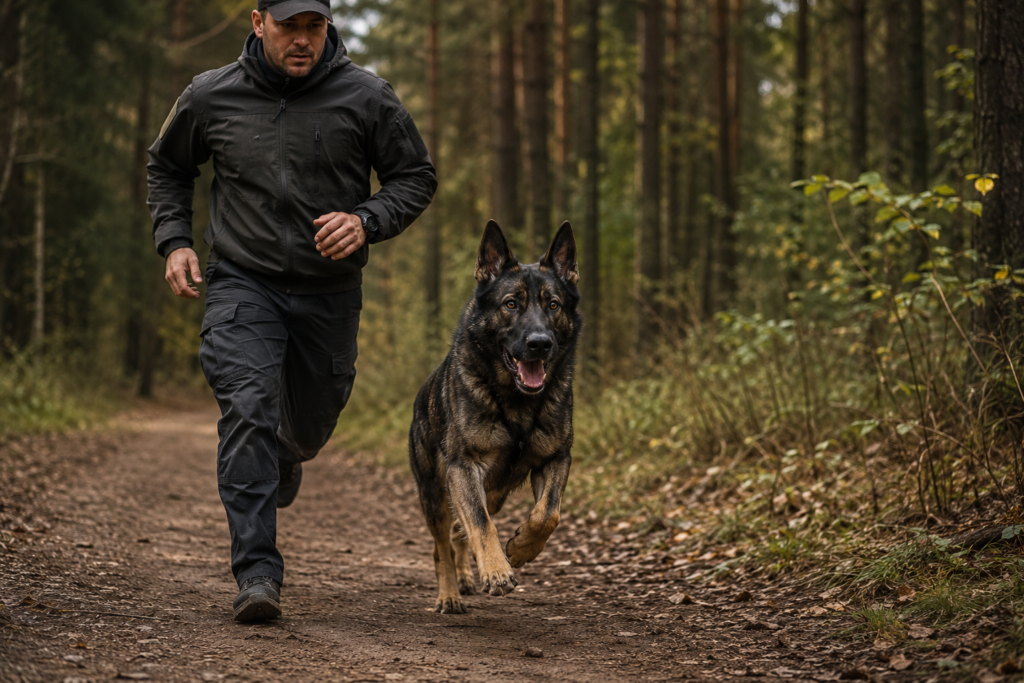
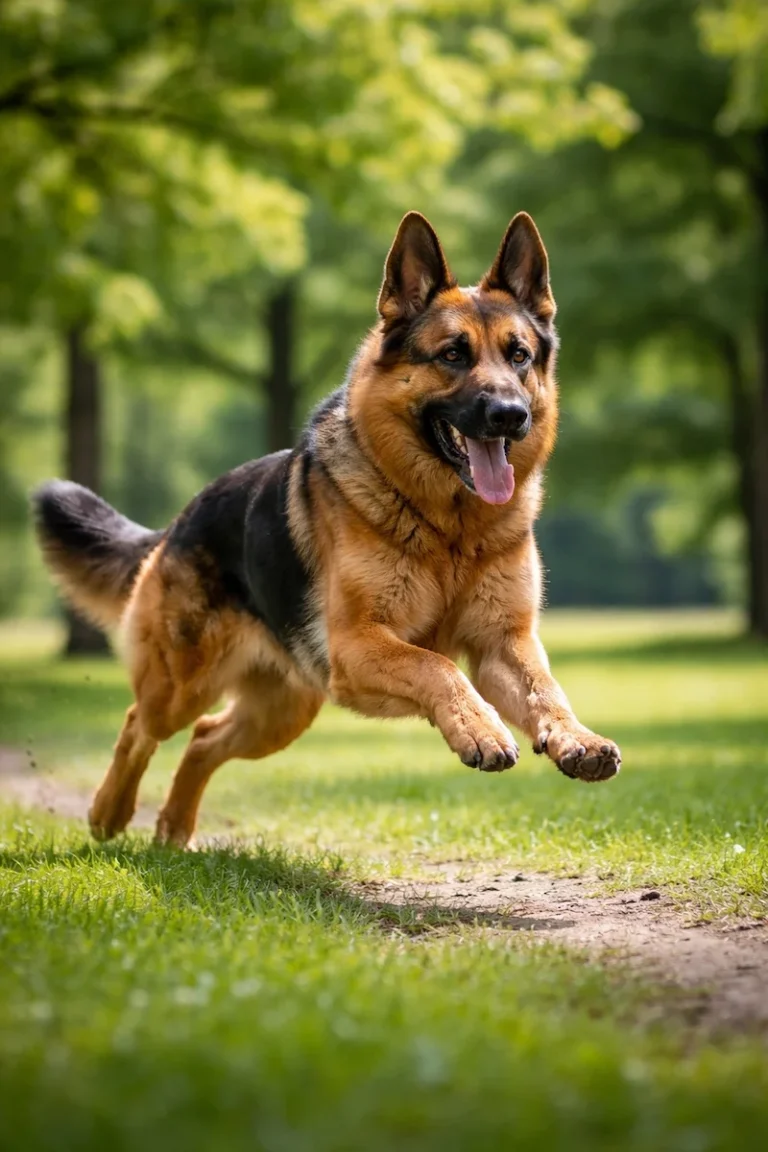
DDR German Shepherds require significant daily exercise and mental stimulation.
These dogs enjoy activities such as:
- Long walks
- Running
- Obedience training
- Hiking
- Protection sports
- Interactive games
Simply letting them sit in a backyard is usually not enough.
Without proper exercise, these dogs may develop behavioral issues caused by boredom and frustration.
An active lifestyle is very important for this breed.
DDR dogs need far more activity than many casual pet breeds, and understanding: How Much Exercise Does a German Shepherd Need? can help owners build a proper daily routine.
Can DDR German Shepherds Live in Apartments?
DDR German Shepherds can live in apartments if they receive enough exercise and mental stimulation every day.
However, they generally do better in homes with:
- Outdoor space
- Active owners
- Consistent routines
- Regular training opportunities
Without enough activity, these dogs may become restless, frustrated, or excessively vocal.
Apartment owners should be prepared for daily walks, training sessions, and physical activity.
DDR German Shepherd Grooming:
DDR German Shepherds have dense double coats that shed throughout the year.
Basic grooming usually includes:
- Brushing several times weekly
- Regular nail trimming
- Ear cleaning
- Occasional baths
During seasonal shedding periods, daily brushing may be necessary.
Routine grooming also helps reduce loose hair and keeps the coat healthy.
DDR German Shepherd Price:
DDR German Shepherd puppies are often expensive because quality working bloodlines require careful breeding, training, and health testing.
Prices commonly range from:
- $1,500 to $5,000+
The final price depends on factors such as:
- Bloodline quality
- Health certifications
- Training level
- Breeder reputation
- Pedigree history
Extremely cheap puppies can sometimes be a warning sign of poor breeding practices.
How to Find a DDR Breeder:
A responsible DDR breeder should provide:
- Health testing records
- Pedigree information
- Vaccination records
- Temperament details
- Clean living conditions
Good breeders also allow buyers to ask questions and learn about the dog’s parents.
Avoid breeders who focus only on appearance, guarantee unrealistic traits, or refuse to share health information.
Researching the breeder carefully is extremely important when buying any working-line German Shepherd.
DDR German Shepherd Pros and Cons:
Pros:
- Highly intelligent
- Loyal and protective
- Strong working ability
- Athletic and energetic
- Excellent trainability
- Confident temperament
Cons:
- Need experienced handling
- Require heavy exercise
- Can become reactive without training
- Strong prey drive
- Not ideal for inactive owners
- Need regular mental stimulation
Is a DDR German Shepherd Right for You?
A DDR German Shepherd may be an excellent choice if you want an active, intelligent, and highly trainable working dog.
However, this bloodline requires:
- Daily physical activity
- Consistent training
- Mental stimulation
- Responsible ownership
- Time and commitment
These dogs usually do best with active individuals or families who understand working breeds and enjoy spending time training and exercising their dogs.
For the right owner, a DDR German Shepherd can become an incredibly loyal and dependable companion.
FAQ’s:
What Does DDR Stand for in Dogs?
DDR stands for Deutsches Demokratische Republik, which refers to the former East Germany.
Are DDR German Shepherds Rare?
Pure DDR bloodlines are less common today because many bloodlines have been mixed with other working lines over time.
Are DDR German Shepherds Good Protection Dogs?
Yes, DDR German Shepherds are highly respected for protection work because of their intelligence, confidence, trainability, and strong guarding instincts.
Do DDR German Shepherds Shed a Lot?
Yes, DDR German Shepherds are heavy shedders because of their thick double coats.
Are DDR German Shepherds Good for First-Time Owners?
They are usually better suited for experienced dog owners because of their strength, energy, intelligence, and training needs.
Conclusion:
A DDR German Shepherd is a powerful working-line dog known for intelligence, loyalty, endurance, and strong protective instincts. Originally developed in East Germany, these dogs were bred for real working performance rather than appearance alone. With proper training, exercise, and socialization, a DDR German Shepherd can become a highly dependable companion for active and experienced owners.