Do German Shepherds Have a Fishy Smell? (Causes & Risks)
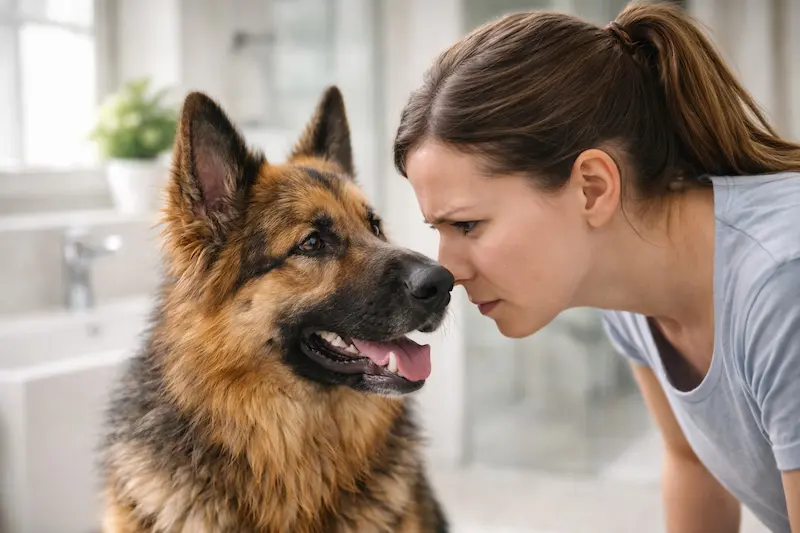
German Shepherds do not normally have a fishy smell. If this odor appears, it usually means anal gland issues, ear or skin infections, or a poor diet. The smell is a warning sign and should be checked, not ignored.
This guide explains the real causes, associated risks, and proven, permanent solutions, not quick fixes that only mask the smell.
What Does a Fishy Smell in a German Shepherd Indicate?
A fishy odor usually points to a disruption in the dog’s natural balance. The most common causes include anal gland leakage, yeast or bacterial infections, and skin or ear issues. The smell may intensify after bathing, sleeping, or sitting because pressure triggers gland release or moisture fuels microbial growth.
Also Read: Why Does My German Shepherd Smell So Bad?
Are Anal Glands the Main Cause of Fishy Smell in German Shepherds?
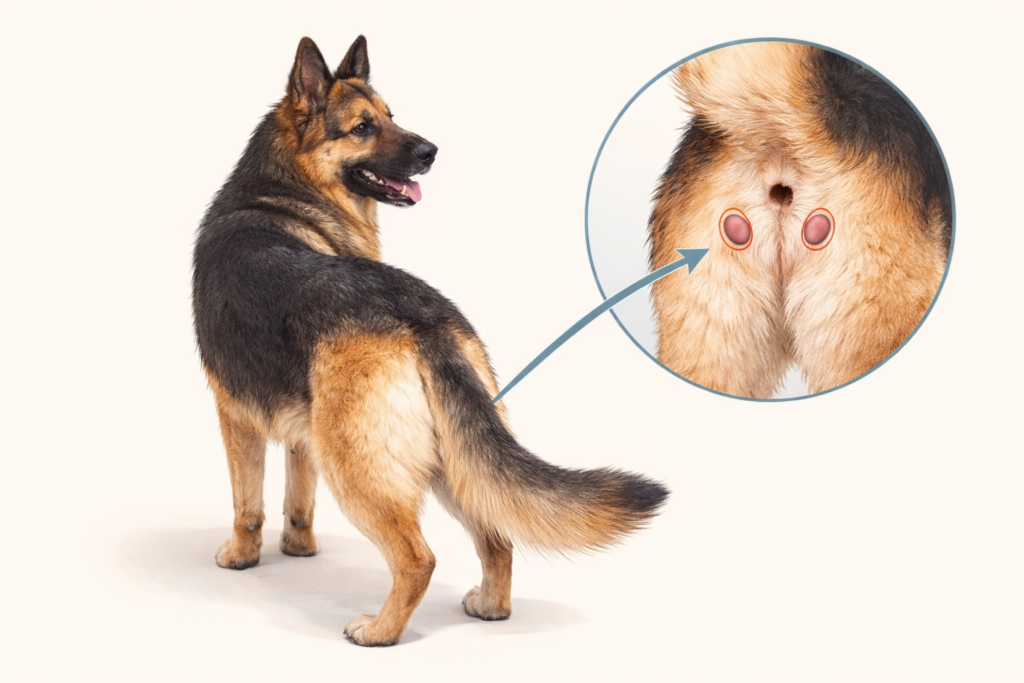
Yes, Anal gland issues are the leading cause of a fishy smell in German Shepherds. These small glands sit near the rectum and release a scent normally during bowel movements. When they become full, impacted, or infected, they can leak unexpectedly.
Common signs include:
- Scooting across floors or carpets
- Excessive licking under the tail
- Sudden fishy odor on furniture or bedding
Left untreated, impacted glands can progress to painful abscesses.
Veterinary experts explain that anal gland problems in dogs are a leading cause of sudden fishy odors and often require proper diagnosis and treatment.
Can Ear Infections Cause a Fishy Smell in German Shepherds?
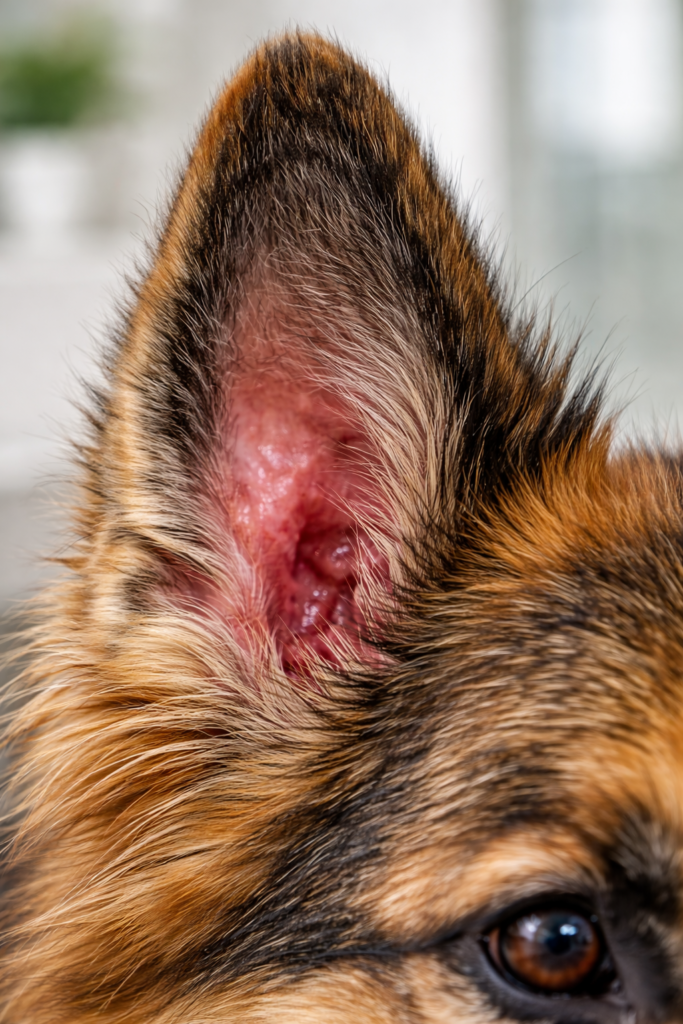
Yes. Yeast and bacterial ear infections often produce a fishy or sour odor. German Shepherd ears can trap moisture, particularly in humid climates or after swimming or bathing.
- Frequent head shaking
- Red, inflamed ear canals
- Greasy or dark discharge with a strong smell
Early treatment prevents chronic infections and hearing damage.
Also Read: Do German Shepherd Ears Smell Bad?
Can Skin Conditions Make a German Shepherd Smell Fishy?
Absolutely. Skin disorders like seborrhea, yeast dermatitis, and bacterial infections damage the skin barrier. When this happens, odor-causing microbes multiply even if the dog is bathed regularly.
Typical symptoms include:
- Oily or greasy coat
- Flaky skin or dandruff
- Persistent odor shortly after grooming
Overbathing often worsens the problem by stripping natural oils.
Does Diet Play a Role in German Shepherd Fishy Odor?
Yes. Diet directly affects skin health and gland function. Low-quality, high-carbohydrate foods can increase inflammation and digestive imbalance, thereby increasing the risk of anal gland and skin problems. Food sensitivities can further intensify odors.
Also Read: What Are German Shepherds Allergic To?
Can Dental Problems Cause a Fishy Smell in German Shepherds?
Yes. Advanced dental disease allows odor-producing bacteria to thrive in the mouth. This can cause foul or fishy breath that spreads through saliva, often mistaken for a skin or gland issue.
Is a Fishy Smell in German Shepherds Dangerous?
Yes. A persistent fishy smell usually signals infection or inflammation. Ignoring it can lead to:
- Anal gland abscesses
- Chronic ear infections
- Skin infections
- Pain, irritability, and behavioral changes
Early action prevents complications.
How Can We Safely Stop Fishy Smell from Anal Glands?
The safest solution is professional anal gland expression by a veterinarian or trained groomer. For long-term prevention, adding natural dietary fiber helps glands empty properly during bowel movements.
What Is the Best Way to Clean a German Shepherd’s Ears to Remove Odor?
Use a vet-approved ear cleaner once weekly, or more often if recommended. Always dry your ears thoroughly after swimming or bathing. Avoid inserting cotton swabs deep into the ear canal, as this can push debris further inside.
Which Shampoo Helps Remove Fishy Smell in German Shepherds?
Choose a pH-balanced, medicated dog shampoo designed for yeast or bacterial control. Shampoos containing chlorhexidine or ketoconazole are often effective when used as directed. Avoid excessive bathing, as it disrupts the skin’s natural defenses.
How Can Diet Changes Prevent Fishy Smell Long-Term?
Switch to a high-protein, limited-ingredient diet with named animal proteins. Adding omega-3 fatty acids supports skin health, reduces inflammation, and improves natural odor control from within.
Also Read: What Is Good Dog Food For German Shepherds?
When Should We Take a German Shepherd to the Vet for a Fishy Smell?
Seek veterinary care immediately if:
- The odor persists after grooming
- Swelling, discharge, or pain is present
- Your dog shows lethargy, appetite loss, or discomfort
Delaying treatment often makes the condition harder to resolve.
How Can We Prevent Fishy Smell in German Shepherds Permanently?
We can prevent a fishy smell in German Shepherds permanently by following a consistent care routine. A high-quality, balanced diet supports healthy skin and properly functioning glands, thereby reducing internal odor. Regular grooming removes dirt, excess oil, and bacteria before they cause a smell. Routine ear cleaning and dental care prevent infections that often produce a fishy odor. Finally, regular veterinary checkups help detect anal gland, skin, or ear issues early, stopping odor problems before they become chronic.
FAQs:
Do German Shepherds normally have a fishy smell?
No, A fishy smell is not normal and usually signals anal gland issues, infection, or hygiene problems.
Is a fishy smell in German Shepherds a sign of anal gland problems?
Yes, Anal gland leakage or impaction is the most common cause of a sudden fishy odor.
Can bathing make a German Shepherd smell fishy?
Yes, Bathing can trigger anal gland expression or worsen yeast growth if moisture remains trapped.
Why does my German Shepherd smell fishy even after grooming?
A persistent odor after grooming often indicates an underlying infection, skin condition, or gland issue that bathing cannot resolve.
Can diet cause a fishy smell in German Shepherds?
Yes, Poor-quality or inflammatory diets can worsen skin health and anal gland function, increasing odor.
Conclusion
A fishy smell in a German Shepherd is never normal and should not be ignored. In most cases, it signals anal gland problems, infections, or dietary imbalance. Identifying the root cause early and providing proper care helps permanently eliminate fishy odor and keep German Shepherds healthy, comfortable, and odor-free.