Why Do German Shepherds Have Sloped Backs? (Truth, History & Health Explained)
German Shepherds have sloped backs mainly due to selective breeding for a specific appearance and gait, especially in show lines. This angulation helps create a smooth, efficient stride, but excessive slope is controversial and may be linked to joint and mobility issues.
In this guide, you will learn why this feature exists, how it developed, and what it means for the dog’s overall well-being.
What Is a Sloped Back in German Shepherds?
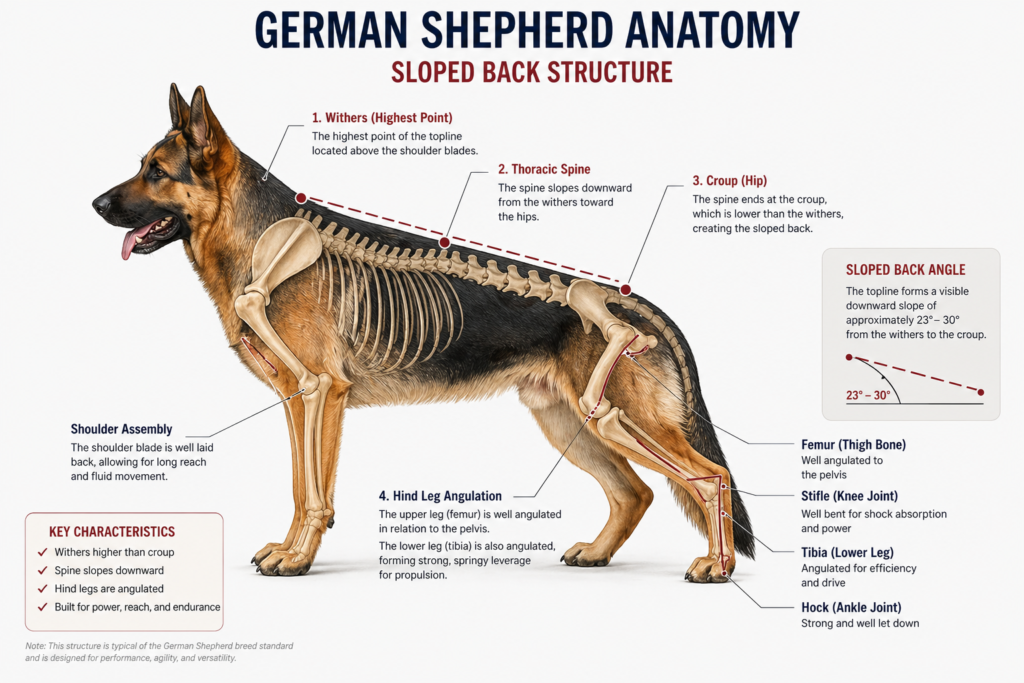
Definition of a Sloped Back:
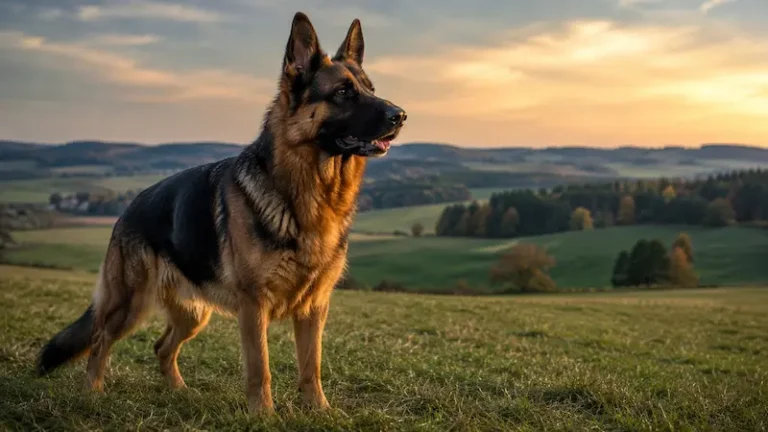
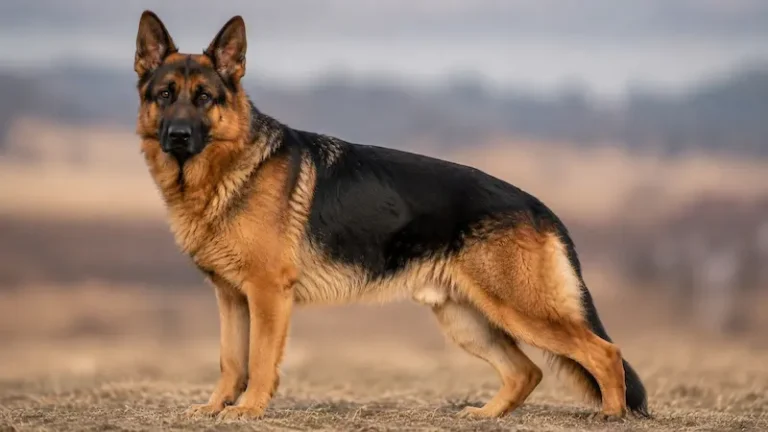
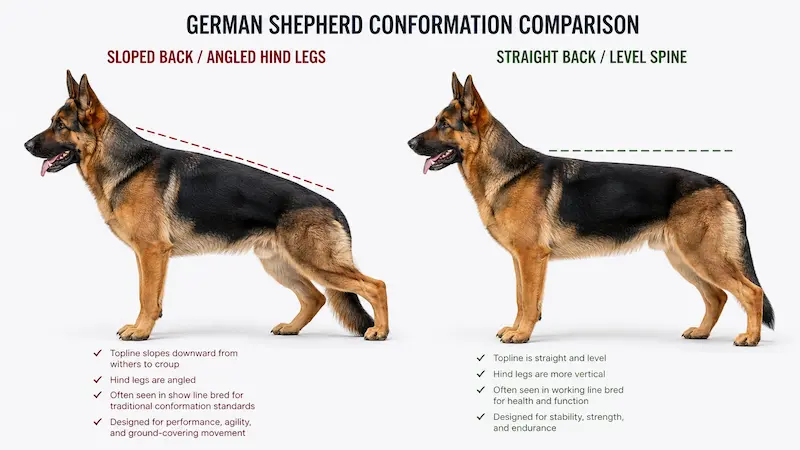
A sloped back refers to the downward angle from a dog’s shoulders to its hips. In German Shepherds, this is often paired with angulated (bent) hind legs, creating a curved topline rather than a straight one.
It’s important to distinguish between:
- Natural slope: A slight incline that supports movement
- Exaggerated slope: A pronounced curve caused by selective breeding
Visual Characteristics:
A German Shepherd with a sloped back typically shows:
- Lower hindquarters compared to the front
- Bent rear legs
- A flowing, curved silhouette
In contrast, straight-backed German Shepherds have a more level spine and balanced stance.
The Origin of the Sloped Back:
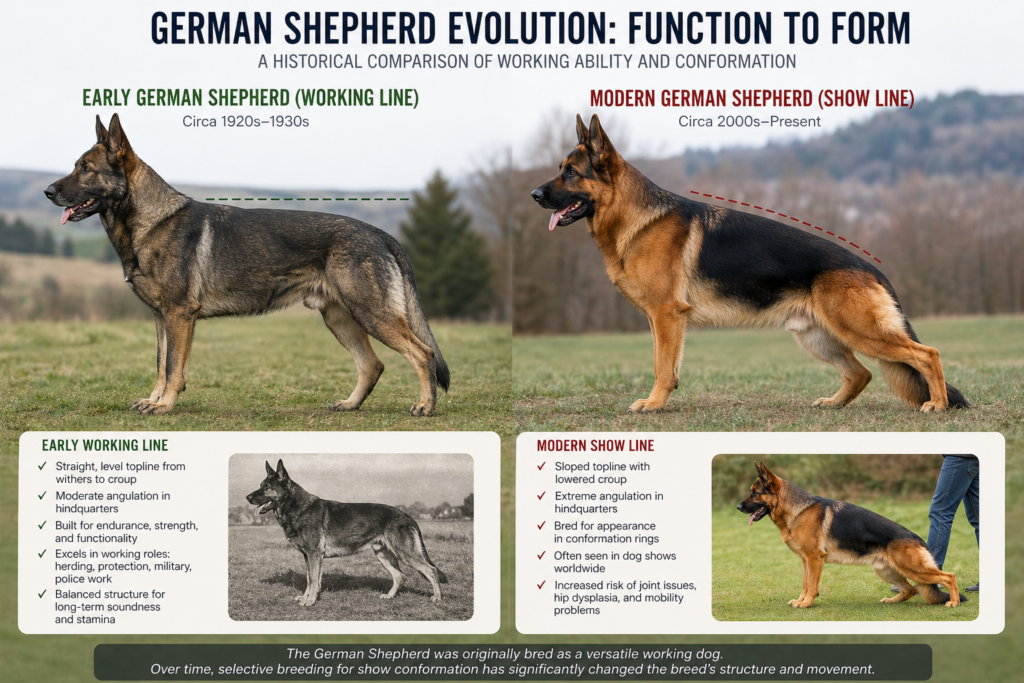
Early German Shepherd Breeding History:
German Shepherds were originally bred in Germany in the late 19th century as herding and working dogs. Early breeders focused on:
- Strength
- Endurance
- Agility
- Practical working ability
These early dogs had relatively straight backs, allowing them to move efficiently over long distances while herding livestock.
Influence of Dog Shows and Breed Standards:
Over time, dog shows began to influence breeding priorities. Appearance became more important, and certain physical traits were emphasized.
Breed standards started favoring:
- A more flowing outline
- Increased rear angulation
- A sloped topline
This shift gradually changed the physical structure of many German Shepherds, especially in show lines.
Want to see what official breed standards actually say? Check the American Kennel Club’s German Shepherd guidelines and how they influence body structure.
American vs European Bloodlines:
Today, there are noticeable differences:
- American show lines: Often have more pronounced slopes
- European working lines: Tend to have straighter backs and more functional builds
This split highlights how breeding goals shape physical traits.
Explore all German Shepherd types and see how Different Types Of German Shepherd Breeds.
Why Do German Shepherds Have Sloped Backs?
Selective Breeding for Appearance:
The primary reason German Shepherds have sloped backs is selective breeding. Over decades, breeders chose dogs with certain visual traits and bred them together.
Judges in dog shows are often rewarded:
- Deep hind angulation
- Smooth, gliding movement
- A distinctive silhouette
This created a feedback loop where exaggerated features became more common.
Functional Purpose (Myth vs Reality)
Some claim that a sloped back improves movement, particularly the “flying trot” seen in shows. While moderate angulation can support efficient gait, excessive slope can actually reduce stability.
In reality:
- Mild slope = functional and beneficial
- Extreme slope = potential mobility issues
So while there may be a functional basis, it has often been overstated.
Genetics and Inherited Traits:
The back structure is largely genetic. When breeders consistently select for sloped backs, the trait becomes more prominent over generations.
However, genetics can also amplify problems if not managed carefully, especially when appearance is prioritized over health.
Sloped Back vs Straight Back Differences:
Physical Structure Comparison
- Sloped back dogs: Curved spine, angled hips, bent rear legs
- Straight back dogs: Level spine, more balanced posture
Movement and Gait:
- Sloped back dogs often display a smooth, sweeping gait
- Straight back dogs tend to have stronger, more stable movement suited for work
Popularity and Preferences:
- Show enthusiasts often prefer sloped backs
- Working dog handlers usually favor straighter backs
Health Implications of Sloped Backs:
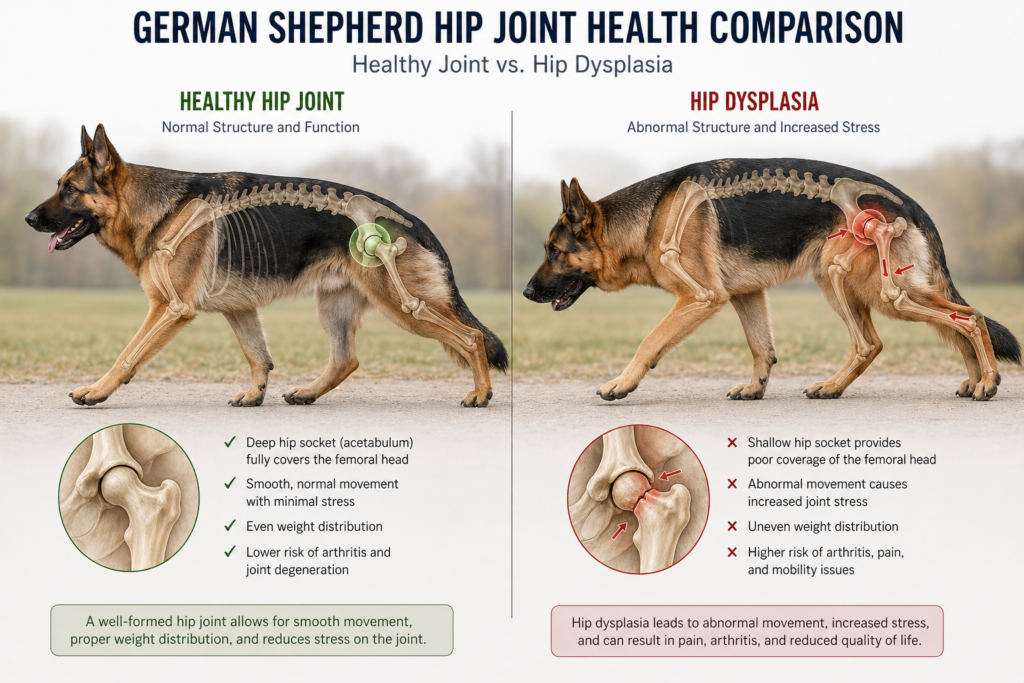
Wondering how serious joint issues can get? Read our complete guide on Do German Shepherd have hip problems.
Risk of Hip Dysplasia:
One of the biggest concerns is hip dysplasia, a condition where the hip joint doesn’t develop properly.
While not caused solely by a sloped back, exaggerated angulation can:
- Increase stress on joints
- Worsen existing genetic predispositions
Mobility and Long-Term Health:
Dogs with extreme slopes may experience:
- Difficulty walking or running
- Reduced endurance
- Joint pain as they age
Moderate slopes, however, do not automatically lead to health issues.
Curious how structure affects lifespan? See the average life expectancy of German Shepherds and what impacts it most.
Scientific Perspective:
Veterinarians generally agree:
- Structure matters, but extremes are the problem
- Responsible breeding reduces risk significantly
The issue isn’t the slope itself; it is how far it is taken.
Controversy Around Sloped Backs:
Criticism from Experts:
Many veterinarians and animal welfare advocates criticize exaggerated sloped backs, arguing that:
- It prioritizes looks over health
- It can lead to avoidable suffering
Ethical Breeding Debate:
This has sparked a broader debate:
- Should aesthetics ever outweigh function?
- Where should breeders draw the line?
Responsible breeders aim to balance both.
Public Perception:
Public opinion has shifted in recent years. Many dog lovers now prefer:
- Healthier, more natural builds
- Functional working-line German Shepherds
Are Sloped Back German Shepherds Unhealthy?
Not Always Understanding Moderation:
A key point often missed: not all sloped backs are bad.
- Mild slope, Normal and functional
- Extreme slope Potentially harmful
The degree matters far more than the presence of a slope.
Role of Responsible Breeding:
Good breeders focus on:
- Health testing
- Balanced structure
- Avoiding extreme features
This dramatically reduces the risk of problems.
How to Choose a Healthy German Shepherd?
What to Look for in a Puppy:
When selecting a puppy:
- Look for a balanced, proportional body
- Avoid exaggerated curves or overly low hindquarters
- Observe that movement should be smooth and stable
Questions to Ask Breeders:
- Do you test for hip and elbow dysplasia?
- Can I see the parents?
- What bloodline does the puppy come from?
Red Flags to Avoid:
- Extreme sloping backs
- Difficulty standing or walking
- Lack of health documentation
Sloped Back in Working vs Show Dogs:
Working Line German Shepherds:
These dogs are bred for:
- Police work
- Military roles
- Search and rescue
They usually have:
- Straighter backs
- Higher endurance
- Stronger joints
Show Line German Shepherds:
These dogs are bred for appearance and competition:
- More pronounced slope
- Elegant gait
- Emphasis on visual standards
Can a Sloped Back Be Corrected or Improved?
Role of Exercise and Nutrition:
While you can’t change bone structure, you can support your dog’s health through:
- Regular, low-impact exercise
- Joint-supportive diets
- Maintaining a healthy weight
Limitations of Structural Change:
A dog’s skeletal shape is permanent. No exercise or training can “fix” an exaggerated slope.
The best approach is prevention through responsible breeding.
Pros and Cons of Sloped Backs:
Advantages:
- Smooth, flowing gait (in moderate cases)
- Preferred appearance in dog shows
Disadvantages:
- Increased risk of joint stress (if extreme)
- Potential mobility issues
- Controversial breeding practices
FAQ’s:
Why do German Shepherds look like their back legs are lower?
Because of rear leg angulation and a sloped spine, which creates the appearance of lower hindquarters.
Are straight-back German Shepherds healthier?
Often, yes, especially when bred for function, but health depends on overall genetics, not just back shape.
Do all German Shepherds have sloped backs?
No, Many working-line German Shepherds have straighter backs.
Is a sloped back natural or man-made?
A slight slope is natural, but extreme versions are the result of selective breeding.
Can sloped backs cause pain in German Shepherds?
Only in severe cases, especially if linked to joint issues like hip dysplasia.
Which German Shepherd type is best for families?
Both types can be great pets, but temperament and training matter more than back shape.
How can I tell if my German Shepherd’s back is normal?
Look for balance, smooth movement, and absence of discomfort rather than focusing only on appearance.
Conclusion:
The sloped back in German Shepherds is not a mystery it is the result of decades of selective breeding shaped by changing priorities.
Originally bred for work, these dogs had straighter, more functional bodies. Over time, show standards introduced more pronounced slopes, leading to the modern divide between working and show lines.
The key takeaway is simple: moderation matters. A slight slope can be completely normal and even beneficial, but extreme angulation raises valid health concerns.
If you are considering a German Shepherd, focus less on appearance and more on:
- Health
- Structure
- Responsible breeding
Because at the end of the day, a healthy dog will always outperform a perfectly shaped one.