What Size Dog Crate For German Shepherd? (Size Guide 2026)
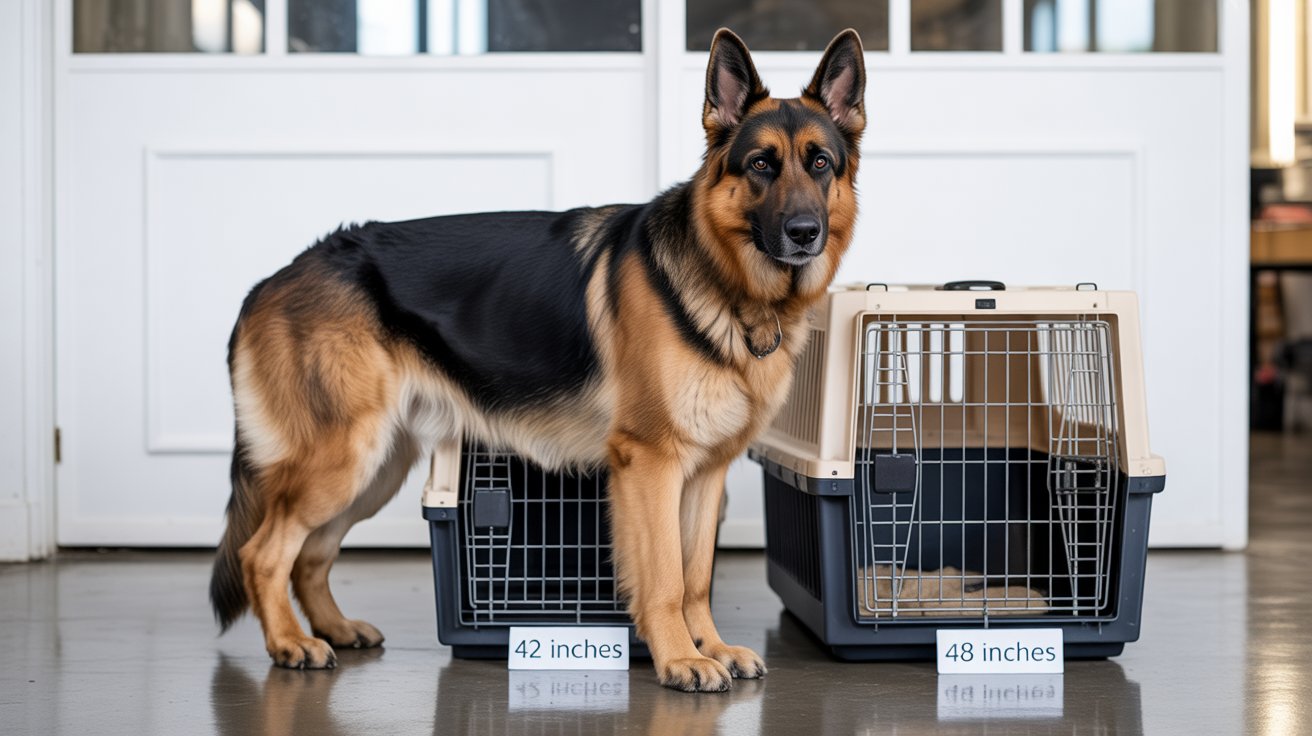
Most adult German Shepherds need a large crate, around 42 inches long. Puppies need smaller crates or dividers. The dog should stand, turn, and lie down comfortably without extra space that encourages accidents or restlessness during proper crate training stages.
This guide explains exactly how to choose the right crate size for a German Shepherd at every life stage, using simple measurements that actually work.
What Is the Best Crate Size for an Adult German Shepherd?
For adult German Shepherds, crate size should be based on height, body length, and resting posture, not weight alone. Dogs with longer legs or deeper chests often need more space, even if their weight is average.
Adult crate size guide:
| Crate Length | Best For |
| 42 inches (XL) | 65 to 85 lb dogs under 26 inches tall |
| 48 inches (XXL) | 85+ lb dogs or dogs over 26 inches tall |
A correctly sized crate allows your German Shepherd to stand upright without ear pressure, turn naturally, and lie down fully stretched. If your dog avoids the crate or constantly changes position, the size is likely wrong.
Is a 42-Inch Crate Big Enough for a German Shepherd?
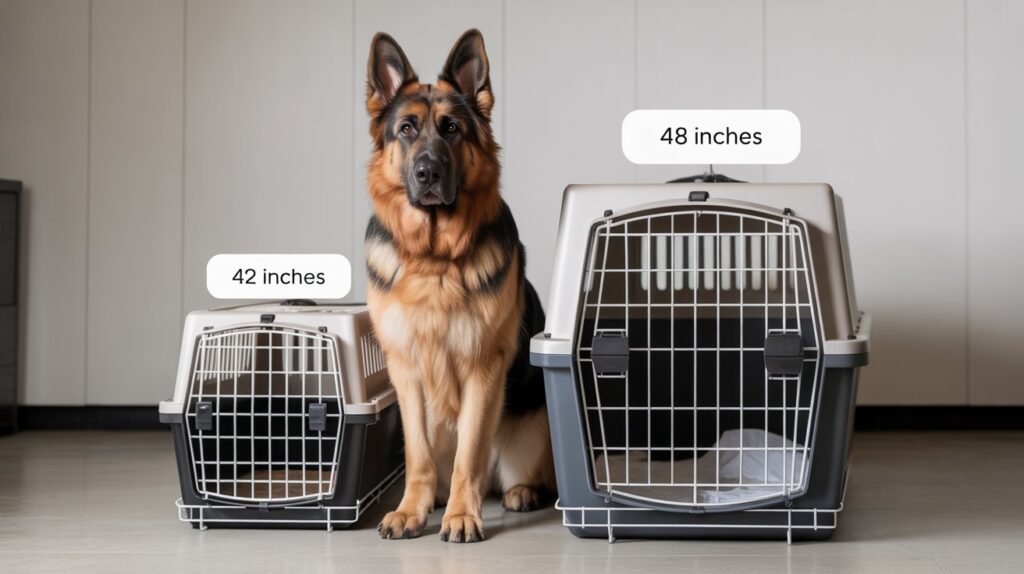
A 42-inch crate is suitable for many German Shepherds, but it is not universal.
This size works best if your dog:
- Weighs 65 to 85 lbs
- Stands under 26 inches tall
- Has an average or lean body structure
However, a 42-inch crate may feel restrictive for large males, working-line dogs, or German Shepherds that sleep fully stretched. If your dog’s ears brush the top or legs press against the walls while resting, upgrading to a 48-inch crate improves comfort and acceptance.
When Does a German Shepherd Need a 48-Inch Crate?
A 48-inch crate is ideal for large, tall, or long-bodied German Shepherds.
Choose this size if your dog:
- Weighs over 85 lbs
- Is 26 to 28 inches tall
- Has long legs and a deep chest
This size is also better when:
- The crate is used for overnight sleep
- Your dog rests inside for longer periods
Extra space improves airflow and reduces joint pressure, especially in adult dogs.
German Shepherd Crate Size by Age:
German Shepherds grow quickly, so their crates need to be changed frequently.
Size guide by age:
- 8 to 16 weeks: 30 to 36-inch crate with divider
- 4 to 10 months: 36 to 42-inch crate
- 12+ months: 42 or 48-inch crate based on size
Using a crate with divider panels allows you to adjust the space as your puppy grows.
Rapid growth depends heavily on nutrition, and proper calorie intake can directly affect how quickly a German Shepherd outgrows a crate.
Also Read: How Many Calories Does A German Shepherd Need?
What Size Crate Does a German Shepherd Puppy Need?
German Shepherd puppies grow quickly, which is why buying multiple crates often becomes expensive and unnecessary. The most practical solution is an adult-size crate with a divider.
A 42-inch crate with a divider allows you to limit space during the early months and expand it as your puppy grows. This controlled space helps puppies learn bladder control, reduces destructive chewing, and creates a safe den-like environment without overwhelming them.
Too much space too early often leads to training setbacks.
Just like crate space, collar size also changes as your German Shepherd grows, and choosing the wrong size can cause discomfort.
Also Read: What Size Collar For A German Shepherd?
When Should You Upgrade to an Adult Crate?
It is time to upgrade when your German Shepherd:
- Touches the crate walls while lying down
- Has to lower its head or bend its ears to stand
- Appears restless or uncomfortable
Most German Shepherds need an adult-size crate by 8 to 10 months, while large males may need a 48-inch crate closer to 10 to 12 months.
How to Measure a German Shepherd for the Right Crate Size?
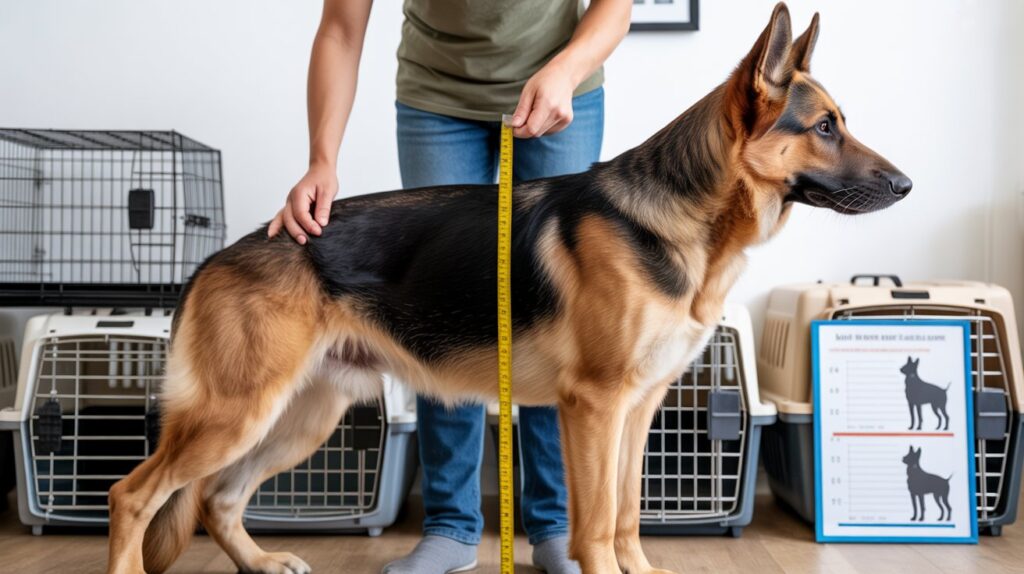
Measuring your German Shepherd is the most reliable way to avoid buying the wrong crate. Start by measuring from the nose to the base of the tail, then measure from the floor to the top of the head or ears if they stand upright. Add 4 inches to each measurement to allow for natural movement.
This method ensures your dog has enough space to move comfortably without losing the sense of security that makes crate training effective.
How Much Head and Ear Clearance Is Needed?
German Shepherds have upright ears that need extra space.
Your crate should allow:
- 3 to 4 inches of clearance above the head and ears
- Full standing height without crouching
If the ears touch the top of the crate, the crate is too short.
Since German Shepherd ears stand upright as they mature, understanding when their ears fully develop helps avoid choosing a crate that becomes too short later.
Also Read: What Age Do German Shepherd Ears Stand Up?
Do Male and Female German Shepherds Need Different Crate Sizes?
Sometimes.
- Males: Larger frame, broader chest, taller
- Females: Slightly smaller and lighter
Most females fit comfortably in 42-inch crates, while many males, especially those from working lines, need 48-inch crates. Measuring your dog is always more reliable than averages.
Working-Line vs Show-Line German Shepherd Crate Size:
Body structure matters more than weight.
Working-line German Shepherds:
- Taller and longer bodies
- Longer legs
- Often require 48-inch crates
Show-line German Shepherds:
- Stockier build
- Shorter legs
- Usually fit well in 42-inch crates
Chest depth and body length are key factors.
Best Crate Size for Sleeping and Daily Use:
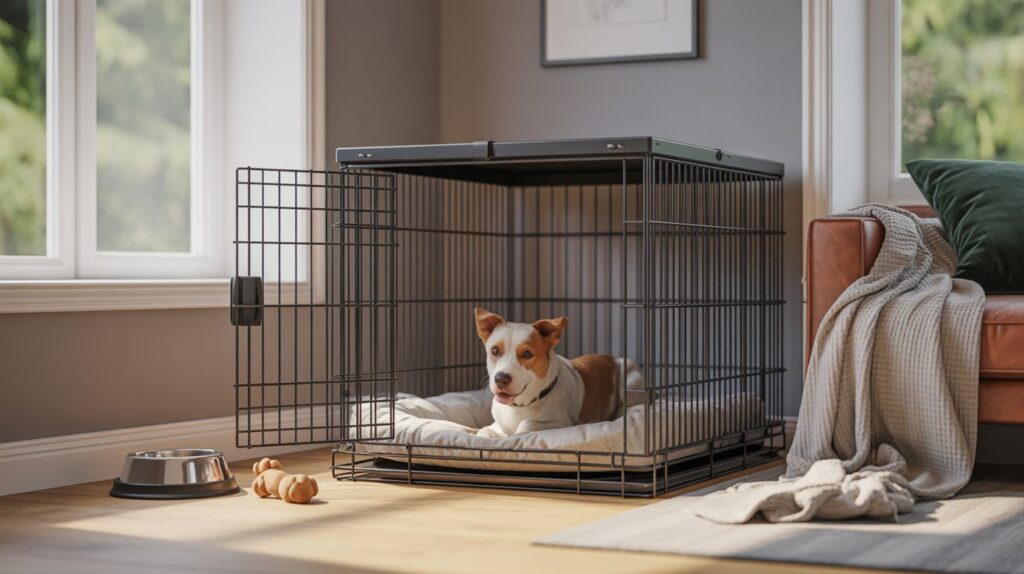
For overnight sleeping:
- Choose the appropriate size
- Add orthopaedic bedding
- Allow full stretch-out space
For short daytime rests:
- Slightly smaller is acceptable
- Never tight or restrictive
Comfort improves crate acceptance and reduces anxiety.
Poor sleeping posture and restricted movement can contribute to digestive stress, so it’s important to understand the risks of bloat in German Shepherds.
Also Read: How Common Is Bloat In German Shepherds?
Is an Oversized Crate Bad for a German Shepherd?
Yes, especially for puppies.
Problems with oversized crates:
- Slower potty training
- Increased chewing behaviour
- Less sense of security
For adult dogs, oversized crates are less harmful but still reduce den comfort. The correct size is always better than simply choosing the biggest option.
Safety Tips for Choosing the Right German Shepherd Crate Size
Look for:
- Strong steel construction
- Rounded edges
- Secure locking doors
- Non-toxic coating
- Proper ventilation
Avoid:
- Weak wire crates
- Plastic crates with low ceilings
- Soft crates for untrained dogs
Add:
- Non-slip mat
- Washable bedding
- Chew-safe water bowl
FAQ’s:
What size crate is best for a full-grown German Shepherd?
Most adult German Shepherds need a 42-inch crate, while larger dogs are more comfortable in a 48-inch crate.
Is a 48-inch crate too big for a German Shepherd?
No, but it should only be used for large or tall dogs. Oversized crates can reduce den comfort.
Should I buy a puppy crate or an adult crate?
An adult crate with a divider is the best choice for German Shepherd puppies.
Can a German Shepherd sleep in a crate overnight?
Yes, if the crate allows full stretching, proper airflow, and includes comfortable bedding.
Do working-line German Shepherds need larger crates?
Yes, working-line German Shepherds are often taller and longer, making 48-inch crates more suitable.
Conclusion:
Choosing the correct crate size for a German Shepherd depends on height, body length, and how the dog rests, not just weight. Most adults fit well in a 42-inch crate, while taller or larger dogs need a 48-inch crate. Measuring your dog properly prevents discomfort, improves training results, and makes crate use a positive long-term habit.