Types of German Shepherd Coats: Powerful Guide Coat Varieties!
Introduction to German Shepherd Coat Types:
German Shepherds are famous for their intelligence, loyalty, and athletic appearance, but their coats are just as impressive. If you’ve ever seen two German Shepherds that looked completely different, you’re not imagining things. Some have short, sleek fur, while others have long, fluffy coats with a noticeable mane around the neck.
Understanding the different types of German Shepherd coats can help you choose the right dog for your lifestyle and prepare for grooming, shedding, and seasonal care. Coat type affects much more than appearance. It can influence how much brushing your dog needs, how much fur ends up around your home, and how well your dog handles different weather conditions.
German Shepherds were originally bred as working dogs, so their coats evolved to protect them from rain, wind, dirt, and changing temperatures. Whether you own a puppy, plan to adopt an adult dog, or simply want to learn more about the breed, understanding coat varieties makes caring for a German Shepherd much easier.
Before exploring coat lengths and colors, it’s important to remember that coat type and coat color are not the same. Coat type refers to the length and texture of the fur, while coat color describes the pattern and shade, such as black and tan, sable, black and red, or solid black.
Why Coat Type Matters:
Coat type matters because it affects grooming, shedding, weather comfort, and even how often you’ll need to clean your home. German Shepherds are known for shedding. Many owners jokingly say German Shepherds “shed twice a year: six months in spring and six months in fall.” That’s a bit of a laugh, but there’s truth in it.
A short stock coat may be easier to brush than a long coat. A long coat may need more attention around the ears, tail, belly, and back legs. A thick double coat may shed heavily during seasonal changes. So, before choosing a puppy or adopting an adult dog, it’s smart to understand what kind of coat you’re bringing home.
Wondering how much fur a German Shepherd can lose throughout the year? Read our complete guide on Will German Shepherd Hair Grow Back?
Coat Type vs. Coat Colour:
Many people mix up coat type and coat color. They’re not the same thing.
Coat type means the length, thickness, and texture of the fur. Coat color means the shade or pattern, such as black and tan, sable, black and red, solid black, or bi-colour.
For example, a German Shepherd can be long-coated and black and tan. Another can be short-coated and sable. The coat type tells you how the fur feels and grows. The color tells you what the dog looks like.
According to the American Kennel Club, German Shepherds can be registered in several colors, including black, black and tan, black and red, black and silver, gray, sable, white, liver, blue, and bi-colour. You can view more breed information from the American Kennel Club here: AKC German Shepherd Dog Breed Information.
Main Types of German Shepherd Coats:
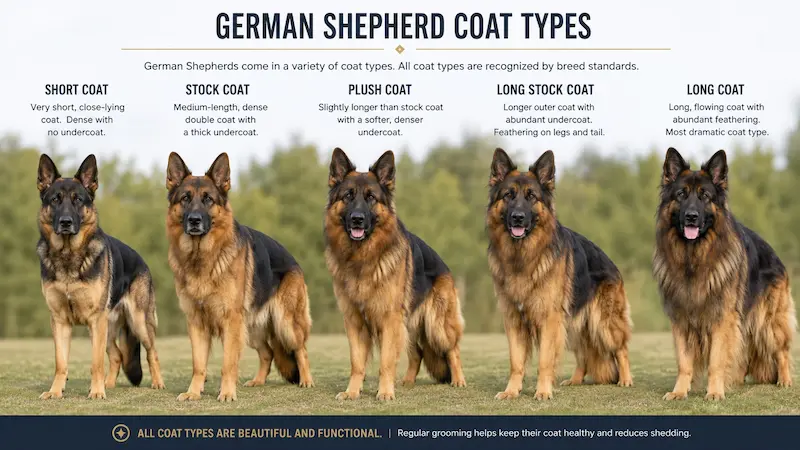
The types of German Shepherd coats are usually grouped by fur length and undercoat. Some names are used by breeders, groomers, and owners in everyday conversation, even when kennel clubs may use more formal wording. Let’s break them down in a simple way.
German Shepherd Coat Genetics Explained:
Many owners wonder why one German Shepherd puppy develops a long coat while another from a different litter has a shorter coat. The answer comes down to genetics.
Coat length is inherited from the parents. The long-coat gene is recessive, which means both parents can carry the gene without showing a long coat themselves. When two carriers are bred together, some puppies may inherit long coats.
Coat color is also influenced by genetics. Sable is considered a dominant color pattern, while colors such as solid black require specific gene combinations. Because genetics can be complex, even experienced breeders cannot always predict a puppy’s exact adult appearance.
This is one reason responsible breeders focus on health, temperament, and structure rather than breeding solely for a specific color or coat type.
Stock Coat German Shepherd:
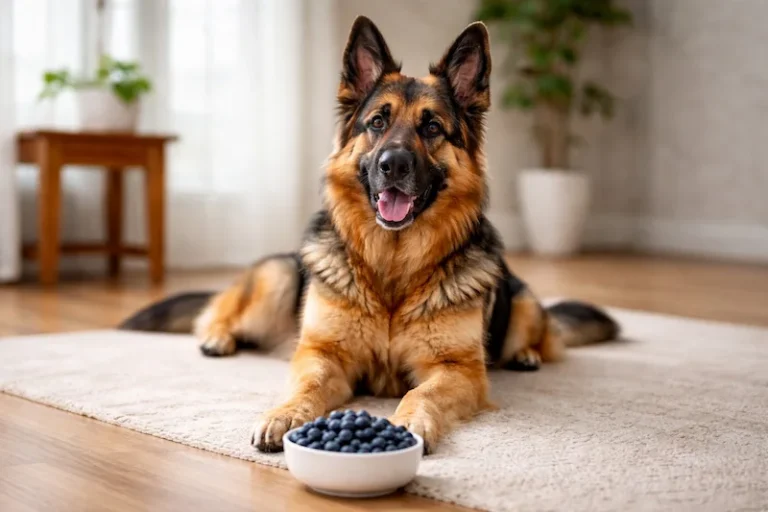
The stock coat is the classic German Shepherd coat. It is medium in length, dense, straight, and close to the body. This is the coat most people imagine when they think of a traditional working German Shepherd.
A stock coat usually has a thick undercoat. The topcoat protects the dog from rain, dirt, and wind. The undercoat helps with insulation. This makes the dog better prepared for outdoor activity.
Stock coats are popular because they’re practical. They don’t usually tangle as much as long coats, but they still shed a lot. Regular brushing is important, especially during spring and fall.
Best features of the stock coat:
| Feature | Description |
| Length | Medium |
| Texture | Dense and firm |
| Undercoat | Usually thick |
| Grooming level | Moderate |
| Shedding | High during seasonal changes |
Plush Coat German Shepherd:
A plush coat is slightly longer and fuller than a regular stock coat. It gives the German Shepherd a softer, thicker, and more rounded appearance. Many owners love this coat because it looks elegant without being as demanding as a full-length coat.
Plush-coated German Shepherds often have a rich, teddy-bear look. However, don’t let that cute appearance fool you. These dogs still need serious brushing. Their thick coat can trap loose fur, dust, and small debris.
A plush coat is a nice middle ground. It looks fuller than a standard coat but is usually easier to manage than a long coat.
Long Stock Coat German Shepherd:
The long stock coat has longer hair than the standard coat, but it still has an undercoat. This is an important point. The undercoat gives protection and structure. The fur may be longer around the ears, neck, tail, and legs.
Long stock coat German Shepherds can look very majestic. Their neck fur may form a soft mane, and their tail may look fuller. Many people find this coat stunning.
However, beauty comes with responsibility. Long stock coats need regular grooming to prevent tangles. You’ll need to brush carefully behind the ears, under the legs, and around the tail.
Long Coat German Shepherd:
A long-coated German Shepherd has long, flowing hair. Some long coats may have little or no undercoat, depending on the dog’s genetics. These dogs often look softer and more glamorous than standard-coated German Shepherds.
This coat type is beautiful, but it may not offer the same weather protection as a proper double coat. Without a strong undercoat, the dog may be less protected from cold or wet weather.
Long-coated German Shepherds are often family favorites because of their striking appearance. Still, they need patient grooming. If you skip brushing for too long, mats can form. Once mats appear, they can pull on the skin and make the dog uncomfortable.
Short Coat German Shepherd:
Short-coated German Shepherds have tighter, shorter hair that lies close to the body. They often look athletic, clean, and sharp. Their body shape is easier to see because the fur doesn’t hide the outline.
Short coats are usually easier to maintain than long coats. However, that doesn’t mean they do not shed. German Shepherds with short coats can still leave fur on floors, carpets, clothes, and sofas.
This coat is a good choice for owners who want a strong working look and a simpler grooming routine.
Double Coat German Shepherd:
Most German Shepherds have a double coat. This means they have two layers of fur: a topcoat and an undercoat. The topcoat is usually harsher and protects against the weather. The undercoat is softer and helps regulate temperature.
Double coats are one reason German Shepherds can work in different climates. However, they also explain why the breed sheds so much.
Never shave a double-coated German Shepherd unless a vet says it is medically needed. Shaving can affect natural temperature control and may damage the coat’s normal growth pattern.
Many owners ask whether shaving helps reduce shedding, but that’s usually not recommended. Learn more in Can You Shave A German Shepherd?
Single Coat German Shepherd:
Some German Shepherds may have a single coat, meaning they have little or no undercoat. This is more common in some long-coated dogs. A single coat may look smooth and flowing, but it may not provide the same protection as a double coat.
Single-coated dogs may need extra care in extreme weather. In cold weather, they may need shorter outdoor sessions. In hot weather, they still need shade, water, and rest.
German Shepherd Coat Colours and Patterns:
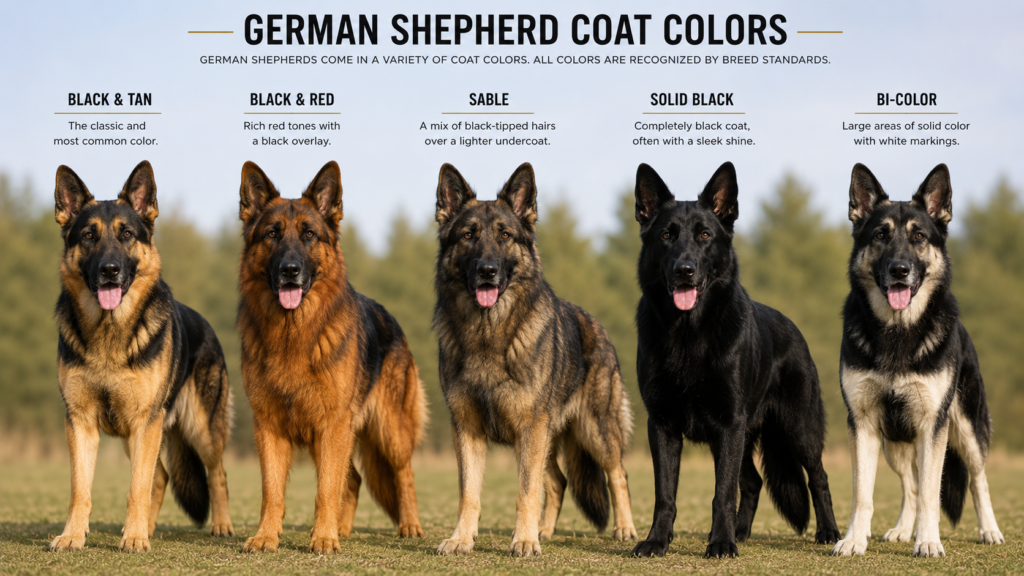
A complete discussion of German Shepherd coats is not complete without covering colors and patterns. Coat color doesn’t usually change the dog’s loyalty, intelligence, or working ability. However, color can affect the show standards and buyer preferences.
Black and Tan:
Black and tan is the most recognized German Shepherd color. These dogs often have a black saddle on their backs and tan markings on their legs, chest, and faces. This is the classic “police dog” look that many people know.
Black and tan German Shepherds are common and popular. Their markings may change as they grow. Puppies can darken or lighten with age, so don’t judge final color too early.
Black and Red:
Black and red German Shepherds have deeper red or mahogany markings instead of lighter tan. This color is often seen in show lines. The rich contrast can look very bold and impressive.
Many people consider black and red one of the most attractive German Shepherd colors. Still, color should never be your only reason for choosing a dog. Temperament, health, and responsible breeding matter more.
Sable:
Sable German Shepherds have hair with different bands of color. This gives them a wolf-like or shaded appearance. Sable can range from light grayish tones to dark, rich shades.
Sable is strongly linked with working-line German Shepherds, though not all sable dogs are working-line dogs. Their color can change as they mature, sometimes becoming darker with age.
Solid Black:
Solid black German Shepherds are striking and elegant. Their coat should appear rich and dark. Some may have small, lighter areas, but a true solid black dog has a mostly black appearance.
Because solid black German Shepherds look rare and powerful, some sellers may overprice them. Always focus on health testing, temperament, and ethical breeding before color.
Bi-Color
Bi-color German Shepherds are mostly black with smaller tan or brown markings. These markings may appear on the legs, face, chest, or under the tail.
Bi-colored dogs often look darker than black and tan dogs. They can have a strong, serious appearance. This pattern is loved by many working-dog fans.
White, Blue, and Liver
White German Shepherds exist, but they are treated differently depending on the registry or competition rules. In some breed standards, white is not accepted for conformation. Blue and liver also exist, but they are often considered less preferred or serious faults in traditional standards.
That does not mean these dogs can’t be loving pets. A white, blue, or liver German Shepherd can still be loyal, smart, and affectionate. However, buyers should be careful if a breeder markets these colors as “rare luxury” dogs at very high prices. Sometimes that’s just a sales trick.
Grooming and Shedding Guide:
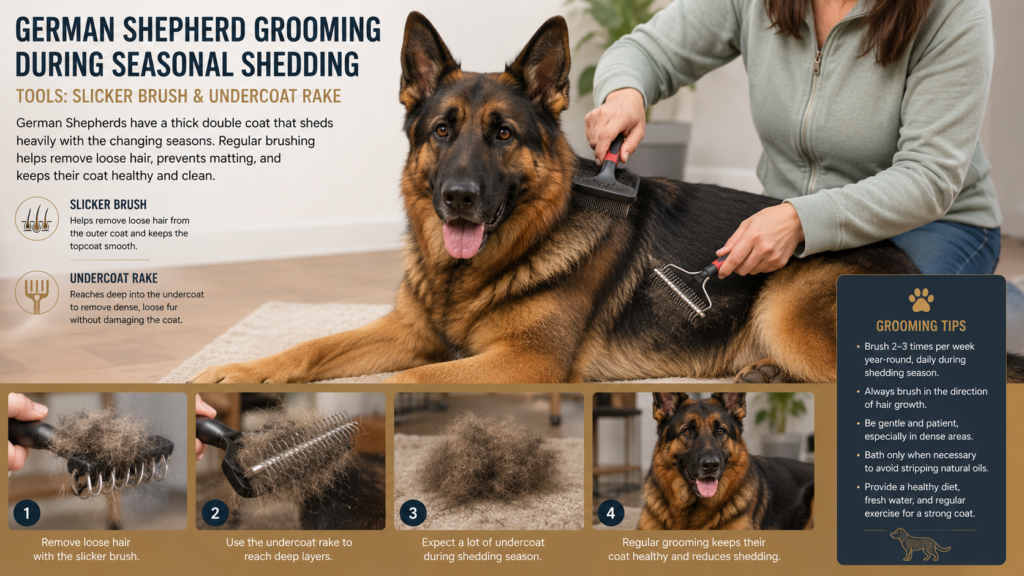
German Shepherd coats need steady care. You do not need to be a professional groomer, but you do need a routine. A good grooming habit keeps the coat healthy, reduces shedding, and helps you notice skin problems early.
Regular bathing also plays an important role in coat health. See our guide on How Often Should German Shepherd Be Bathed?
Brushing Schedule:
For most German Shepherds, brushing two to four times per week is a good starting point. During heavy shedding seasons, daily brushing may be better. Long-coated dogs may need more frequent brushing than short-coated dogs.
Here’s a simple brushing guide:
| Coat Type | Brushing Need |
| Short coat | 2 to 3 times weekly |
| Stock coat | 3 to 4 times weekly |
| Plush coat | 3 to 5 times weekly |
| Long stock coat | 4 to 6 times weekly |
| Long coat | Daily or near daily |
| Heavy shedding season | Daily |
Brush gently and work in sections. Don’t rush. Start from the neck, move along the back, then brush the sides, chest, legs, and tail. Pay close attention to areas where mats form.
Bathing Tips:
German Shepherds don’t need constant baths. Bathing too often can dry out the skin and remove natural oils. A bath every 6 to 10 weeks may be enough for many dogs, unless they get dirty, smelly, or have a skin condition.
Use a dog-safe shampoo. Human shampoo can be too harsh. Rinse very well because leftover shampoo can cause itching.
After bathing, dry the coat properly. This is especially important for thick double coats. A damp undercoat can lead to odor or skin irritation.
Tools You Need:
A good grooming kit makes life easier. You may need:
- Slicker brush
- Undercoat rake
- Metal comb
- Deshedding tool
- Dog-safe shampoo
- Towels
- High-velocity dryer, if available
- Nail clippers or a grinder
- Ear cleaning solution recommended by a vet
Don’t go overboard with deshedding tools. Too much pressure can irritate the skin or damage the coat. Gentle, regular grooming works better than aggressive grooming once in a blue moon.
Seasonal Shedding Care:
German Shepherds often blow coat during seasonal changes. This means they lose a large amount of undercoat. You may notice fur coming out in clumps. It can look alarming, but it’s normal for many double-coated dogs.
During this time, brush daily. Vacuum often. Wash dog bedding more frequently. A healthy diet can also support coat quality.
Final Grooming Reminder:
A shiny coat starts from the inside. Good food, clean water, exercise, parasite control, and vet care all support healthy skin and fur. Grooming is not only about looks. It is also a health check.
How to Predict a German Shepherd Puppy’s Adult Coat?
Many new owners are surprised to learn that a puppy’s coat can change significantly during growth. A fluffy puppy is not always guaranteed to become a long-coated adult, and coat colors may become darker or lighter over time.
Here are a few clues that may help:
• Puppies with longer hair around the ears, tail, and legs often develop longer adult coats.
• A very dense, fuzzy puppy coat may indicate a thicker undercoat as the dog matures.
• Sable puppies often change color several times during their first two years.
• Black and tan puppies may develop stronger saddle markings as they grow.
• The most reliable clue is the coat type of the parents.
Because German Shepherds continue maturing for several years, their final coat appearance may not be fully developed until adulthood.
FAQ’s:
What is the most common German Shepherd coat?
The stock coat is the most common German Shepherd coat. It has medium-length hair, a dense undercoat, and a practical working-dog appearance.
Do all German Shepherds have double coats?
Most German Shepherds have double coats, but not all. Some long-coated dogs may have little or no undercoat. A double coat gives better weather protection but also causes more shedding.
Which German Shepherd coat sheds the most?
Double-coated German Shepherds usually shed the most, especially during seasonal coat changes. Long and plush coats may also appear to shed more because the hair is longer and more visible.
Are long-coated German Shepherds purebred?
Yes, long-coated German Shepherds can be purebred. Coat length is related to genetics. However, show rules and preferences may differ depending on the kennel club or breed standard.
Is a white German Shepherd rare?
White German Shepherds are less common than black and tan or sable dogs, but they’re not magical or superior because of color. Be careful with breeders who charge extreme prices only because a dog is white.
Conclusion:
German Shepherd coats are beautiful, useful, and full of variety. From the classic stock coat to the elegant long coat, each type has its own charm. Colors like black and tan, black and red, sable, solid black, and bi-color make the breed even more eye-catching.
Still, the best German Shepherd is not chosen by coat alone. A great dog should be healthy, confident, well-socialized, and matched to your lifestyle. Coat type matters for grooming and care, but temperament matters even more.
Before buying or adopting, ask about health testing, parent temperament, grooming needs, and the dog’s energy level. Whether you choose a short coat, plush coat, long stock coat, or long coat, your German Shepherd can become a loyal, smart, and loving companion with the right care.