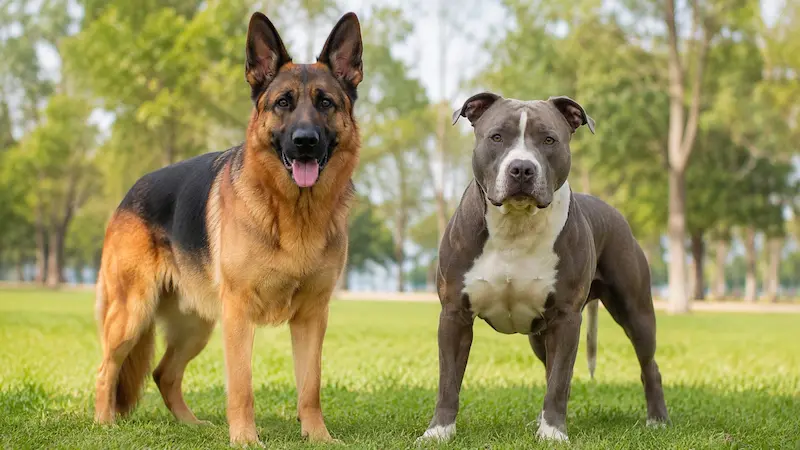
Can a German Shepherd Kill a Pitbull? (Strength, Bite Force & Reality)
Yes, a German Shepherd can kill a Pitbull in a fight, but it is not guaranteed. The outcome depends on size, strength, training, health, and circumstances. Dog fights are unpredictable and often cause severe injuries or death to both dogs. Most Responsible owners should focus on preventing fights rather than comparing which breed would win.
In this guide, we will compare German Shepherds and Pit Bulls based on size, bite force, temperament, and physical abilities. More importantly, we will explain why dog fights are so dangerous and how responsible owners can prevent them from happening in the first place.
Can a German Shepherd Kill a Pitbull?
Yes, but so can a Pit Bull seriously injure or kill a German Shepherd under certain circumstances. There is no breed that automatically wins every fight. The outcome depends on many variables, including the dogs’ size, physical condition, age, experience, and whether one dog has a significant advantage before the fight even begins.
German Shepherds are generally taller and often heavier than Pit Bulls, giving them a longer reach and greater overall body size. Pit Bulls, on the other hand, are known for their compact, muscular build and strong determination. Because each breed has different physical strengths, predicting the outcome of a fight is impossible.
In reality, dog fights rarely end without serious consequences. Even if one dog appears stronger, both animals can suffer deep bite wounds, broken bones, internal injuries, infections, or permanent emotional stress. Veterinary treatment is often required, and recovery can take weeks or even months.
Instead of asking which breed would win, responsible owners should focus on preventing situations where a fight could happen. Proper training, early socialization, supervision, and safe introductions are far more important than comparing physical strength.
German Shepherd vs Pitbull Size Comparison
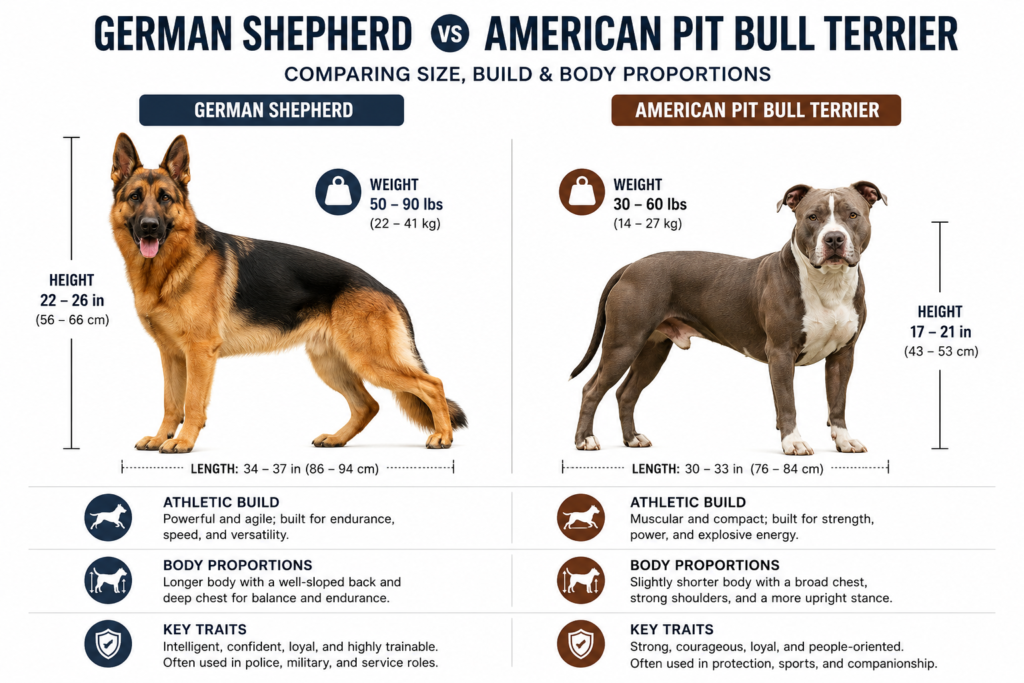
Although every dog is different, German Shepherds are generally larger than Pit Bulls. Their additional height and longer legs often provide greater reach, while Pit Bulls typically have a lower center of gravity and a more compact, muscular body.
| Feature | German Shepherd | Pit Bull |
| Height | 22 to 26 inches | 17 to 21 inches |
| Weight | 50 to 90 lbs | 30 to 65 lbs |
| Build | Lean, athletic | Compact, muscular |
| Speed | High | Moderate to High |
| Agility | Excellent | Excellent |
These physical differences influence how each breed moves and responds during physical activity. A larger German Shepherd may have an advantage in reach and stride length, while a stockier Pit Bull may generate considerable strength from its muscular frame.
However, body size alone does not determine the outcome of an encounter. Two dogs of the same breed can differ significantly in weight, fitness, confidence, health, and training. An older or unhealthy dog may perform very differently from a young, well-conditioned one, regardless of breed.
For this reason, experts discourage judging a dog’s capabilities based solely on breed stereotypes. Responsible ownership, proper training, and controlled socialization have a much greater influence on a dog’s behavior than physical characteristics alone.
Bite Force Comparison
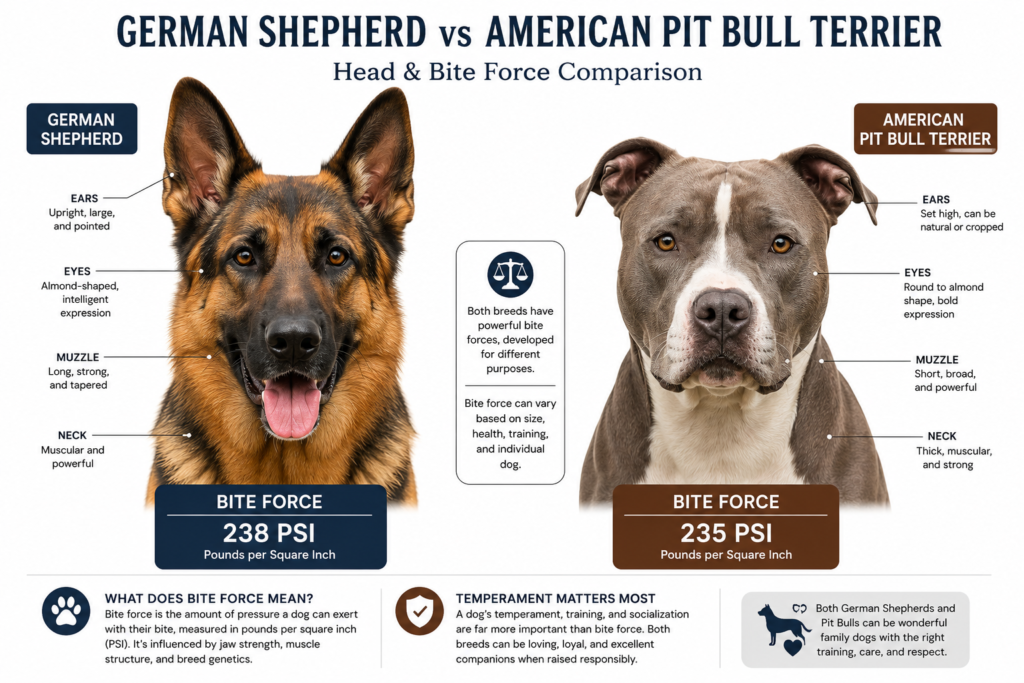
Many people believe that bite force alone determines which dog would win a fight. In reality, bite force is only one small part of the equation. Size, body position, experience, health, and the ability to control movement often matter just as much.
Studies and online sources frequently report different bite force numbers because there is no universally accepted testing method for measuring a dog’s bite. As a result, published figures should be treated as estimates rather than exact values.
| Breed | Estimated Bite Force |
| German Shepherd | Around 230 to 290 PSI |
| Pit Bull | Around 235 to 330 PSI (varies by source) |
These estimates vary between studies and should not be considered definitive.
While Pit Bulls are often described as having a powerful grip, German Shepherds also possess strong jaws developed for police, military, and protection work. Both breeds are fully capable of causing severe injuries if they bite.
Instead of focusing only on bite force, experts recommend considering the dog’s overall size, physical condition, behavior, and training. A stronger bite does not automatically determine the outcome of an encounter.
There is no standardized scientific method for measuring bite force across all dog breeds, so published PSI figures should be treated as estimates rather than proven facts.
Temperament Differences
Although German Shepherds and Pit Bulls are both powerful breeds, their personalities and working backgrounds are different. Understanding these differences is far more useful than comparing which breed is more dangerous.
Proper training and early socialization play a major role in shaping behavior. If you’re wondering how German Shepherds interact with other animals, read our guide on Will a German Shepherd Kill a Cat?
German Shepherd
German Shepherds were developed as working dogs and are widely used in police, military, search-and-rescue, and service roles because of their intelligence and trainability.
Typical characteristics include:
- Highly intelligent and quick learners
- Loyal and protective of their family
- Alert and naturally watchful
- Eager to work and follow commands
- Strong desire for mental stimulation
When properly trained and socialized, German Shepherds are generally confident and controlled rather than unnecessarily aggressive.
Pit Bull
Pit Bulls are energetic, muscular dogs that often form strong bonds with their owners. Despite common misconceptions, many are affectionate family companions when responsibly raised.
Typical characteristics include:
- Confident and determined
- Strong and athletic
- Loyal to their family
- Energetic and playful
- Respond well to consistent, positive training
Like any breed, poor socialization, neglect, or irresponsible ownership can increase the risk of behavioral problems.
Temperament Is Not the Same as Aggression
One of the biggest misconceptions is that breed alone determines aggression. In reality, a dog’s behavior is influenced by many factors, including:
- Early socialization
- Training methods
- Genetics
- Health and pain
- Daily exercise
- Environment
- Owner responsibility
A well-trained German Shepherd or Pit Bull is far more likely to behave appropriately than a poorly managed dog of any breed.
Which Breed Has the Physical Advantage?
There is no clear physical winner between a German Shepherd and a Pit Bull because each breed has different strengths.
German Shepherds generally have advantages in:
- Greater height and reach
- Longer stride length
- Excellent speed
- High endurance
- Strong agility
Pit Bulls often have advantages in:
- Compact muscular build
- Powerful body strength
- Lower center of gravity
- Determination during physical activity
However, physical characteristics alone cannot predict what would happen if two dogs fought. Age, health, weight, conditioning, and previous training can completely change the outcome.
For example:
- A young, healthy German Shepherd may outperform an older or injured Pit Bull.
- A heavier Pit Bull may have an advantage over a smaller German Shepherd.
- A professionally trained dog often responds differently from an untrained pet.
Because every dog is unique, veterinarians and behavior specialists discourage trying to compare breeds based on hypothetical fights. Preventing conflict is always safer than attempting to predict the outcome.
Owners should also be aware of serious health conditions that can affect a dog’s physical performance and overall well-being. For example, how common is bloat in German Shepherds is a life-threatening emergency that requires immediate veterinary care and should never be ignored.
Why Dog Fights Are So Dangerous
Whether the dogs are German Shepherds, Pit Bulls, or any other breed, dog fights can become dangerous within seconds. Even brief fights may cause injuries that require emergency veterinary treatment.
Many people underestimate bite wounds because the damage on the skin may appear small. However, dog teeth often create deep puncture wounds that tear muscles, blood vessels, and tissue beneath the surface. These hidden injuries can lead to infection, severe pain, or internal bleeding if left untreated.
Possible consequences include:
- Deep puncture wounds
- Torn muscles and ligaments
- Broken teeth or jaw injuries
- Damage to nerves and blood vessels
- Eye injuries
- Internal bleeding
- Serious bacterial infections
- Long-term fear or aggression toward other dogs
Even when both dogs survive, the emotional effects can last much longer than the physical injuries. A previously friendly dog may become anxious, reactive, or fearful around other animals after a traumatic fight.
For these reasons, professional trainers and veterinarians strongly recommend preventing dog fights instead of assuming one breed is capable of handling another.
How to Prevent a German Shepherd and Pitbull Fight
Most fights can be prevented through responsible ownership, proper training, and careful supervision. Prevention is always safer than trying to stop a fight after it has already started.
Socialize Your Dog Early
Introduce puppies to different people, environments, and well-behaved dogs from an early age. Positive socialization helps reduce fear and improves confidence.
Provide Enough Exercise
A bored dog is more likely to develop unwanted behaviors. Daily walks, training sessions, and mental enrichment help reduce frustration and improve self-control.
Also Read: How Much Exercise Does a German Shepherd Need?
Learn Canine Body Language
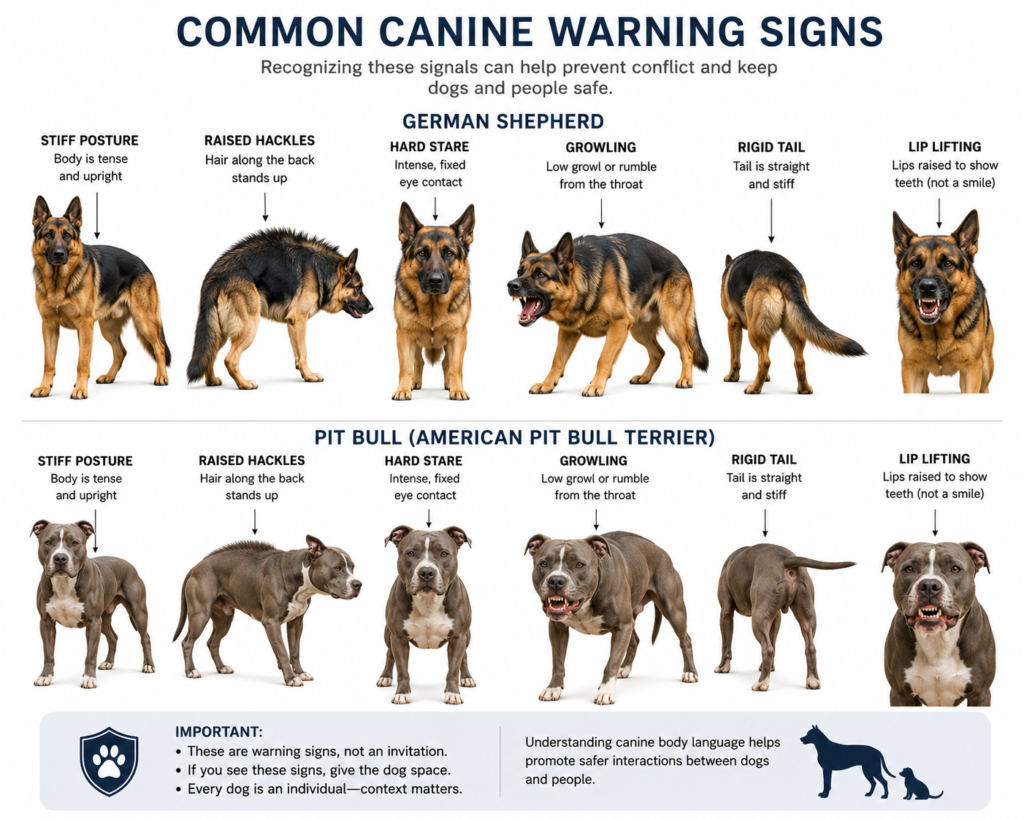
Many fights begin with subtle warning signs such as:
- Stiff body posture
- Hard staring
- Raised hackles
- Growling
- Lip lifting
- Tail held rigidly
Recognizing these signals allows owners to separate dogs before a situation escalates.
Avoid Resource Guarding
Some dogs become protective over food, toys, or sleeping areas. Feed dogs separately and supervise valuable items when unfamiliar dogs are together.
Never Leave Unfamiliar Dogs Unsupervised
Even friendly dogs can react unexpectedly when stressed, frightened, or overstimulated.
Maintain Consistent Training
Reliable commands such as Sit, Stay, Leave It, and Come can help interrupt unwanted behavior before it develops into aggression.
What To Do If Two Dogs Fight
If two dogs begin fighting, your priority is protecting yourself. Many owners are accidentally bitten while trying to separate fighting dogs.
Do NOT
- Grab the collars with your hands
- Reach between the dogs
- Attempt to pull a dog’s mouth open
- Hit or kick the dogs
These actions often increase the risk of serious injury.
Safer Ways to Interrupt a Fight
If possible:
- Stay as calm as possible.
- Call for another adult to help.
- Use a loud noise or sudden distraction if it can be done safely.
- Place a physical barrier, such as a large board, between the dogs if available.
- If two experienced adults are present and understand the technique, the wheelbarrow method may help separate the dogs more safely.
Once the dogs are separated:
- Move them to different secure areas.
- Check both dogs carefully for injuries.
- Contact a veterinarian immediately, even if wounds appear minor.
- Monitor for swelling, bleeding, limping, or changes in behavior over the following days.
Many serious bite injuries are hidden beneath the fur and require professional treatment.
Expert Advice
Organizations such as the American Veterinary Medical Association (AVMA) emphasize responsible ownership, supervision, and early intervention to reduce dog aggression and prevent injuries.
Proper socialization, regular exercise, positive training, and responsible supervision significantly reduce the risk of aggressive encounters between dogs. Owners should also remember that individual personality matters far more than breed stereotypes.
Understanding your dog’s behavior and responding early to warning signs is one of the most effective ways to keep both dogs and people safe.
FAQ
Can a Pit Bull kill a German Shepherd?
Yes, just as a German Shepherd can seriously injure a Pit Bull, a Pit Bull can also cause fatal injuries under certain circumstances. The outcome depends on factors such as size, health, age, training, and the specific situation rather than breed alone.
Which dog has the stronger bite?
There is no universally accepted answer because bite force measurements vary between studies. Both German Shepherds and Pit Bulls have powerful jaws capable of causing serious injuries, but bite force alone does not determine the outcome of a fight.
Are German Shepherds stronger than Pit Bulls?
German Shepherds are generally taller and often heavier, while Pit Bulls typically have a more compact and muscular build. Each breed has different physical strengths, making direct comparisons unreliable.
Can a trained German Shepherd beat a Pit Bull?
Training improves obedience and control, not fighting ability. Responsible training is designed to prevent conflict rather than encourage it, so no responsible expert can guarantee the outcome of a hypothetical fight.
Can German Shepherds and Pit Bulls live together?
Yes, Many German Shepherds and Pit Bulls live together successfully when they are properly introduced, well-socialized, trained consistently, and supervised during interactions.
Are Pit Bulls naturally aggressive?
No, Behavior depends on genetics, socialization, training, environment, and responsible ownership. Like any breed, individual dogs can vary greatly in temperament.
Conclusion
So, can a German Shepherd kill a Pit Bull? In rare situations, yes, but the opposite can also be true. There is no guaranteed winner because every dog is different. Factors such as size, age, health, training, and the circumstances of an encounter have a much greater influence than breed alone.
Instead of focusing on hypothetical fights, responsible owners should prioritize prevention through proper training, early socialization, adequate exercise, and careful supervision. German Shepherds and Pit Bulls are both intelligent, capable breeds that can become loyal, well-behaved companions when their physical and mental needs are met. Keeping conflicts from happening is always safer than trying to predict what might happen if they do.