Why Does My German Shepherd Smell So Bad? (Causes & Fixes)
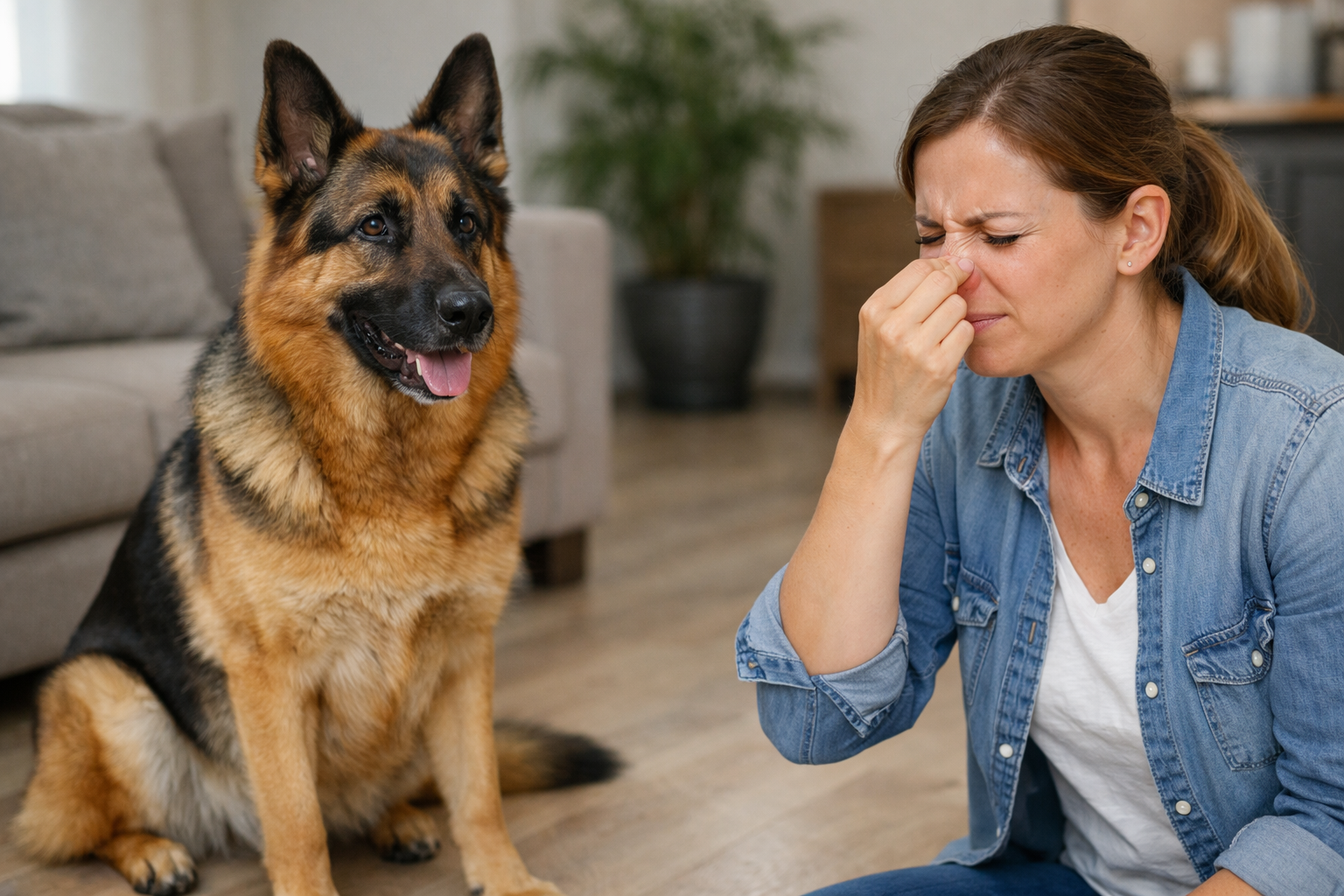
Why does my German Shepherd smell so bad? In most cases, it is caused by skin infections, ear problems, poor diet, or moisture trapped in the thick coat. Identifying the exact source and fixing it early helps eliminate odor effectively.
This guide explains the real causes, practical fixes, and simple prevention steps in clear, owner-friendly language.
Is It Normal for German Shepherds to Smell?
Why does my German Shepherd smell so bad? A healthy German Shepherd should not smell bad.
Like all dogs, they have a mild natural scent. However, strong, sour, fishy, or musty odors usually signal an underlying issue such as:
- Skin infections
- Ear problems
- Dental disease
- Diet-related imbalances
Because German Shepherds have a thick double coat and sensitive skin, odors tend to appear faster when something is off.
- Mild dog smell is normal
- Strong, lingering, or unusual smell needs attention
A healthy German Shepherd should not smell bad. Here is something most German Shepherd owners do not realize: according to veterinary guidance from the American Kennel Club, strong or persistent dog odor is usually linked to skin, ear, or health issues, not poor hygiene alone.
Common Smell Types and What They Usually Mean:
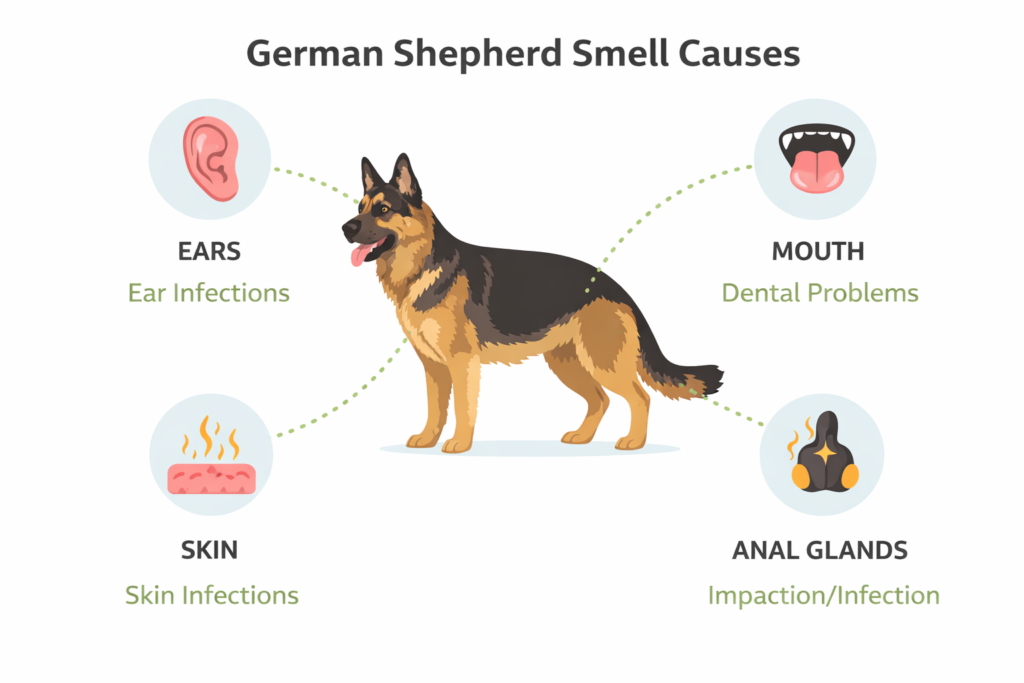
Different smells come from different problems. Identifying the odor helps you fix it faster.
| Smell Type | Most Likely Cause | Other Signs |
| Musty or cheesy | Yeast skin infection | Itching, redness |
| Fishy | Anal gland issues | Scooting, licking |
| Rotten breath | Dental disease | Tartar, swollen gums |
| Oily or greasy | Seborrhea or skin imbalance | Flakes, greasy coat |
| Sweet or unusual | Metabolic problems | Excess thirst, weight loss |
If the smell matches one of these and does not improve within a few days, a vet visit is strongly recommended.
Why German Shepherds Are Prone to Odor Problems
German Shepherds have breed-specific traits that make odor issues more common:
- Dense double coat that traps moisture and dirt
- Sensitive skin prone to allergies
- Active lifestyle (mud, bacteria, sweat exposure)
In warm or humid climates, moisture trapped in the undercoat can quickly lead to bacterial or yeast overgrowth if grooming is inconsistent.
Grooming Mistakes That Make Smells Worse
Infrequent or Incomplete Brushing
Loose undercoat hair traps dirt, oil, and odor-causing bacteria.
Best practice:
- Brush 3 to 4 times per week
- Daily brushing during shedding seasons
This improves airflow to the skin and keeps odors from building up.
Over-Bathing (Very Common Mistake)
Bathing too often strips the skin of natural oils and can increase the risk of skin infections.
For most German Shepherds:
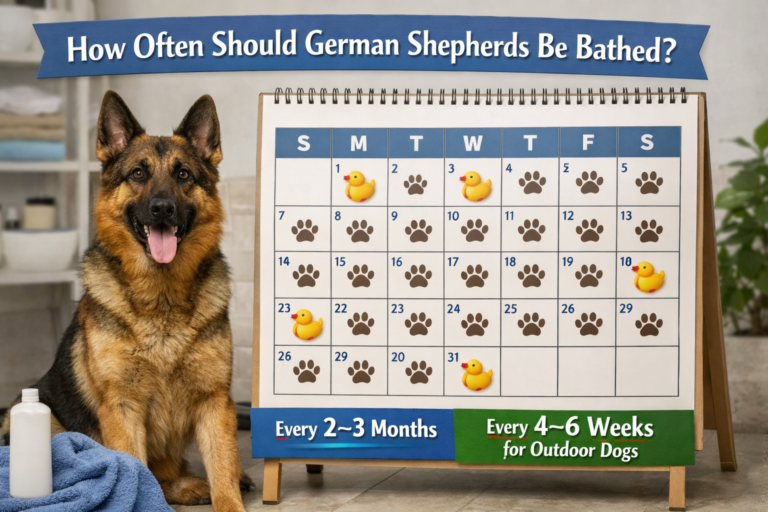
- Bathe once every 4 to 6 weeks
- Always dry thoroughly (especially neck, belly, underarms)
- Use a mild, dog-specific shampoo for sensitive skin
A damp undercoat is one of the fastest ways to create bad smells.
Skin Infections and Allergies (Top Cause of Bad Smell)
Skin problems are the number one reason German Shepherds smell bad.
Signs of a Skin Infection:
- Strong musty or sour odor
- Constant scratching or licking
- Red, darkened, or thickened skin
- Patchy hair loss
Common Triggers:
- Food sensitivities
- Pollen, dust, or grass allergies
- Low-quality dog food
What Actually Helps:
- Vet-recommended medicated shampoos
- Identifying food triggers through diet trials
- Omega-3 supplements for skin health
If symptoms last more than 7 days, professional treatment is necessary.
Also Read: What Are German Shepherds Allergic To?
Ear Infections and Bad Smells:
German Shepherd ears can trap moisture, especially after swimming or bathing.
Warning Signs:
- Yeasty or foul ear smell
- Head shaking
- Redness or discharge
Prevention Tips:
- Clean ears once a week with a vet-approved solution
- Never insert cotton swabs deep into the ear
- Dry ears carefully after water exposure
Persistent ear odor should never be ignored.
Dental Problems and Bad Breath:
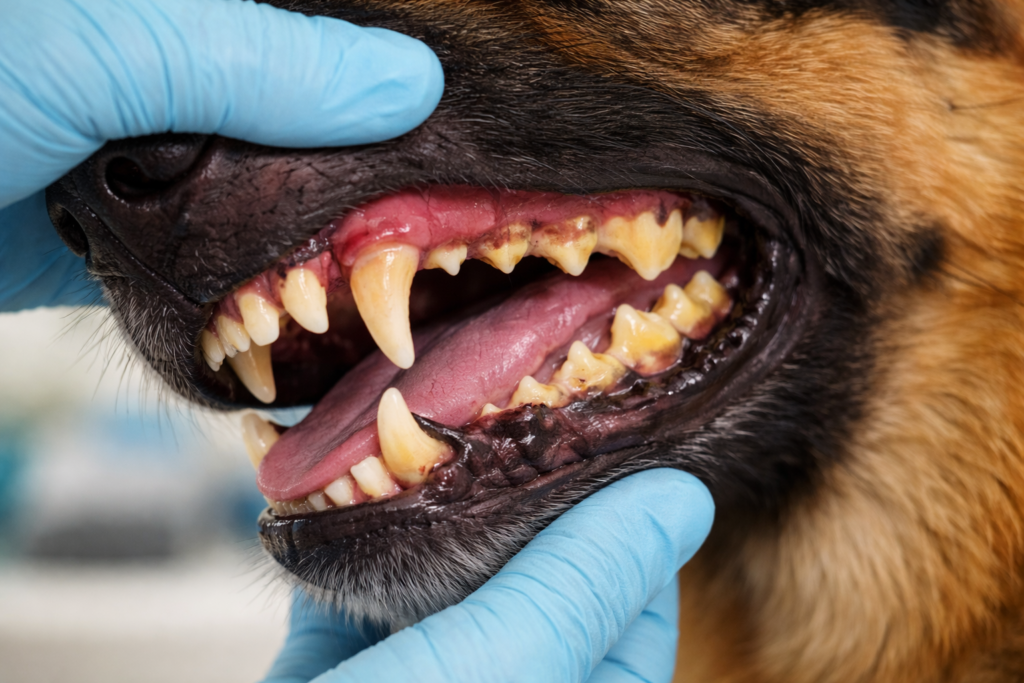
Bad breath is not normal, especially in adult German Shepherds.
Common Causes:
- Tartar buildup
- Gum disease
- Infected teeth
Simple Fixes:
- Brush teeth 3 to 4 times per week
- Use vet-approved dental chews
- Schedule professional cleanings when needed
Good oral care alone can eliminate a major source of odor.
Anal Gland Issues (Fishy Smell)
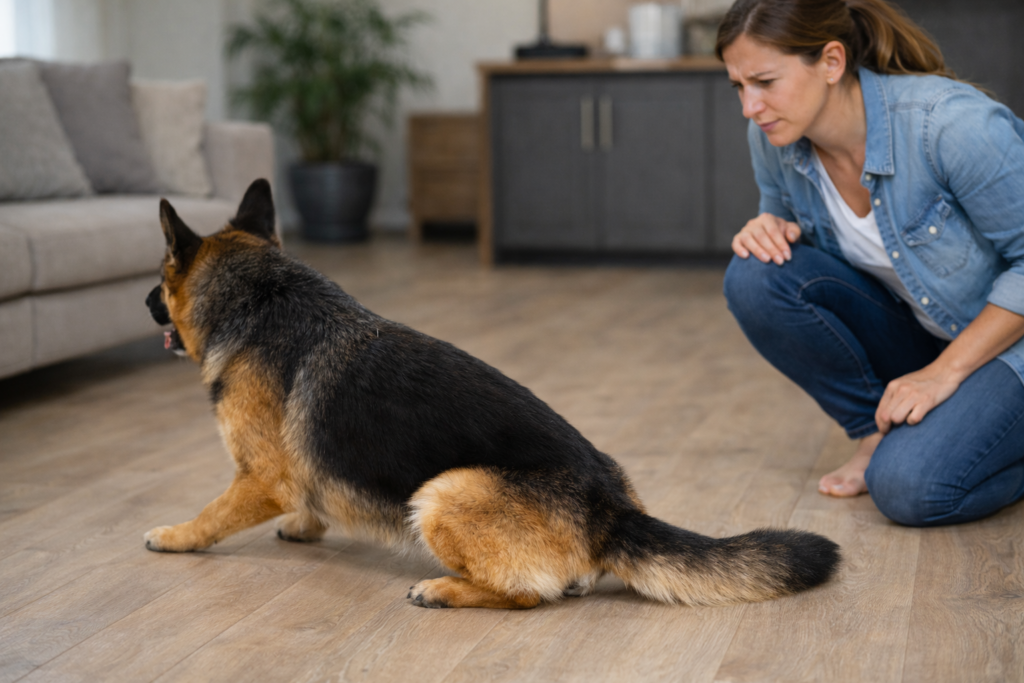
A sudden fishy smell almost always points to anal glands.
Signs:
- Scooting on the floor
- Licking the rear
- Strong odor after sitting
Prevention:
- High-fiber diet
- Healthy stool consistency
- Vet or groomer’s expression when needed
Do not attempt to express the gland yourself unless properly trained.
Diet and Digestive Health:
Low-quality food often causes skin inflammation, gas, and body odor.
What to Look For:
- Real animal protein as the first ingredient
- Added omega-3 fatty acids
- Minimal fillers
Helpful Supplements:
- Fish oil
- Probiotics for gut and skin balance
Many owners notice an improvement in odor within 4 to 6 weeks of switching to a better diet.
Also Read: Can German Shepherds Eat Blueberries?
Environmental and Seasonal Factors:
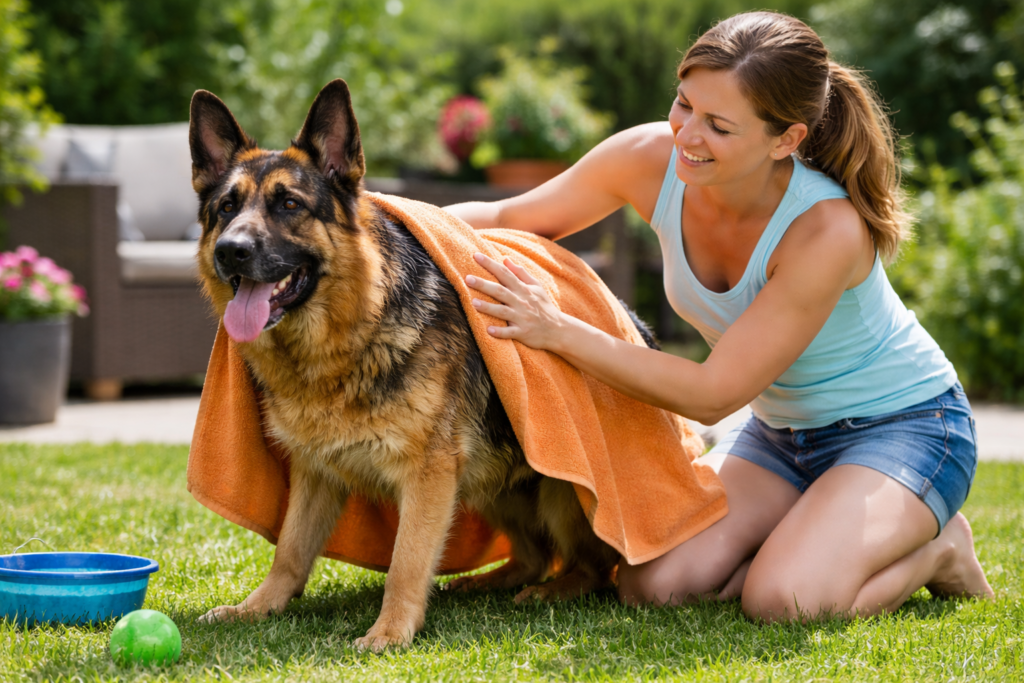
Bad smells often worsen in summer due to heat and humidity.
Simple Prevention Tips:
- Rinse paws and belly after walks
- Use breathable bedding
- Keep indoor air well-ventilated
- Always dry your dog after outdoor activity
Small habits make a big difference.
When a Bad Smell Signals a Health Problem:
Unusual or sweet odors may indicate underlying health issues, such as diabetes or hormonal imbalances.
See a vet immediately if odor is paired with:
- Sudden weight changes
- Lethargy
- Increased thirst or urination
Also Read: Do German Shepherds Get Sick Easily?
FAQ’s:
Why does my German Shepherd smell bad even after a bath?
Bathing alone does not fix skin infections, ear problems, dental disease, or diet-related issues.
What does a yeast infection smell like on a German Shepherd?
It has a musty or cheesy odor and often causes itching, redness, and greasy skin.
Can diet cause my German Shepherd to smell bad?
Yes, poor-quality food can trigger digestive and skin issues, leading to strong body odor.
Why do my German Shepherd’s ears smell bad?
Moisture and yeast buildup often lead to ear infections with strong odors.
Why does my German Shepherd smell worse in summer?
Heat and humidity increase bacterial and yeast growth in the thick double coat.
Conclusion:
If you are wondering why your German Shepherd smells so bad, the cause is usually linked to skin infections, ear problems, poor diet, or grooming mistakes, not the breed itself. By identifying the source early and following proper care routines, you can eliminate unpleasant odors and keep your German Shepherd clean, healthy, and comfortable year-round.