Do German Shepherds Have Sensitive Stomachs? (Feeding Guide)
Yes, German Shepherds often have sensitive stomachs compared to many other breeds. Their genetics, fast digestion, and higher risk of conditions like EPI make them prone to diarrhea, gas, and food intolerance. With a proper diet and gradual changes in food, most digestive issues can be managed effectively.
In this guide, you will learn why stomach sensitivity happens and how to manage it properly to keep your dog healthy and comfortable.
Why German Shepherds Have Sensitive Stomachs?
If your German Shepherd frequently has loose stool, gas, or sudden diarrhea, you are not alone. This breed is well known for having a sensitive digestive system. Many owners feel confused because their dog looks active and healthy, but still struggles with stomach problems.
Breed Genetics and Large Breed Digestive Sensitivity:
German Shepherds are large, high-energy working dogs. Large breeds process food differently from small dogs. Their digestive tract moves food faster, which can sometimes reduce nutrient absorption. When food moves too quickly through the intestines, stool may become soft or inconsistent.
Genetics also plays a major role. Certain bloodlines have a higher risk of digestive disorders such as Exocrine Pancreatic Insufficiency (EPI). In this condition, the pancreas does not produce enough digestive enzymes. Without proper enzymes, food cannot break down fully, leading to:
- Poor weight gain
- Large stool volume
- Greasy or pale stool
- Excessive hunger
Veterinarians often see EPI more commonly in German Shepherds compared to many other breeds. Early testing makes a major difference in recovery.
Genetics plays a major role in digestive sensitivity, just like how some German Shepherds are prone to hip problems. Read more about Do German Shepherds Have Hip Problems?
The Role of the Canine Gut Microbiome:
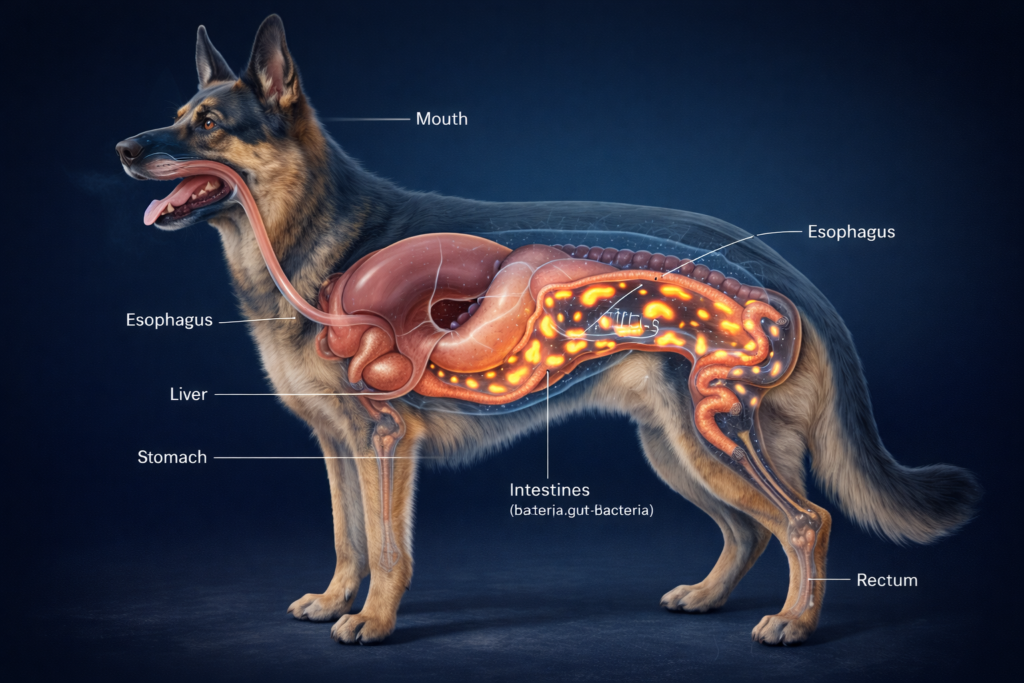
Inside your dog’s intestines lives a complex community of bacteria known as the gut microbiome. These beneficial bacteria help digest food, produce vitamins, and support immune function.
When this balance is disturbed, digestive upset begins.
Common triggers include:
- Sudden food changes
- Antibiotics
- Chronic stress
- Low-quality dog food
- Parasites
An unhealthy microbiome can lead to diarrhea, gas, stomach gurgling, and inconsistent stool texture.
Supporting gut health with prebiotics, probiotics, and highly digestible protein can improve stool quality and restore balance over time.
Supporting your German Shepherd’s gut microbiome is key to preventing digestive problems. Discover how expert veterinarians explain gut health in German Shepherds and learn proven strategies to improve digestion.
Working Breed Metabolism and Nutrient Absorption:
German Shepherds burn energy quickly. Their working-breed metabolism demands high-quality protein and balanced fat levels.
If you feed low-grade fillers such as excessive corn, soy, or unnamed meat by-products, digestion may suffer. Poor digestibility leads to bloating, loose stool, and gas buildup.
Many sensitive German Shepherds respond better to:
- Salmon
- Lamb
- Turkey
- Hydrolyzed protein formulas
Highly digestible ingredients reduce gastrointestinal stress and improve nutrient absorption.
Common Digestive Problems in German Shepherds:
Recognizing symptoms early prevents chronic gut inflammation and long-term complications.
Food intolerance or allergy may cause chronic diarrhea. Discover what allergens commonly affect German Shepherds in What Are German Shepherds Allergic To?.
Food Intolerance vs Food Allergy:
Food intolerance affects digestion only. It does not involve the immune system. Symptoms usually include:
- Loose stool
- Gas
- Mild diarrhea
Food allergies, on the other hand, trigger the immune system. Along with digestive upset, you may see:
- Itchy skin
- Ear infections
- Paw licking
- Redness or hot spots
If your dog has only stomach issues, intolerance is more likely. If skin problems appear, too, allergy testing may help.
Chronic Diarrhea and Loose Stool:
Occasional soft stool is common. But diarrhea lasting more than a few days needs attention.
Chronic diarrhea can cause:
- Dehydration
- Electrolyte imbalance
- Vitamin deficiencies
- Weight loss
Track stool consistency daily. If it remains soft for more than 1 week, consult your veterinarian for testing.
Vomiting, Gas, and Bloating:
Vomiting after eating too fast can happen occasionally. Frequent vomiting is not normal.
Excessive gas and bloating often signal poor digestion or food sensitivity.
However, severe bloating with a hard abdomen, restlessness, or collapse may indicate a life-threatening emergency such as gastric dilatation. Immediate veterinary care is critical in that situation.
Exocrine Pancreatic Insufficiency EPI:
German Shepherds are one of the breeds most commonly affected by EPI.
Warning signs include:
- Weight loss despite a strong appetite
- Greasy, pale stool
- Large stool volume
- Poor muscle condition
- Increased hunger
A simple blood test can confirm the condition. Treatment involves lifelong pancreatic enzyme supplementation. With proper management, many dogs regain healthy weight and live normal lives.
Inflammatory Bowel Disease in Dogs:
Inflammatory Bowel Disease (IBD) causes chronic inflammation of the digestive tract.
Symptoms include:
- Persistent diarrhea
- Vomiting
- Weight loss
- Reduced appetite
Diagnosis may require blood work, stool testing, and sometimes a biopsy. Treatment usually includes prescription diets and anti-inflammatory medication. Early management greatly improves quality of life.
Signs Your German Shepherd Has a Sensitive Stomach:
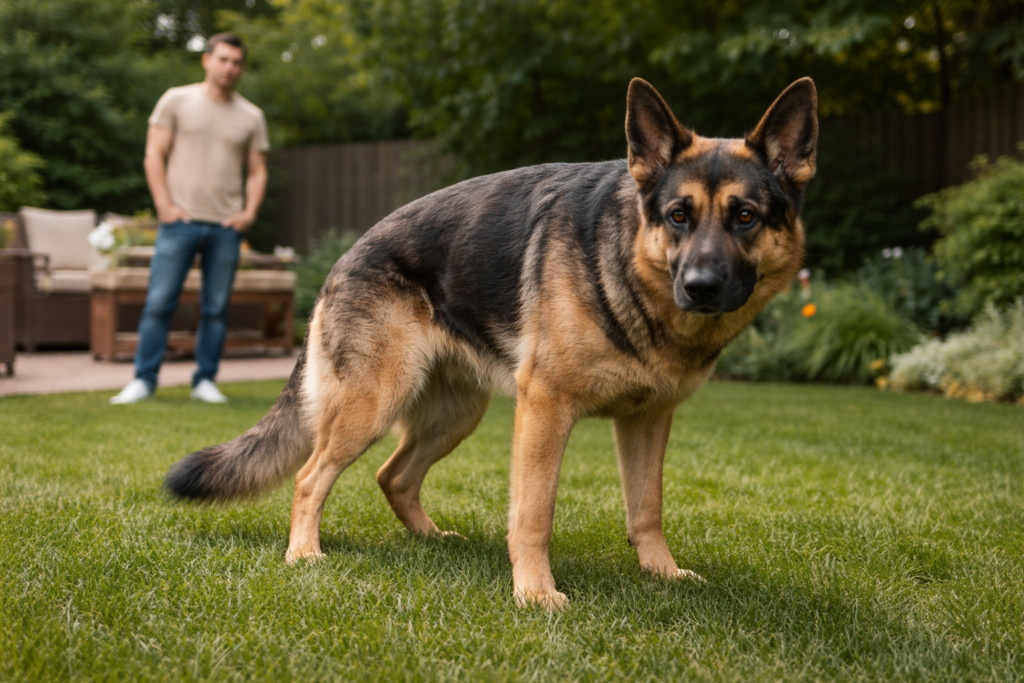
Subtle changes often appear before severe symptoms develop.
Soft Stool but Active Behavior
If your dog remains playful and energetic but passes soft stool regularly, mild food intolerance is common. Review ingredient lists and recent diet changes.
Mucus in Stool or Frequent Bowel Movements
Mucus signals intestinal irritation. Frequent bathroom trips also suggest gastrointestinal tract inflammation.
Stomach Gurgling and Excessive Gas
Loud stomach sounds and persistent gas often result from poor digestibility or abrupt food transitions.
Weight Loss and Malabsorption Warning Signs:
If your dog eats normally but continues losing weight, malabsorption may be occurring. This can weaken immunity and reduce muscle mass over time.
When Symptoms Become an Emergency
Seek urgent veterinary care if you notice:
- Blood in stool
- Continuous vomiting
- Severe dehydration
- Weakness or collapse
- Distended hard abdomen
Delaying treatment can become life-threatening.
What Causes Stomach Sensitivity in German Shepherds?
Identifying the trigger prevents unnecessary food switching.
Low Quality Ingredients and Fillers:
Cheap fillers reduce digestibility. Look for whole, named meat as the first ingredient. Avoid vague terms like “meat meal” without specification.
Chicken and Common Protein Allergies:
Chicken is one of the most common dog food proteins. Some German Shepherds develop intolerance to it.
If diarrhea continues, try a novel protein such as salmon or lamb for six to eight weeks before judging results.
Sudden Food Changes:
Switching food too quickly shocks the digestive system. Always transition gradually over seven days to protect gut bacteria.
Parasites and Infections:
Worms, Giardia, and bacterial infections frequently cause diarrhea. A stool test can quickly rule out these causes.
Pancreatitis and Gastritis:
High-fat meals may trigger pancreatitis. Symptoms include vomiting, abdominal pain, and lethargy.
Gastritis involves inflammation of the stomach lining and may result from spoiled food, toxins, or chronic irritation.
Both conditions require veterinary evaluation.
Best Food for German Shepherds With Sensitive Stomachs:
Digestibility matters more than marketing labels.
Limited Ingredient Dog Food:
Fewer ingredients reduce the chance of reactions. Choose a single protein source with simple carbohydrates like rice or sweet potato.
Hydrolyzed Protein and Novel Protein Diets:
Hydrolyzed protein breaks into smaller particles that are less likely to trigger immune responses. Veterinarians often recommend this diet for severe allergies or chronic inflammatory conditions.
Salmon vs Lamb vs Chicken Comparison:
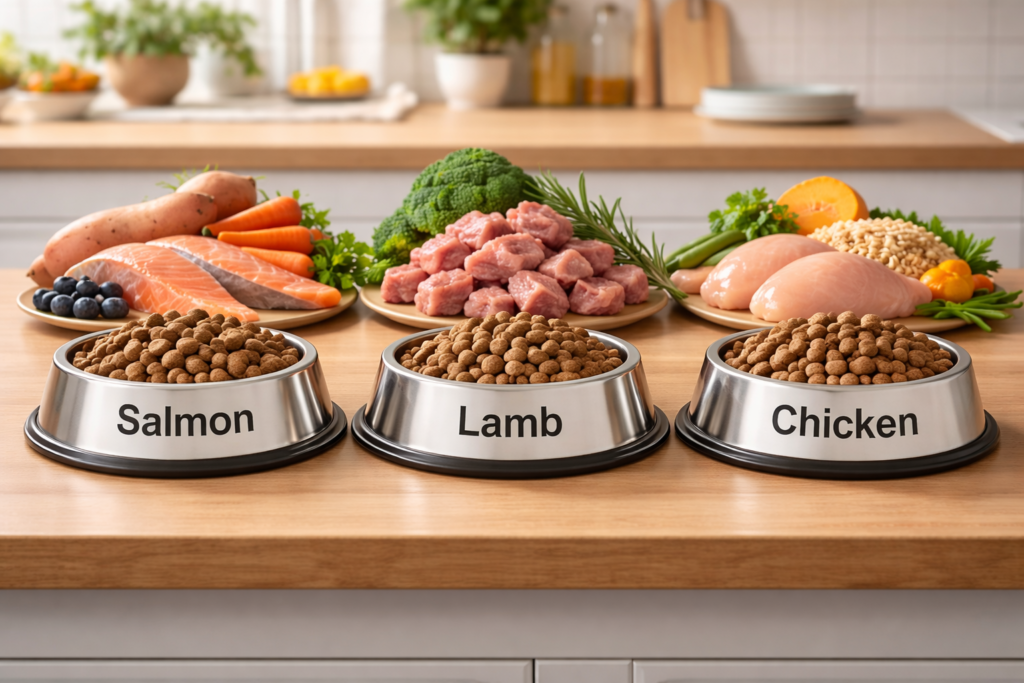
Salmon provides omega-3 fatty acids that support gut lining health and reduce inflammation.
Lamb works well for dogs sensitive to common proteins.
Chicken suits many dogs but may trigger intolerance in some genetic lines.
Grain Free vs Grain Inclusive Diets:
Grain-free diets are not automatically better. Many German Shepherds digest rice or oats very well. Monitor stool quality rather than following trends.
Choosing highly digestible meals is key for sensitive stomachs. Check our guide on What Is Good Dog Food For German Shepherds? for more options.
Prescription Diet vs Over the Counter Food:
Prescription diets offer strict ingredient control and clinical testing. They cost more but can be life-changing in cases of IBD or EPI.
Ingredients to Look For and Ingredients to Avoid:
Easily Digestible Protein Sources:
Choose clearly named proteins such as salmon, lamb, turkey, or whitefish.
Prebiotics, Probiotics, and Digestive Enzymes:
Prebiotics feed beneficial gut bacteria. Probiotics introduce helpful strains. Digestive enzymes improve nutrient breakdown, especially in enzyme-deficient dogs.
Artificial Preservatives and Meat By-Products:
Some artificial preservatives may irritate sensitive digestive systems. Natural preservation methods are generally safer.
Corn, Wheat, and Soy Fillers:
Some dogs tolerate grains well. Others develop loose stool. Monitor individual responses rather than assuming all grains are harmful.
How Much to Feed a German Shepherd With a Sensitive Stomach?
Overfeeding increases digestive stress and stool inconsistency.
Feeding Amount by Weight Chart:
Follow the feeding guide on your dog food label and adjust based on activity level, body condition, and age.
Portion Control for Large Breed Dogs:
Divide daily food into two or three smaller meals. Smaller portions reduce stomach overload and improve digestion.
Puppy vs Adult vs Senior Feeding Differences:
Puppies need higher calories and protein for growth. Adults require balanced maintenance nutrition. Seniors benefit from moderate calories and easier-to-digest formulas.
How to Switch Dog Food Without Causing Diarrhea?
7 Day Transition Feeding Plan:
| Day | Old Food | New Food |
| Day 1 to 2 | 75% | 25% |
| Day 3 to 4 | 50% | 50% |
| Day 5 to 6 | 25% | 75% |
| Day 7 | 0% | 100% |
Signs the New Food Is Not Working:
Stop and consult your vet if you notice:
- Severe diarrhea
- Persistent vomiting
- Itching or skin flare-ups
- Sudden lethargy
Elimination Diet Trial Guide:
Use only one protein and one carbohydrate source. Feed this strictly for eight weeks. Avoid treats, flavored medications, or table scraps during the trial period.
Consistency determines accurate results.
Natural Remedies and Digestive Support:
Pumpkin for Dog Diarrhea:
Plain canned pumpkin provides soluble fiber that helps firm loose stool. Use small portions mixed into regular meals.
Probiotics and Gut Health Supplements:
Veterinarian-approved probiotic strains can improve stool consistency and reduce gas in many sensitive dogs when used consistently.
Hydration and Electrolyte Support:
Fresh water must always be available. Dehydration worsens digestive stress and slows recovery.
Prevention Tips for Long-Term Gut Health:
Feeding Schedule Consistency:
Feed at the same times daily. Routine stabilizes digestion and reduces stress on the gastrointestinal tract.
Immune and Digestive Support Strategy:
Annual veterinary checkups and stool testing catch early digestive problems before they become chronic.
Avoiding Overfeeding and Table Scraps:
Human food often contains excess fat, spices, or dairy that irritate sensitive stomachs.
When to See a Veterinarian:
Severe Dehydration Signs:
Dry gums, sunken eyes, and weakness require immediate care.
Blood in Stool:
Blood may signal infection, parasites, or intestinal injury.
Persistent Vomiting:
Repeated vomiting quickly leads to dehydration and electrolyte imbalance.
Sudden Weight Loss:
Unexpected weight loss always requires medical testing.
FAQ’s:
Why Does My German Shepherd Have Diarrhea but Acts Normal?
Mild food intolerance or rapid diet changes often cause this. Review recent food adjustments first.
Can Chicken Cause Diarrhea in German Shepherds?
Yes, some individuals develop chicken protein intolerance. Switching to a novel protein for six to eight weeks often clarifies the issue.
What Is the Best Protein for a Sensitive Stomach?
Salmon and lamb are well tolerated by many sensitive German Shepherds. Always monitor stool consistency during trials.
Is Grain-Free Better for German Shepherds?
Not necessarily. Some dogs digest grains without issues. Choose what your dog tolerates best.
How Long Does Food Sensitivity Last?
Food sensitivity continues as long as the triggering ingredient remains in the diet. Once removed, improvement typically appears within two to eight weeks.
Conclusion:
German Shepherds often develop a sensitive stomach due to genetics, fast metabolism, and gut microbiome imbalance. With the right diet, gradual food transitions, and early symptom monitoring, most digestive issues can be managed successfully. Understanding why German Shepherds have sensitive stomachs helps you prevent long-term problems and keep your dog healthy and active.