Can German Shepherds Have Blue Eyes? (Everything You Need to Know)
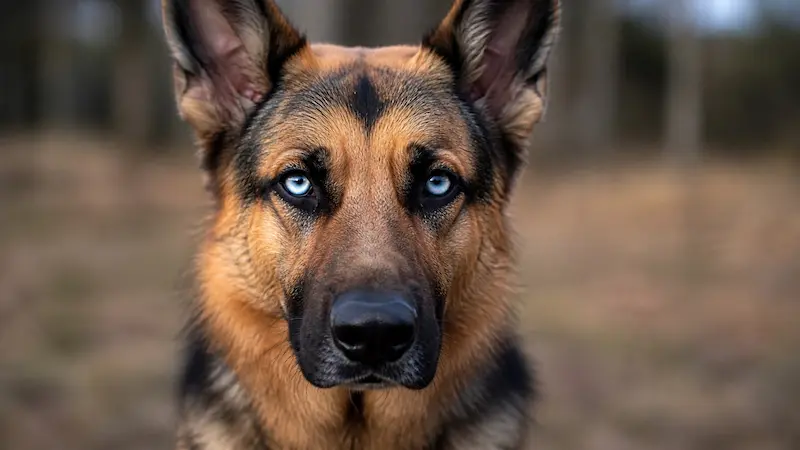
Yes, German Shepherds can have blue eyes, but it is very rare. Most German Shepherds naturally have brown eyes, while blue eyes are usually linked to rare genetics, coat dilution, mixed breeding, or temporary puppy eye color changes during early growth stages.
In this guide, you will learn whether German Shepherds can truly have blue eyes, what causes it, and if the condition affects their health or behavior.
Can German Shepherds Naturally Have Blue Eyes?
Yes, German Shepherds can naturally have blue eyes, although it is extremely rare in purebred bloodlines.
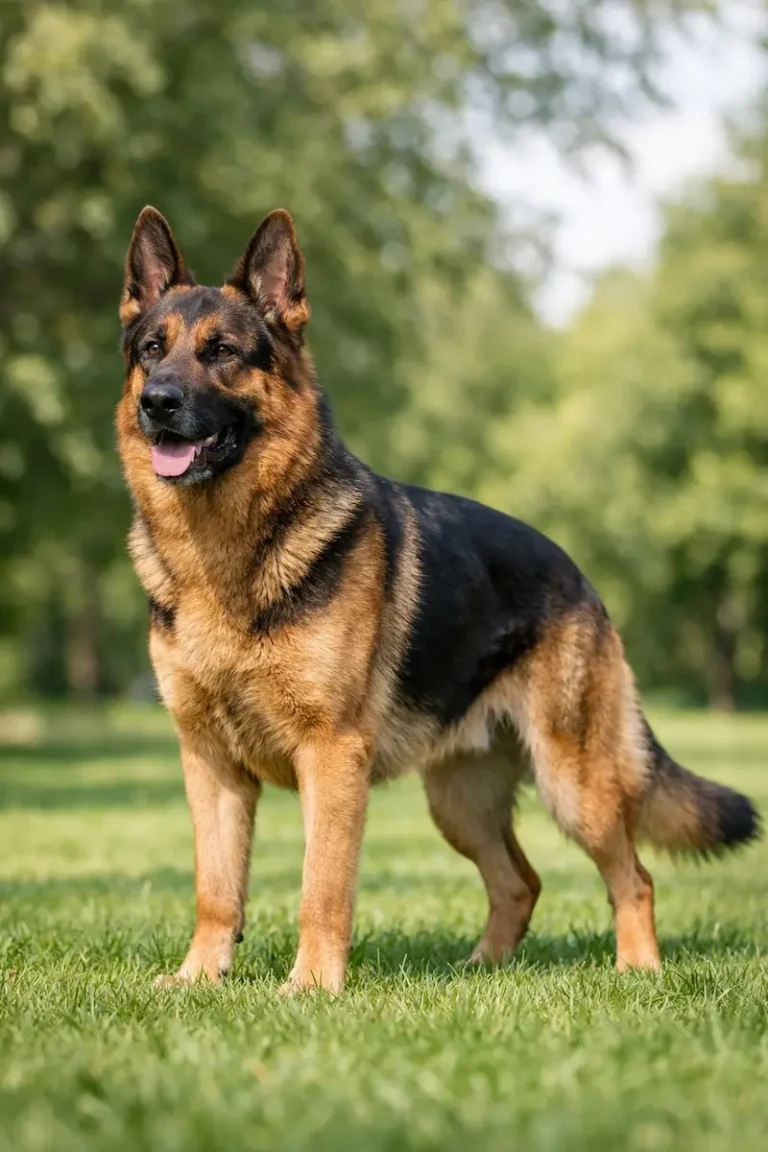
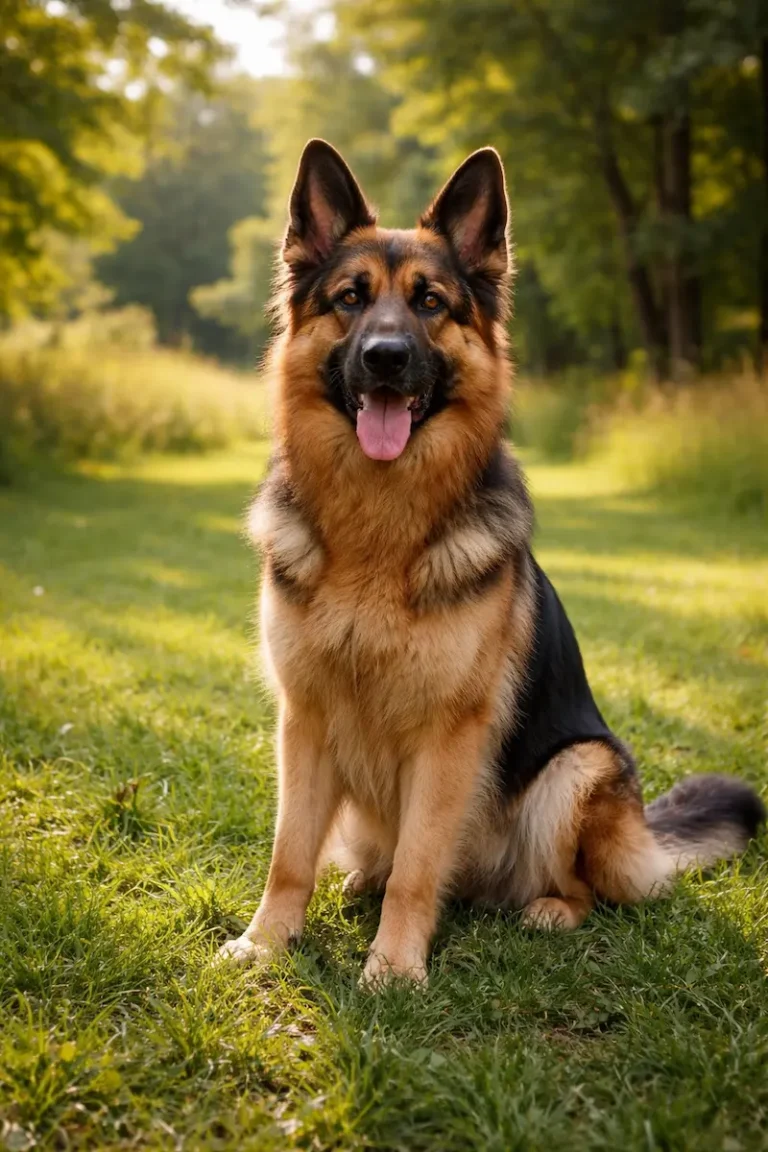
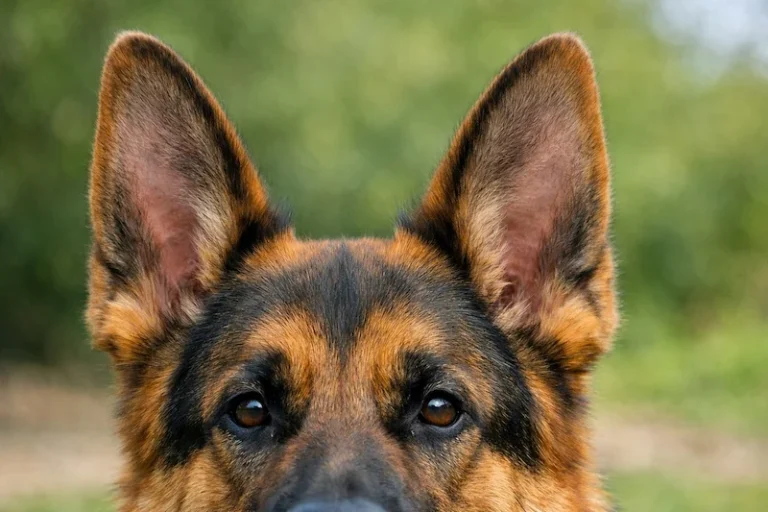
Traditionally, German Shepherds are expected to have dark brown eyes. Most kennel clubs prefer darker eye colors because they match the breed’s classic appearance and expression. That is one reason blue eyes stand out so much when they appear.
Even so, nature does not always follow breed standards perfectly. Rare genetic changes can occasionally produce blue eyes in an otherwise purebred German Shepherd.
A dog with blue eyes is not automatically unhealthy, less intelligent, or poorly behaved. In many cases, the unusual eye color is simply a cosmetic difference.
According to the American Kennel Club German Shepherd breed standard, darker eyes are traditionally preferred in purebred bloodlines.
Are Blue Eyes Common in German Shepherds?
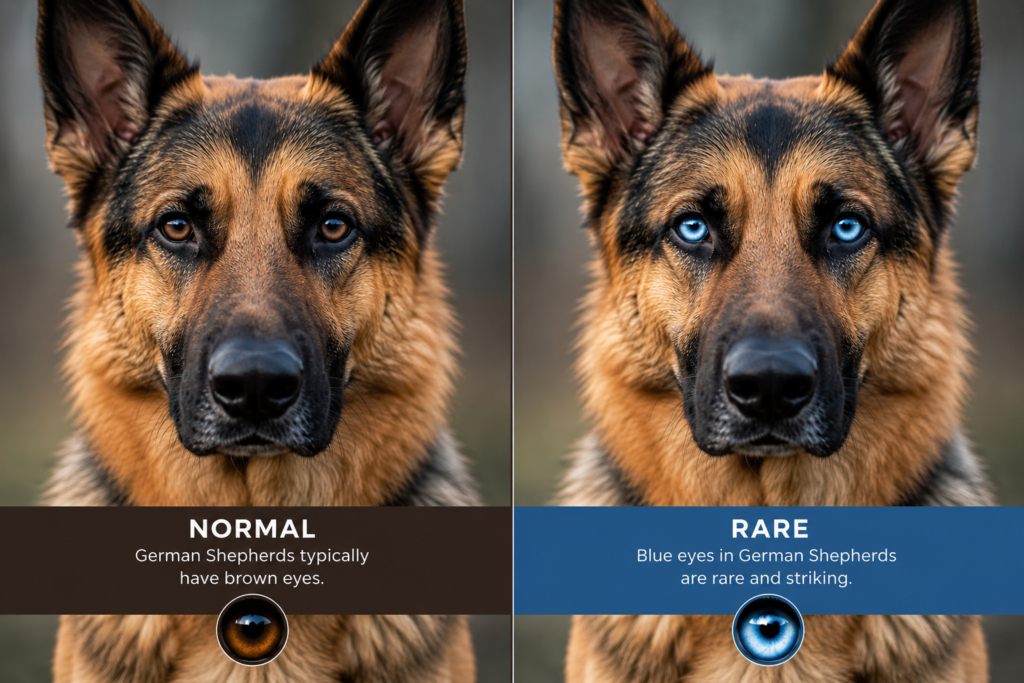
No, blue eyes are very uncommon in German Shepherds.
Most German Shepherds naturally develop:
- Dark brown eyes
- Medium brown eyes
- Amber or honey-colored eyes in rare situations
Bright blue eyes are unusual because the breed does not commonly carry the genes responsible for strong blue pigmentation.
When people see a blue-eyed German Shepherd, the dog may be:
- A rare purebred genetic variation
- A mixed breed
- A dog carrying dilution genes
- A young puppy whose eye color has not changed yet
Because blue eyes are rare in the breed, they often attract attention quickly. Many owners say strangers regularly stop to ask if their dog is part Husky.
What Causes Blue Eyes in German Shepherds?
Blue eyes develop when there is less melanin in the iris. Melanin is the pigment that affects eye, coat, and skin color.
With lower pigment levels, light scatters differently inside the eye, which creates a blue appearance.
Several genetic factors may cause this in German Shepherds.
Genetic Mutations:
In rare cases, German Shepherds inherit genetic mutations that affect pigment production. These changes can lead to:
- One blue eye
- Partial blue coloring
- Completely blue eyes
This is uncommon in traditional bloodlines, but it can happen naturally.
Dilution Genes:
Certain dilution genes may also influence eye color.
German Shepherds with unusual coat colors such as:
- Blue coats
- Liver coats
- Isabella coats
sometimes develop lighter eyes than standard dogs.
Their eyes may appear:
- Gray-blue
- Ice-blue
- Pale amber
- Light gray
The exact shade depends on genetics and pigment levels.
Can German Shepherd Puppies Have Blue Eyes?

Yes, many German Shepherd puppies are born with bluish eyes during the first few weeks of life.
This is completely normal and usually temporary.
Young puppies have lower melanin levels in their eyes, so the eyes can appear cloudy blue or gray at first.
Puppy development changes fast. You may also notice ear changes during the same growth stage. At what age do German Shepherd Ears Stand Up
When Do Puppy Eyes Change Color?
Most German Shepherd puppies begin developing their permanent eye color between:
- 8 weeks
- 16 weeks
As melanin increases, the eyes gradually darken into brown, amber, or hazel shades.
Some puppies keep lighter eyes permanently, but true blue adult eyes are still considered rare.
Owners often notice the eye color changing little by little each week during puppy growth.
Signs the Blue Eyes Are Permanent:
A German Shepherd puppy may keep blue eyes permanently if:
- The blue color remains after 4 months
- The puppy carries dilution genes
- The dog has mixed breeding
- A rare pigment mutation is present
Permanent blue eyes usually become clearer and brighter as the puppy matures.
Are Blue-Eyed German Shepherds Purebred?
This is one of the most debated topics among dog owners and breeders.
Some people believe a blue-eyed German Shepherd must be mixed with another breed, but that is not always true.
Can Purebred German Shepherds Have Blue Eyes?
Yes, purebred German Shepherds can occasionally have blue eyes because of rare genetic traits or mutations.
However, many blue-eyed German Shepherds seen online are actually mixed breeds.
Common mixes include:
- German Shepherd Husky mix
- German Shepherd Border Collie mix
- German Shepherd Australian Shepherd mix
These breeds naturally carry blue-eyed genes more often, which increases the chance of blue-eyed puppies.
A responsible breeder should always provide proper pedigree records and health testing if they claim the dog is purebred.
Do Blue Eyes Affect a German Shepherd’s Health?
Blue eyes alone do not automatically mean a German Shepherd is unhealthy.
Many blue-eyed dogs live long, healthy, and active lives.
However, some genes associated with unusual pigmentation may slightly increase the risk of inherited health problems.
The real concern is not the eye color itself but the genetics connected to it.
Wondering how long a healthy German Shepherd usually lives? Here is the full lifespan guide. What is the Life Expectancy of a German Shepherd?
Possible Health Risks:
Certain inherited pigment genes may raise the risk of:
- Vision problems
- Hearing loss
- Light sensitivity
- Congenital abnormalities
These issues are more commonly linked to double merle genetics, although merle is not a standard German Shepherd trait.
This is why ethical breeding matters far more than appearance.
Common Eye Conditions to Watch For:
Blue-eyed German Shepherds should still receive regular veterinary eye exams.
Owners should monitor for:
- Cataracts
- Progressive retinal atrophy
- Corneal damage
- Chronic eye irritation
- Excessive tearing
Early treatment can help prevent more serious complications later.
Are Blue-Eyed German Shepherds Blind?
No, this is a common myth.
Blue eyes do not cause blindness.
A healthy blue-eyed German Shepherd can see just as well as a brown-eyed dog. Eye color alone does not determine vision quality.
Problems only appear if the dog inherits separate genetic disorders affecting eye development.
Types of German Shepherds That May Have Blue Eyes:
Some German Shepherd variations are more likely to develop lighter eye colors than others.
Blue German Shepherd:
A blue German Shepherd has a diluted black coat that may appear:
- Steel gray
- Smoky blue
- Charcoal colored
These dogs sometimes develop lighter eye shades that look gray, silver, or blue under certain lighting.
Panda German Shepherd:
Panda German Shepherds have unusual white markings caused by a rare genetic mutation.
Some Panda Shepherds may develop lighter or partially blue eyes, although it is still uncommon.
Their unique markings often make the eye color appear even more striking.
German Shepherd Husky Mix:
The German Shepherd Husky mix is one of the most common reasons people see blue-eyed Shepherd-type dogs.
Since Siberian Huskies naturally carry blue eyed genes, mixed puppies often inherit:
- Ice-blue eyes
- One blue eye
- Heterochromia
- Light gray eyes
These mixes are popular because they combine the Shepherd’s intelligence with the Husky’s striking appearance.
White German Shepherd:
White German Shepherds occasionally develop lighter eye pigmentation, though true bright blue eyes remain rare.
Most still have brown or amber eyes.
Can German Shepherds Have One Blue Eye?
Yes, this condition is called heterochromia.
A German Shepherd with heterochromia may have:
- One blue eye and one brown eye
- Partial blue coloring in one eye
- Mixed pigment patterns
In most cases, heterochromia is harmless and purely genetic.
Many owners actually consider it one of the most unique features a dog can have.
How Much Does a Blue-Eyed German Shepherd Cost?
Blue-eyed German Shepherds are often marketed as rare dogs, which can increase their price significantly.
Average Price Range:
A blue-eyed German Shepherd puppy may cost:
- $1,000 to $3,500+
depending on:
- Bloodline
- Coat color
- Eye color rarity
- Breeder reputation
- Health testing
Prices can be even higher if breeders advertise the puppy as rare or exclusive.
Why Are They More Expensive?
Some breeders charge higher prices because:
- Rare appearances attract buyers
- Unique eye color increases demand
- Specialty breeding programs are involved
However, appearance alone should never justify poor breeding practices.
A healthy and well-socialized dog is always more important than unusual eye color.
Red Flags When Buying a Blue-Eyed German Shepherd
Some unethical breeders focus more on appearance than health.
Avoid breeders who:
- Cannot provide health certificates
- Refuse DNA testing
- Focus only on eye color
- Sell puppies too early
- Avoid showing parent dogs
- Cannot explain the bloodline clearly
Instead, choose breeders who prioritize:
- Temperament
- Hip health
- Eye health
- Genetic testing
- Ethical breeding standards
- Proper socialization
A responsible breeder will gladly answer questions and provide medical documentation.
How to Care for a Blue-Eyed German Shepherd:
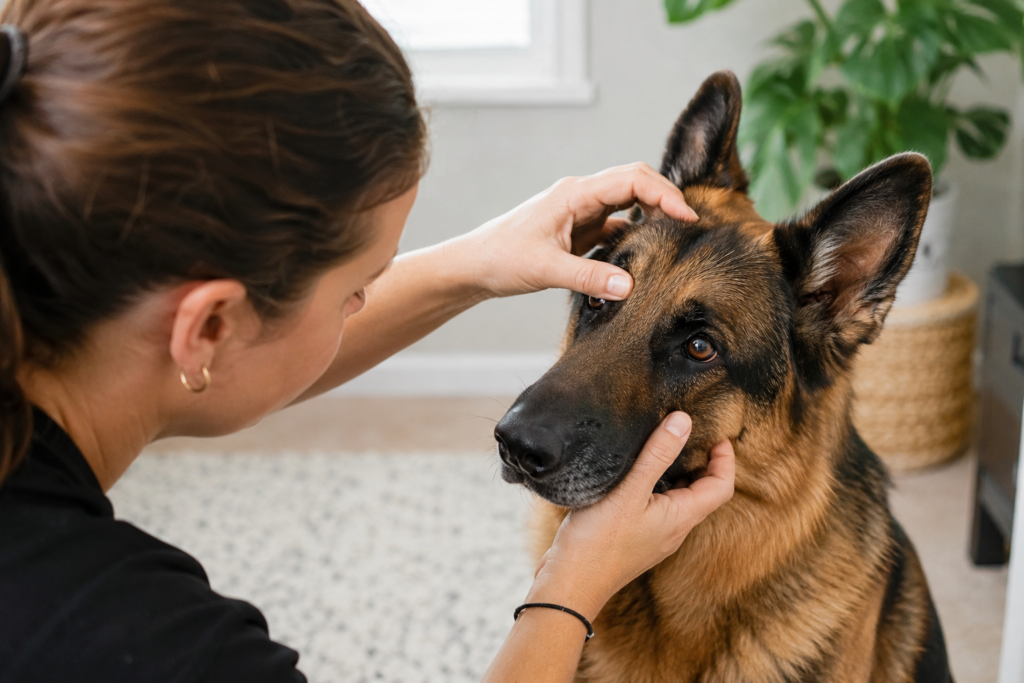
Blue-eyed German Shepherds generally need the same care as any other German Shepherd.
The breed is highly energetic, intelligent, and emotionally attached to its family.
Eye Care Tips:
To support long-term eye health:
- Clean discharge gently
- Watch for redness or irritation
- Avoid excessive sun exposure
- Schedule regular vet visits
- Prevent rough eye injuries during play
If you notice cloudiness, swelling, or constant tearing, contact a veterinarian promptly.
Nutrition for Eye Health:
A balanced diet can support healthy vision.
Helpful nutrients include:
- Omega-3 fatty acids
- Vitamin A
- Zinc
- Antioxidants
High-quality dog food combined with proper hydration helps maintain overall health.
Exercise Needs:
German Shepherds are active working dogs that need both physical and mental stimulation.
Daily activity should include:
- Walks
- Obedience training
- Structured play
- Puzzle toys
- Social interaction
Without enough activity, German Shepherds may develop:
- Anxiety
- Destructive behavior
- Excessive barking
- Weight gain
A tired Shepherd is usually a happier and calmer dog.
Without enough activity and structure, German Shepherds may also develop territorial behavior problems. Are German Shepherds Territorial?
Myths About Blue-Eyed German Shepherds:
There are many myths online about blue-eyed German Shepherds.
Some of these claims confuse dog owners and create unnecessary fear.
Blue Eyes Mean the Dog Is Blind:
False.
Blue eye color alone does not affect vision quality.
All Blue-Eyed German Shepherds Are Mixed Breeds:
False.
Although mixed breeding is common, some purebred German Shepherds can naturally develop blue eyes because of rare genetics.
Blue Eyes Change Personality:
False.
Eye color does not affect intelligence, trainability, loyalty, or temperament.
Blue-Eyed German Shepherds Are Aggressive:
There is no scientific evidence linking eye color to aggression.
Behavior is influenced far more by:
- Training
- Socialization
- Genetics
- Environment
- Owner responsibility
Blue-Eyed German Shepherd vs Brown-Eyed German Shepherd:
Appearance:
Blue-eyed German Shepherds often look more unusual and eye-catching than traditional dark-eyed dogs.
Their lighter eyes can create a more wolf-like appearance, which many owners find beautiful.
Brown-eyed German Shepherds, however, still represent the classic breed look recognized around the world.
Temperament:
There is no major temperament difference caused by eye color.
Both blue-eyed and brown-eyed German Shepherds can be:
- Loyal
- Intelligent
- Protective
- Confident
- Highly trainable
Personality depends more on breeding, environment, and training.
Health:
Health depends far more on responsible breeding practices than eye pigmentation.
Poor breeding creates bigger risks than blue eyes ever will.
Should You Get a Blue-Eyed German Shepherd?
A blue-eyed German Shepherd can make an excellent companion if:
- The dog comes from a responsible breeder
- Proper health testing has been completed
- You understand the breed’s exercise needs
- You can provide training and socialization
However, choosing a dog only because of eye color is never a good idea.
Temperament, health, confidence, and stability matter much more over the long term.
A well-bred German Shepherd with good behavior will always be more rewarding than a poorly bred dog with rare features.
FAQ’s:
Can German Shepherds naturally have blue eyes?
Yes, but it is extremely rare in purebred German Shepherds.
Are blue eyes accepted in dog shows?
Most kennel clubs consider blue eyes a breed fault for German Shepherds.
Do blue-eyed German Shepherds need special care?
Not usually, although regular eye exams are recommended.
Is a blue-eyed German Shepherd always a Husky mix?
No, some purebred German Shepherds can naturally develop blue eyes through rare genetics.
How long do blue-eyed German Shepherds live?
With proper care, they typically live around 9 to 13 years.
Conclusion:
They can, although it is rare. Blue eyes in German Shepherds are usually connected to unusual genetics, coat dilution, or mixed breeding. In most cases, the eye color itself does not affect the dog’s intelligence, loyalty, or quality of life.
What matters most is responsible breeding, proper training, and good overall health.
Whether your German Shepherd has dark brown eyes, icy blue eyes, or one of each, a well-cared-for dog can become a loyal and loving companion for many years.