Are German Shepherds good service dogs? (Ultimate Guide)
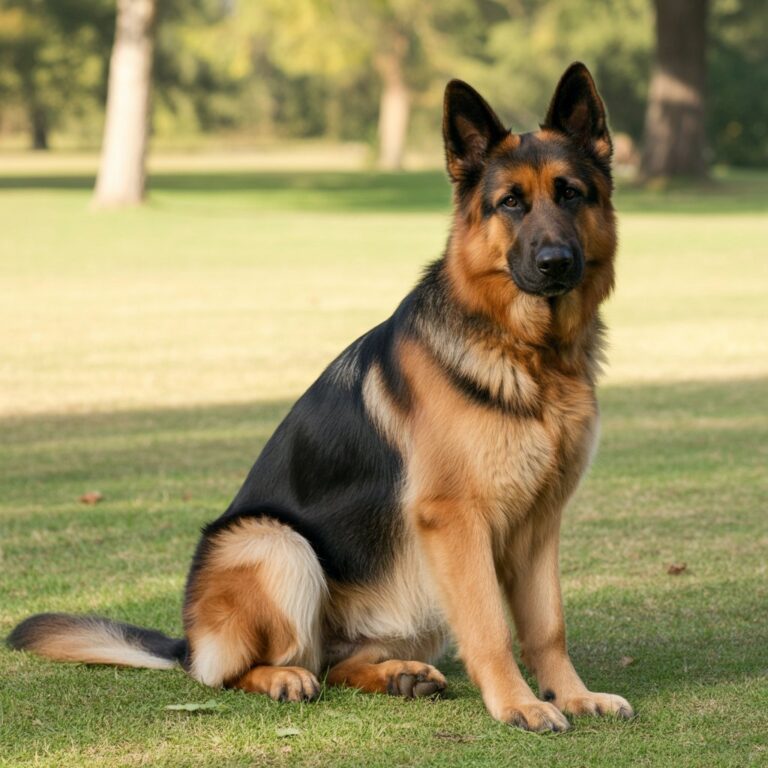
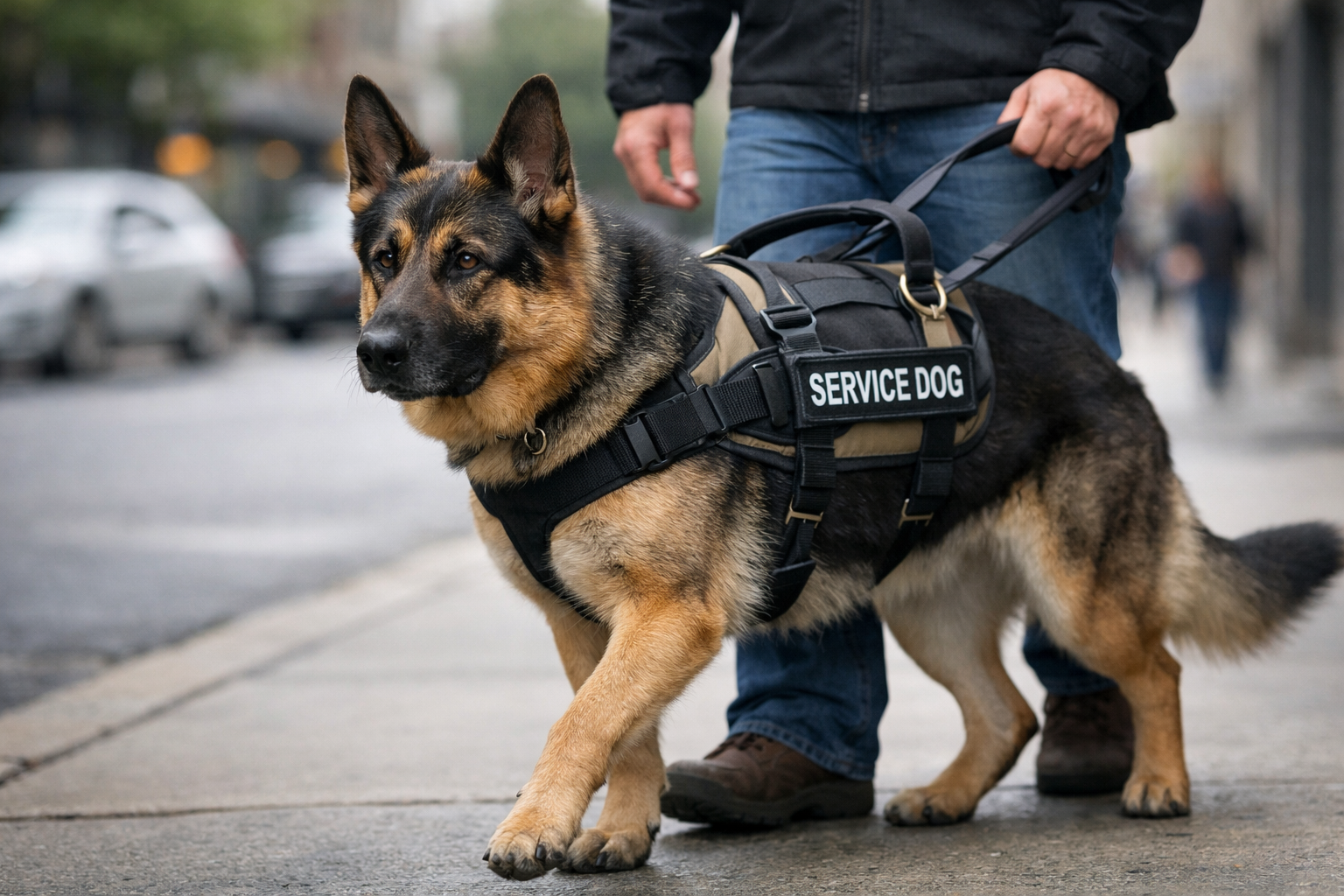
German Shepherds can be excellent service dogs. They are intelligent, loyal, highly trainable, and strong enough for mobility, guiding, and protection tasks. With proper training and socialization, they perform reliably and bond closely with handlers who need consistent assistance and support.
In this guide, we will explore their abilities, limitations, and care needs to help determine whether this powerful breed is the right service dog for a specific individual’s lifestyle and requirements.
What Legally Qualifies a Dog as a Service Dog?
A German shepherds good service dogs is legally defined as a dog trained to perform specific tasks that directly help a person with a disability. Good behavior alone does not qualify a dog as a service dog. The dog must perform trained actions that reduce or manage the handler’s physical or psychological limitations.
Service Dog Legal Definition:
A service dog must:
- Be trained to perform disability-related tasks
- Work under the handler’s control
- Remain calm in public spaces
- Assist with physical or mental limitations
Service Dog vs Emotional Support Dog:
| Type | Task Trained | Public Access |
| Service Dog | Yes | Yes |
| Emotional Support Dog | No | No |
| Therapy Dog | No | Limited |
Only service dogs have full public access rights in places such as stores, hospitals, and public transport.
You can review the official ADA service dog guidelines to understand exactly what qualifies a dog for public access rights.
Why German Shepherds Are Commonly Considered for Service Work?
German Shepherds have worked alongside humans for decades in police, military, and assistance roles. This history makes them one of the most trusted working breeds for service tasks.
Natural Working Instinct:
German Shepherds:
- Thrive with structured routines
- Stay focused on tasks
- Respond quickly to handler commands
- Prefer having a job to do
Strong Handler Bond:
They usually form a deep bond with one handler. This strong connection helps them stay attentive and responsive during service work.
Many experienced handlers prefer German Shepherds because they remain alert and task-focused throughout the day rather than acting like a casual pet.
German Shepherd Intelligence and Ability to Learn Complex Tasks:
German Shepherds rank among the most intelligent dog breeds. Their ability to learn multi-step tasks makes them suitable for advanced service roles.
Learning Speed and Memory:
They:
- Learn commands quickly
- Retain task sequences
- Adjust to new environments
- Respond well to consistent training
Problem-Solving Ability:
When properly trained, they can:
- Make controlled decisions
- Adapt to handler needs
- Perform multi-step assistance tasks
This level of learning ability is one reason they are used for mobility and psychiatric service work.
Temperament Requirements for a Reliable Service Dog:
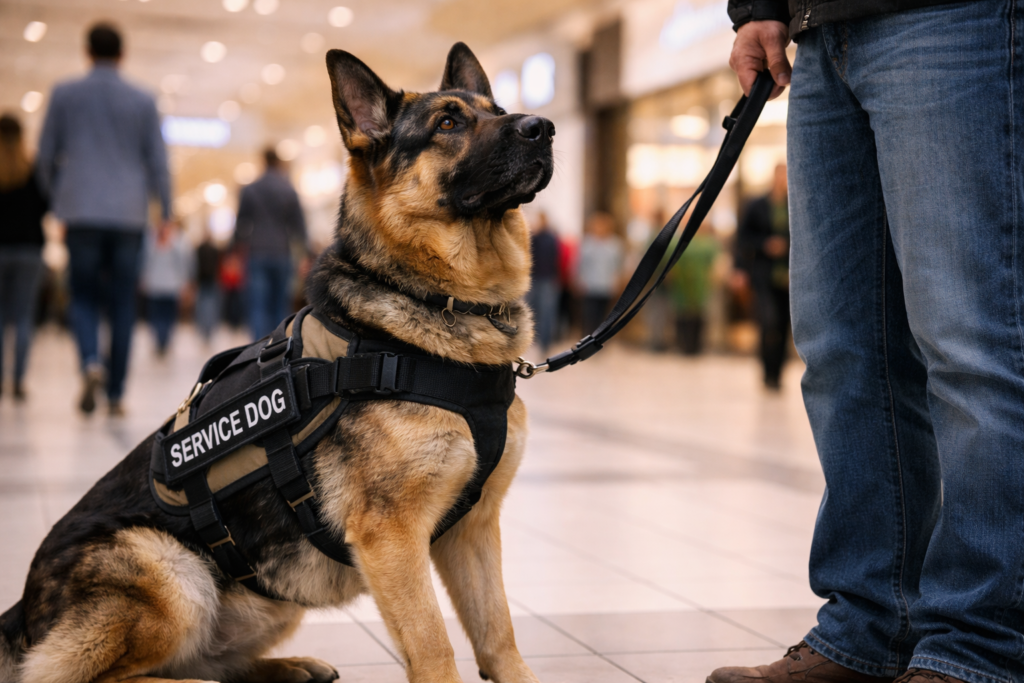
Temperament is more important than size or strength. A service dog must remain calm, predictable, and confident in busy environments.
Emotional Stability:
A suitable German Shepherd should:
- Stay calm around crowds
- Recover quickly from stress
- Ignore noise and distractions
- Show no aggression
Why Temperament Testing Matters:
Not every German Shepherd qualifies for service work. Dogs with anxiety, fear, or reactive behavior are usually not suitable. Professional temperament testing helps identify strong candidates early.
Also Read: Are German Shepherds Territorial?
Physical Strength and Mobility Assistance Capabilities:
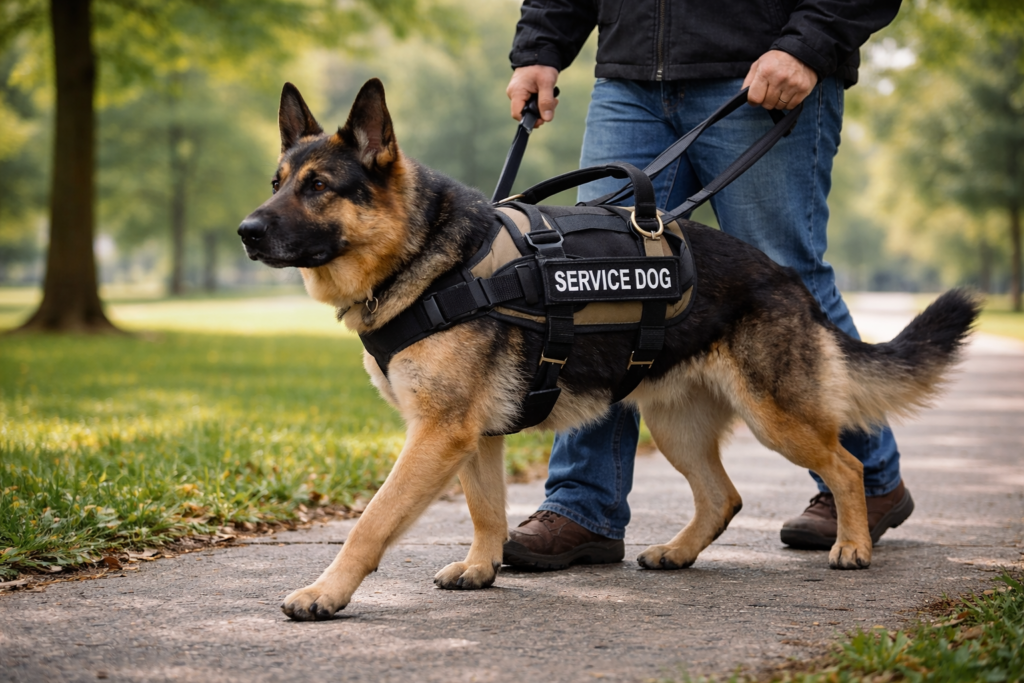
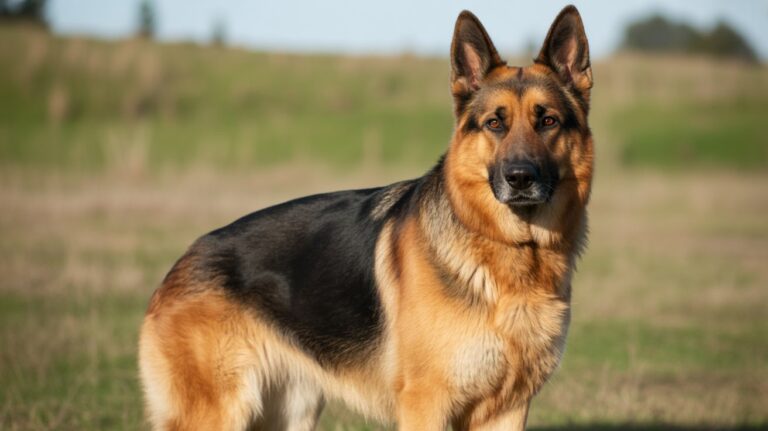
German Shepherds are physically strong and well-built, which makes them ideal for certain mobility tasks.
Mobility Support Tasks:
They can assist with:
- Balance while walking
- Retrieving dropped items
- Opening doors
- Light bracing support
| Feature | German Shepherd |
| Body Strength | High |
| Endurance | High |
| Balance Support | Suitable |
| Size for Bracing | Appropriate |
Proper harness training is essential to protect both dog and handler.
Also Read: How Much Exercise Does a German Shepherd Need?
Effectiveness in Psychiatric and PTSD Service Roles:
German Shepherds are widely used for PTSD and psychiatric support, especially for handlers who need strong physical presence and awareness.
Psychiatric Task Performance:
They can be trained to:
- Interrupt panic episodes
- Provide grounding pressure
- Create space in crowds
- Wake handlers from nightmares
Emotional Awareness:
German Shepherds are highly aware of changes in handler behavior. This awareness helps them respond quickly during stress episodes.
Medical Response vs Medical Alert Roles:
German Shepherds perform very well in medical response tasks but are less commonly used for scent-based alerts.
Medical Response Tasks:
They can:
- Fetch medication
- Activate alert systems
- Assist after an episode
Medical Alert Limitations:
While some can learn scent alerts, breeds like Labrador Retrievers are more commonly used for seizure or blood sugar detection.
Health Conditions That May Affect Service Work:
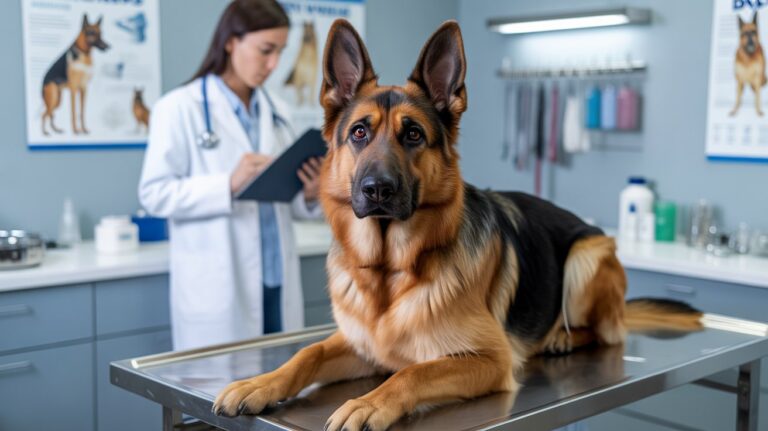
Health is a major factor in how long a service dog can work effectively.
Common Health Risks:
German Shepherds may develop:
- Hip or elbow dysplasia
- Degenerative myelopathy
- Skin or digestive issues
| Health Factor | Effect |
| Joint Problems | Reduced mobility |
| Neurological Issues | Early retirement |
| Allergies | Ongoing care |
Health-tested breeding and proper nutrition improve working longevity.
Also Read: What is the Life Expectancy of a German Shepherd?
Public Access Challenges and Breed Bias:
German Shepherds sometimes face more public scrutiny than other service breeds due to their size and reputation.
Common Misconceptions:
Some people assume:
- Large dogs are aggressive
- Working breeds are unsafe indoors
How Training Helps:
A calm, well-trained German Shepherd reduces access issues. Still, handlers may occasionally face questions in public spaces.
Training Timeline and Cost:
Training a German Shepherd service dog requires long-term commitment.
Training Timeline:
Most require:
- 18 to 24 months of training
- Daily reinforcement
- Ongoing task practice
| Training Type | Estimated Cost |
| Owner-Trained | Lower cost, high time |
| Professional Program | $15,000 to $30,000 |
Rushing training often leads to unreliable performance.
Also Read: When To Neuter a German Shepherd?
German Shepherd vs Labrador Retriever:
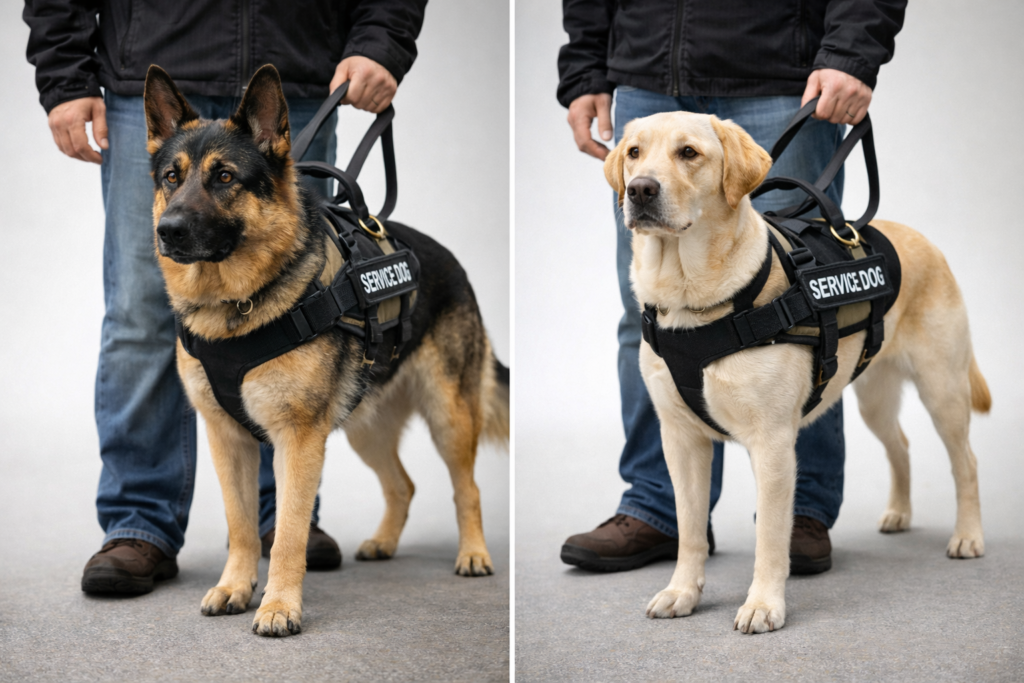
Both breeds work well, but they suit different handlers.
| Feature | German Shepherd | Labrador |
| Intelligence | Very High | High |
| Strength | High | Medium |
| Public Acceptance | Moderate | Very High |
| Health Stability | Moderate | High |
German Shepherds suit handlers needing strength and task focus. Labradors are often easier for first-time handlers.
Who Should Choose a German Shepherd Service Dog:
They are best for people who:
- Need mobility or psychiatric support
- Can maintain structured training
- Prefer a focused working dog
- Have experience with large breeds
Who Should Not Choose One:
Not ideal if you:
- Want low maintenance
- Cannot manage shedding or exercise
- Need a very long working lifespan
- Prefer a highly social dog
Choosing the wrong breed can create stress for both handler and dog.
FAQ’s:
Are German Shepherds good service dogs for anxiety?
Yes, when properly trained, German Shepherds can interrupt panic behaviors, provide grounding, and stay focused in stressful environments.
Can a German Shepherd legally be a service dog?
Yes, if the dog is task-trained to assist with a disability, it qualifies as a service dog under service animal laws.
What type of service work are German Shepherds best suited for?
German Shepherds excel in mobility assistance, PTSD support, and medical response tasks due to their strength, intelligence, and ability to focus on their handler.
How long does it take to train a German Shepherd as a service dog?
Most German Shepherd service dogs require 18 to 24 months of consistent training to reach full working reliability.
Are German Shepherds better than Labradors as service dogs?
German Shepherds offer more strength and task focus, while Labradors are generally easier to manage and face less public resistance.
Conclusion:
German Shepherds are good service dogs when matched with the right handler and proper training plan. Their intelligence, strength, and focus make them highly capable for mobility, psychiatric, and response tasks. However, health care, structured training, and realistic expectations are essential for long-term success.
For experienced handlers who want a serious working partner, a well-trained German Shepherd can be one of the most reliable and effective service dogs available.