

Will a German Shepherd Kill a Cat? (What Every Owner Should Know)
Yes, a German Shepherd can kill a cat because of its size and natural prey drive, but most do not. Early socialization, proper training, supervision, and gradual introductions greatly reduce the risk, allowing many German Shepherds and cats to live safely together.
In this guide, you’ll learn why some German Shepherds chase cats, whether they can safely live together, the warning signs to watch for, and practical steps to build a peaceful relationship between your dog and cat.
Will a German Shepherd Kill a Cat?
The honest answer is yes, it is possible, but it is not inevitable. A German Shepherd has the size and strength to seriously injure a cat if a chase turns into an attack. However, many German Shepherds never harm cats and successfully share a home with them for years.
The biggest factor is prey drive, which is the instinct to chase fast-moving animals. Some German Shepherds have a stronger prey drive than others, and a running cat can naturally trigger that instinct. This does not necessarily mean the dog is aggressive. In many cases, the dog begins by chasing, but because of the large size difference, the cat can still be seriously injured.
Several factors influence whether a German Shepherd is likely to live peacefully with a cat, including:
- Early socialization
- Obedience training
- Previous experience with cats
- Individual temperament
- The age of both animals
- Owner supervision
- Daily physical and mental exercise
German Shepherd puppies raised alongside cats often accept them as part of the family. Adult dogs that have never met cats may require much more patience, careful introductions, and ongoing supervision.
Instead of assuming every German Shepherd is dangerous around cats, it is more accurate to evaluate each dog’s behavior individually. With responsible ownership and proper training, many German Shepherds and cats develop calm, respectful relationships.
Why Do German Shepherds Chase Cats?
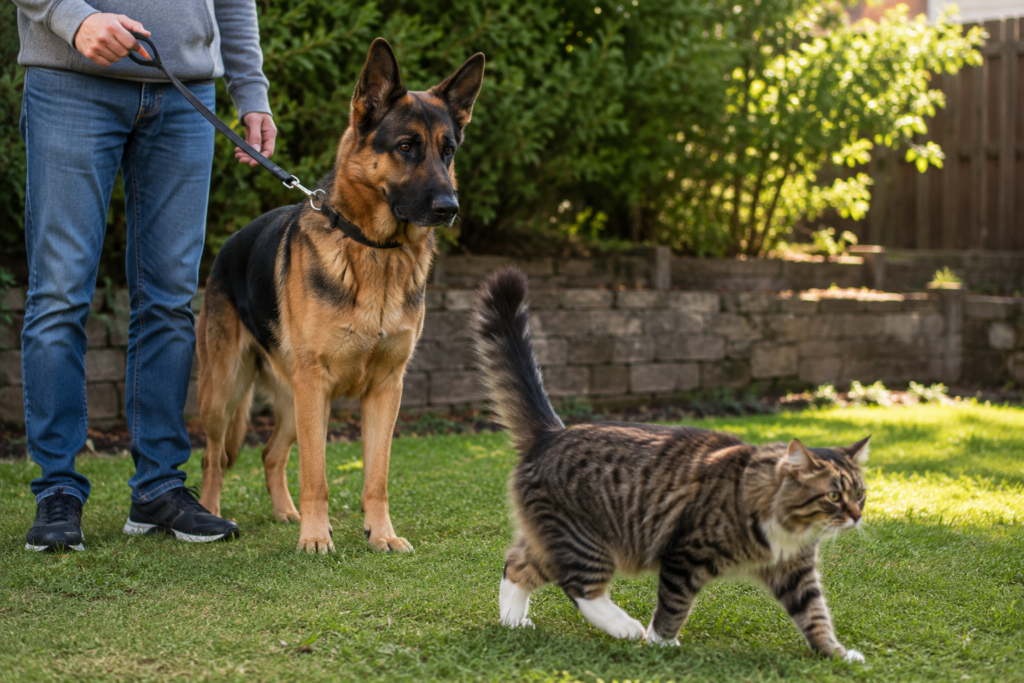
Chasing is one of the most common behaviors owners notice when introducing a German Shepherd to a cat. In most cases, the chase is driven by instinct rather than hatred or aggression.
German Shepherds were originally bred as working dogs with strong focus, intelligence, and quick reactions. Although they are best known for herding and protection work today, they still retain a natural prey drive that encourages them to notice and pursue fast-moving objects.
Cats often trigger this instinct because they:
- Run quickly when frightened
- Make sudden movements
- Climb or jump unexpectedly
- Appear much smaller than the dog
A dog may chase simply because movement activates its instincts. However, if the chase is not interrupted, the situation can become dangerous due to the significant size and strength difference between the two animals.
It is also important to remember that not every chase is aggressive. Some young German Shepherds attempt to play without realizing how intimidating or physically overwhelming they are. Even playful chasing can accidentally injure a cat, which is why early training and supervision are essential.
A well-socialized German Shepherd that has learned self-control is generally much more reliable around cats than a dog that has had little exposure to smaller animals.
According to veterinary behavior experts, prey drive is an instinct rather than aggression. Proper training and controlled introductions are the most effective ways to help dogs and cats live together safely.
You can also learn more about the German Shepherd breed’s temperament from the American Kennel Club.
Can German Shepherds Live Peacefully With Cats?
Yes, thousands of German Shepherds live safely with household cats every day.
Success depends on introducing them properly and supervising early interactions.
Dogs introduced to cats at a young age usually adapt faster, but adult German Shepherds can also learn with patience and consistent training.
Good management includes:
- Slow introductions
- Separate safe spaces for the cat
- Rewarding calm behavior
- Never forcing interactions
- Supervising until trust develops
Many owners find that their German Shepherd eventually ignores the cat completely once both animals understand each other’s boundaries.
Warning Signs a German Shepherd May Be Dangerous to a Cat

Some behaviors require immediate attention because they suggest the dog is viewing the cat as prey rather than a companion.
Watch for signs such as:
- Intense staring
- Stiff body posture
- Silent stalking
- Lunging toward the cat
- Ignoring commands when the cat appears
- Attempting to corner the cat
If you notice these behaviors, keep both animals separated and begin training before allowing more interaction.
Dogs that repeatedly fixate on cats may benefit from help from a certified professional trainer or veterinary behaviorist.
Factors That Affect the Risk
Several things influence whether a German Shepherd is likely to harm a cat.
| Factor | Risk | Why |
| Early socialization | Low | The dog learns the cat is part of the family. |
| Strong prey drive | High | Fast movement is more likely to trigger chasing. |
| Poor obedience | Higher | The dog is harder to control around distractions. |
| No supervision | High | Increases the risk of accidents or injuries. |
| Cat frequently runs away | Higher | Running can activate the dog’s chase instinct. |
No breed is completely predictable. Individual temperament matters much more than breed alone.
How to Stop a German Shepherd from Chasing or Attacking Cats
Most German Shepherds can learn to live peacefully with cats when they receive proper training and early socialization. The goal is not to eliminate prey drive completely but to teach your dog self-control and appropriate behavior around cats.
Start Socialization Early
Puppies usually adapt to cats much more easily than adult dogs. Introduce them gradually in a calm environment while rewarding relaxed behavior.
Early positive experiences help the dog see the cat as part of the family instead of something to chase.
Never Leave Them Unsupervised at First
Even if your German Shepherd seems calm, avoid leaving them alone with a cat during the first few weeks or months.
Use:
- Baby gates
- Crates
- Leashes
- Separate rooms when necessary
Supervision helps prevent accidents while trust develops.
Teach Basic Obedience Commands
Reliable obedience gives you control before problems occur.
Focus on commands like:
- Leave it
- Stay
- Come
- Place
- Watch me
These commands can interrupt chasing behavior before it escalates.
Give Your German Shepherd Enough Exercise
Many chasing problems happen because the dog has excess physical or mental energy.
A tired German Shepherd is generally calmer around other animals.
Daily exercise should include:
- Long walks
- Obedience training
- Puzzle toys
- Scent games
- Fetch
- Mental enrichment
Dogs with their energy needs met are much less likely to fixate on household cats.
Read Now: How Much Exercise Does a German Shepherd Need?
Can German Shepherds and Cats Ever Become Friends?
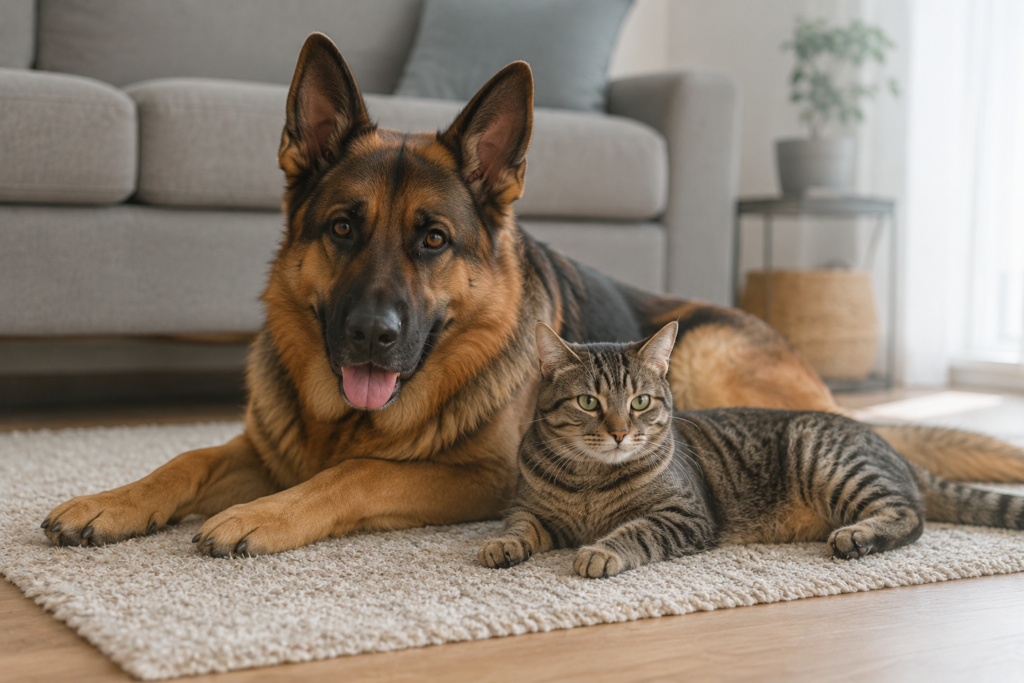
Friendship depends on several factors, including early socialization, proper introductions, consistent training, and the personalities of both animals. Some German Shepherds simply learn to ignore cats, while others eventually play, sleep, or relax beside them. Every relationship develops at its own pace.
Expert Tips for Safe Living
To help your German Shepherd and cat live together safely:
- Introduce them slowly.
- Always supervise early interactions.
- Give the cat high places to escape.
- Reward calm behavior around the cat.
- Never punish curiosity with harsh corrections.
- Exercise your German Shepherd every day.
- Feed both pets separately.
- Respect the cat’s personal space.
Consistency and patience usually produce the best long-term results.
Frequently Asked Questions
Will a German Shepherd naturally attack a cat?
No, German Shepherds do not naturally attack every cat. While they have a strong prey drive, many live peacefully with cats when they are properly socialized, trained, and introduced gradually.
Can a German Shepherd kill a house cat?
Yes, it is physically possible if a serious attack occurs, given the dog’s size and strength. However, this is uncommon in well-trained, supervised dogs that have been properly introduced to cats.
Are German Shepherd puppies safe with cats?
German Shepherd puppies usually adapt to cats much more easily than adult dogs. Early socialization helps them see cats as family members rather than prey, although supervision is still necessary.
How do I introduce my German Shepherd to my cat?
Introduce them slowly using a leash, baby gate, or other barrier. Reward calm behavior, keep sessions short, and never force interaction. Allow the cat to approach at its own pace.
Why does my German Shepherd chase my cat?
Chasing is usually caused by prey drive, excitement, lack of training, or insufficient exercise. It does not always mean your dog wants to harm the cat.
Can German Shepherds and cats live together?
Yes, Many German Shepherds and cats live together successfully for years. Early socialization, consistent training, and proper management greatly increase the chances of a peaceful relationship.
Do male German Shepherds chase cats more?
Some individuals do, but prey drive depends more on personality and training than gender.
Can older German Shepherds learn to live with cats?
Yes, Adult dogs often need more patience and slower introductions, but many successfully adapt with consistent training.
Note:
Every dog has a unique temperament. If your German Shepherd has already attacked or seriously injured a cat, seek help from a certified professional dog trainer or veterinary behaviorist before allowing further contact.
Conclusion
So, will a German Shepherd kill a cat? The answer is yes, it is possible, but it is not inevitable. Most German Shepherds do not attack cats without a reason. Their behavior depends on factors such as prey drive, early socialization, training, supervision, and the individual personalities of both animals.
If you introduce them carefully, provide consistent obedience training, and always supervise early interactions, many German Shepherds and cats can share the same home safely. Preventing problems is far easier than trying to correct aggressive behavior later. Responsible ownership, early training, and patient introductions give most German Shepherds and cats the best chance of living together peacefully.






Very quickly this website will be famous among all blog visitors, due to it’s nice articles
or reviews