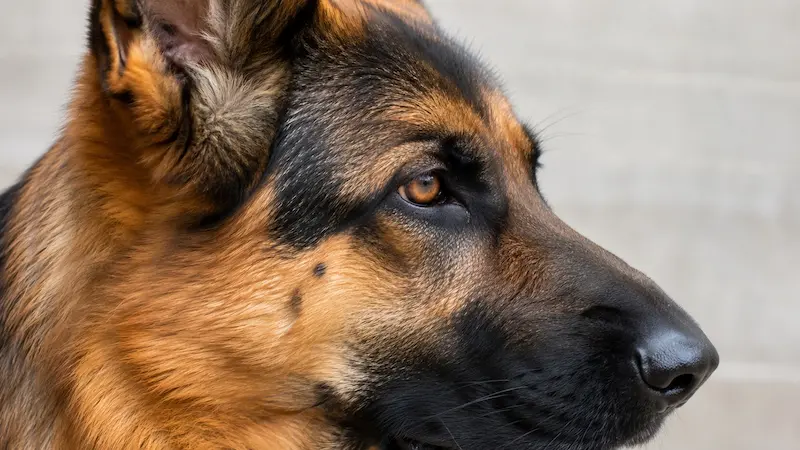
Why Do German Shepherds Have Moles? (Causes, Types & When to Worry)
German Shepherds have moles mainly due to genetics, aging, and skin pigmentation. Most are harmless growths, such as nevi or skin tags. However, if a mole changes in size, color, or starts bleeding, it may indicate a problem and should be checked by a veterinarian.
In this guide, you will learn why German Shepherds develop moles, which types are normal, and the warning signs you should never ignore.
What Are Moles on German Shepherds?
Moles in dogs, often called melanocytic nevi, are pigmented skin growths that can vary in appearance.
They may look like:
- Small dark spots
- Slightly raised bumps
- Smooth or rough patches
Unlike humans, dog moles can appear in different textures and shapes, especially under thick fur, where they often go unnoticed.
Some skin growths can be early warning signs; learn if German Shepherds are prone to cancer before ignoring them.
Where Do Moles Usually Appear?
You can find moles almost anywhere on your dog’s body, but they are more common in areas like:
- Around the lips and face
- Eyelids
- Belly and inner thighs
- Under dense fur (hard to spot without checking)
Many owners only discover them during grooming or petting.
Why Do German Shepherds Have Moles? (Main Causes)
1. Genetics:
Some German Shepherds are more prone to skin growths due to their breed traits. If your dog has multiple moles, genetics may be the main reason.
2. Aging:
Just like humans, dogs develop more skin growths as they age.
In fact, most older dogs have at least a few benign lumps or moles.
3. Sun Exposure:
Areas with less fur, like the belly or nose, can develop pigmentation changes due to UV exposure over time.
4. Hormonal Changes:
Hormonal imbalances can affect skin health and sometimes trigger new growths or changes in existing moles.
5. Skin Irritation or Friction:
Constant rubbing from collars, scratching, or minor injuries can lead to small growths forming over time.
Types of Moles and Skin Growths (Important to Know)
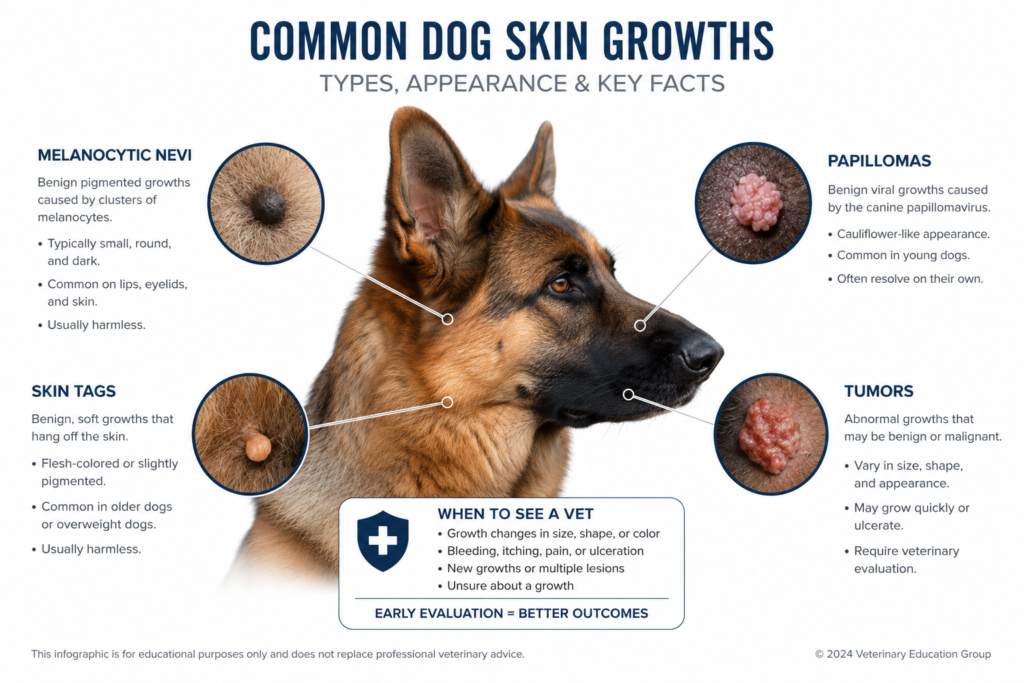
Not every bump is a mole. Here’s a quick breakdown:
Benign Moles (Melanocytic Nevi)
- Usually harmless
- Slow-growing
- Even color
Skin Tags:
- Soft and hanging
- Common in older dogs
- Typically painless
Warts (Papillomas)
- Caused by a virus
- Rough, cauliflower-like texture
- More common in younger dogs
Tumors (Benign vs Malignant)
- Lipomas: Soft, fatty, non-cancerous lumps
- Malignant tumors: Faster growth, irregular shape, need urgent attention
Studies suggest that a large percentage of dog skin lumps are benign, but proper diagnosis is still essential.
Certain tumors can be life-threatening understand hemangiosarcoma in German Shepherds, and its early signs.
Not sure if your dog’s mole is normal or not? See how experts at the American Kennel Club explain dog skin growths and lumps before making assumptions.
Are Moles Dangerous?
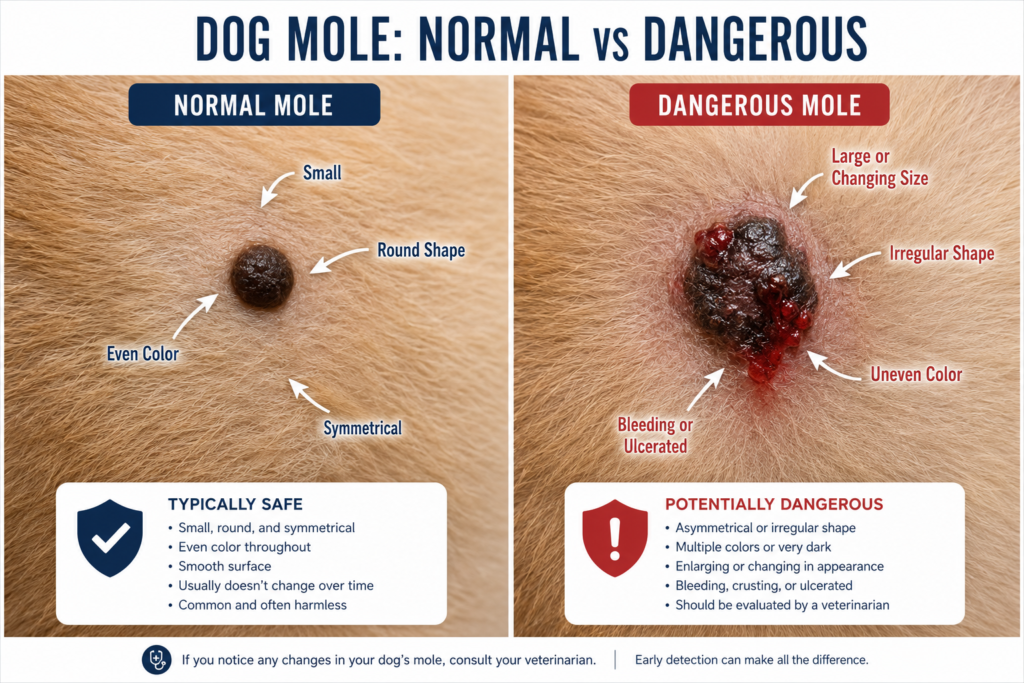
Signs of Harmless Moles:
Most moles are safe if they:
- Stay the same size
- Have a consistent color
- Don’t bleed or cause pain
Warning Signs You Should NOT Ignore:
Pay close attention to a mole:
- Grows quickly
- Changes color or shape
- Bleeds or oozes
- Causes itching or discomfort
These changes can indicate something more serious.
If your dog shows these signs, you might wonder Do German Shepherds get sick easily, or is it something serious.
When Should You See a Vet?
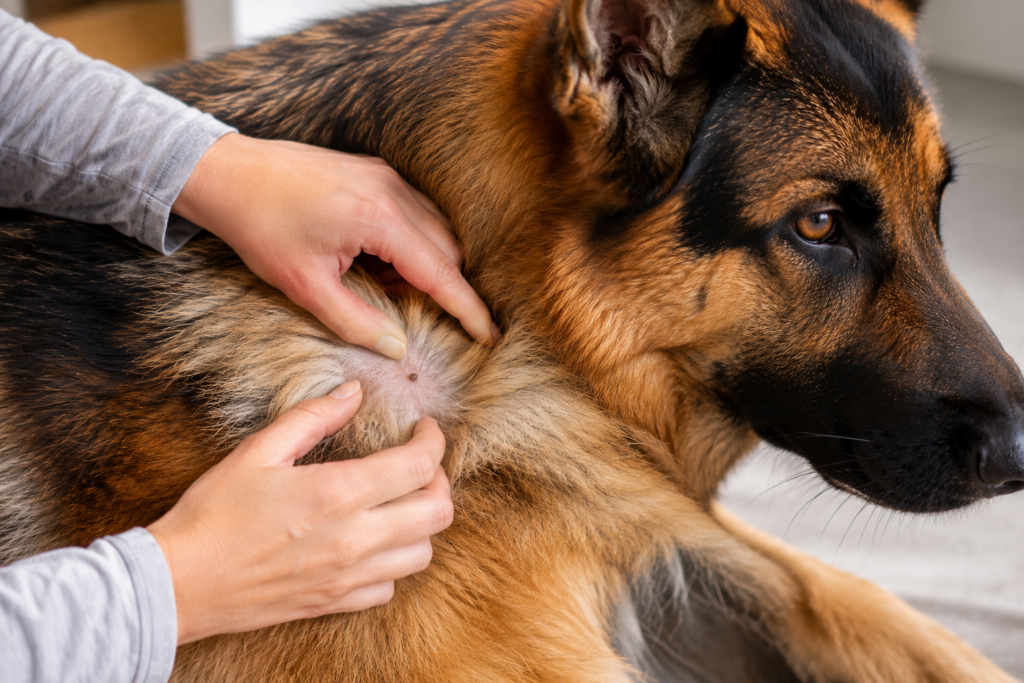
You should contact a vet immediately if you notice:
- Sudden enlargement
- Irregular or uneven borders
- Open sores or bleeding
- Pain when touched
Monthly Skin Checks:
Make it a habit to:
- Run your hands over your dog’s body
- Check hidden areas under fur
- Take photos to track changes
Early detection can make a huge difference.
How Vets Diagnose Skin Growths:
Physical Examination:
The first step is checking size, texture, and location.
Fine Needle Aspiration (FNA)
A quick test where cells are taken using a thin needle and examined.
Biopsy:
If needed, a small tissue sample is analyzed to confirm whether the growth is benign or cancerous.
Treatment Options:
1. Monitoring (No Treatment)
If the mole is harmless, vets usually recommend observation only.
2. Surgical Removal:
Removal may be needed if the growth:
- Interferes with movement
- Gets irritated frequently
- Shows suspicious changes
3. Medication or Advanced Care:
In rare cases, additional treatment may be required depending on the diagnosis.
Can You Prevent Moles?
You can’t completely prevent moles, but you can reduce risks:
Skin Care Routine:
- Regular grooming
- Keeping skin clean and dry
Sun Protection:
- Avoid excessive sun exposure
- Provide shade outdoors
Healthy Diet:
A balanced diet supports overall skin health and reduces abnormalities.
German Shepherd Skin Care Tips:
Regular Grooming:
Brushing helps you:
- Detect unusual growths early
- Maintain healthy skin
Check Hidden Areas:
Don’t forget:
- Armpits
- Belly
- Behind the ears
Use Dog-Safe Products:
Avoid harsh shampoos that can irritate the skin.
FAQ’s:
Do German Shepherds naturally have moles?
Yes, Many German Shepherds develop harmless moles due to genetics and aging.
Are moles on German Shepherds dangerous?
No, Most moles are benign, but changes in size, color, or bleeding should be checked by a vet.
Can I remove my German Shepherd’s mole at home?
No, removing moles at home can cause infection or complications. Always consult a vet.
What causes black moles on German Shepherd skin?
Black moles are usually caused by pigmentation, aging, or sun exposure, and are typically harmless unless they change.
How do I know if my German Shepherd’s mole is cancerous?
Look for rapid growth, irregular shape, bleeding, or color change; these signs require immediate veterinary evaluation.
Conclusion
Moles on German Shepherds are usually harmless and often a normal part of aging. However, staying alert to changes is essential.
By doing regular skin checks and consulting your vet when needed, you can ensure your dog stays healthy and safe.
When in doubt, always choose professional advice over guesswork.