German Shepherd vs Belgian Malinois: (Differences Explained)
German Shepherds are larger, calmer, and more family-friendly, making them easier for most owners. Belgian Malinois are lighter, highly energetic, and require intense training and activity. The best choice depends on your experience level, lifestyle, and ability to handle exercise and discipline needs.
This in-depth guide breaks down everything you need to know about the difference between German Shepherd and Belgian Malinois, helping you decide which breed truly fits your life.
Breed Origins and History:
Origin of the German Shepherd:
The German Shepherd originated in Germany in the late 19th century. It was first developed for herding sheep, but its intelligence and obedience quickly made it useful in police, military, and service work.
Origin of the Belgian Malinois:
The Belgian Malinois comes from Belgium, specifically the city of Malines. It is one of four Belgian shepherd breeds and was also used for herding. Today, it is widely used by elite military and law enforcement units for its speed and focus.
How History Shapes Their Behavior:
Because of their background:
- German Shepherds became versatile working dogs that also fit well in family life
- Belgian Malinois developed into high-drive, task-focused dogs that always need a job
This difference still affects their behavior today.
Physical Differences Between German Shepherd and Belgian Malinois:
Size and Weight Comparison:
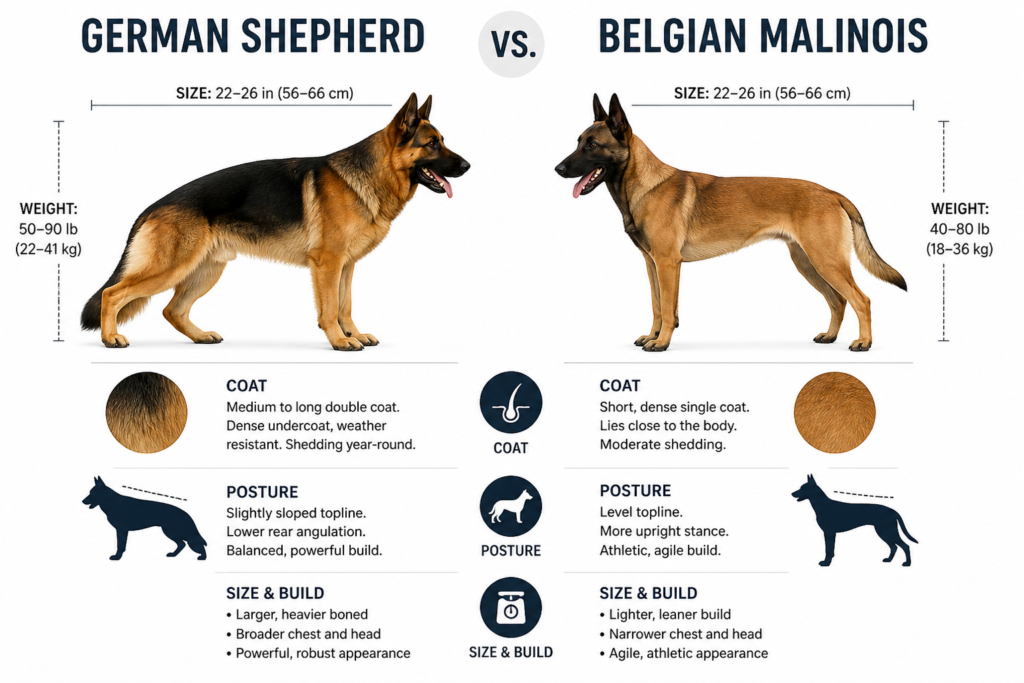
German Shepherds are generally bigger and heavier:
- Height: 22 to 26 inches
- Weight: 50 to 90 pounds
Belgian Malinois are leaner and more athletic:
- Height: 22 to 26 inches
- Weight: 40 to 80 pounds
Coat Type and Colors:
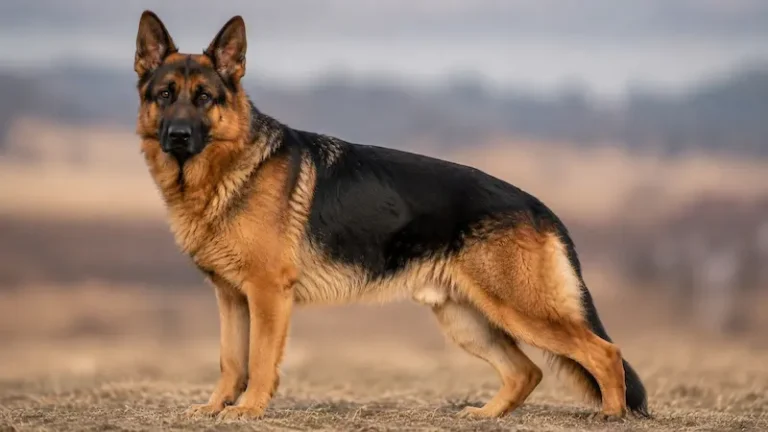
- German Shepherd: Thick double coat (black & tan, sable, all-black)
- Belgian Malinois: Short coat, usually fawn with a black mask
Body Structure and Appearance:
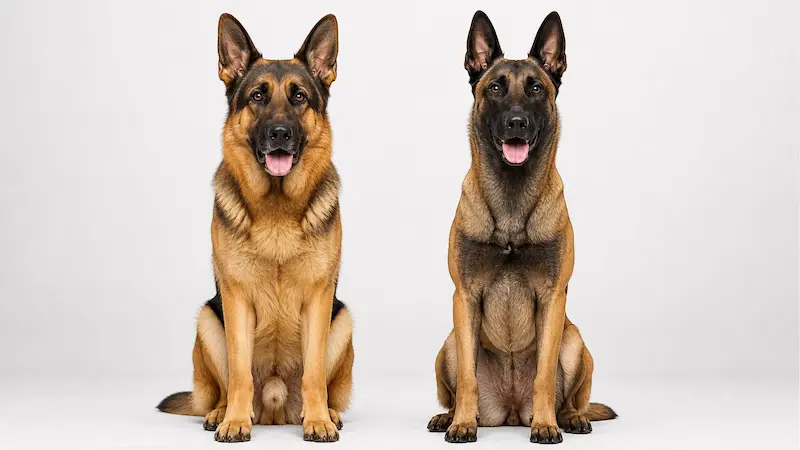
German Shepherds have a more muscular body with a slightly sloped back.
Belgian Malinois are slimmer and lighter, built for speed and agility.
In simple words, Malinois look like athletes, while German Shepherds look more powerful.
Temperament and Personality Differences:
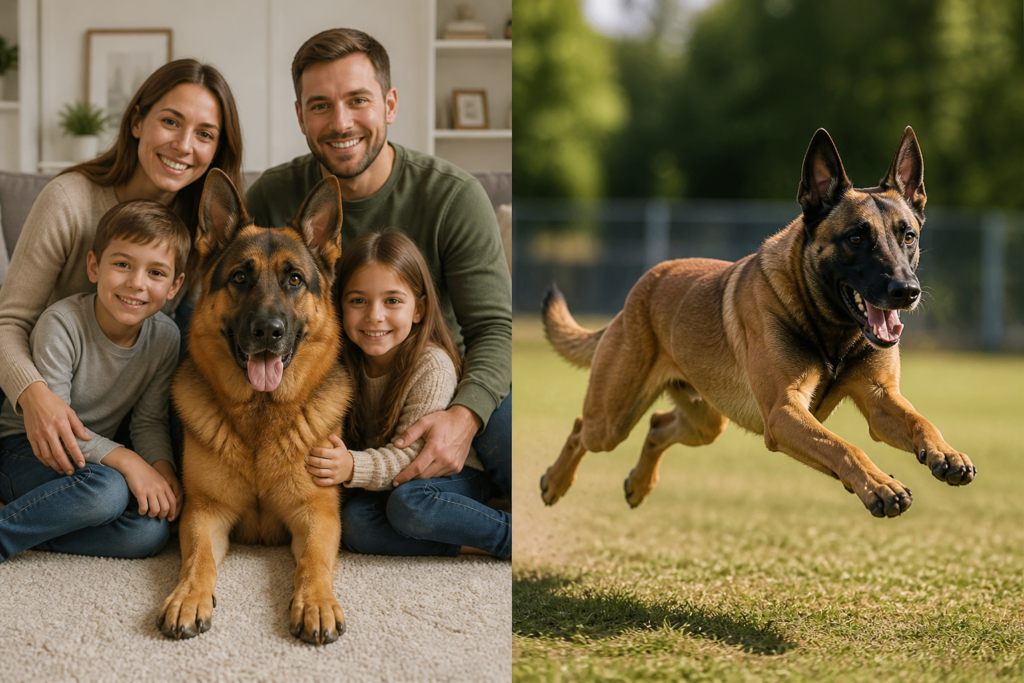
German Shepherd Temperament:
German Shepherds are known for their loyalty and balanced nature. They are protective but also calm when properly trained. Many families prefer them because they bond deeply and are usually gentle with children.
Want a deeper look at their personality traits? Must Read now: Are German Shepherds Friendly?
Belgian Malinois Temperament:
Belgian Malinois are extremely energetic and always alert. They are not just active they are intense. These dogs don’t like sitting idle and need constant mental and physical challenges.
Imagine a dog that gets bored quickly if you don’t keep it busy that is a Malinois.
Which Breed Is More Protective?
Both breeds are naturally protective:
- German Shepherd is more stable and approachable
- Belgian Malinois has a faster reaction, always on high alert
If protection is your main concern, you should also read: Will a German Shepherd Attack an Intruder?
Intelligence and Trainability
Both breeds are among the smartest dog breeds in the world.
According to the American Kennel Club, both breeds rank among the most intelligent and trainable working dogs.
Learning Ability Comparison:
- German Shepherd: Learns quickly and adapts well
- Belgian Malinois: Learns even faster but needs consistency
Ease of Training for Beginners:
- German Shepherd: Easier for first-time owners
- Belgian Malinois: Better for experienced handlers
Role in Police and Military Work:
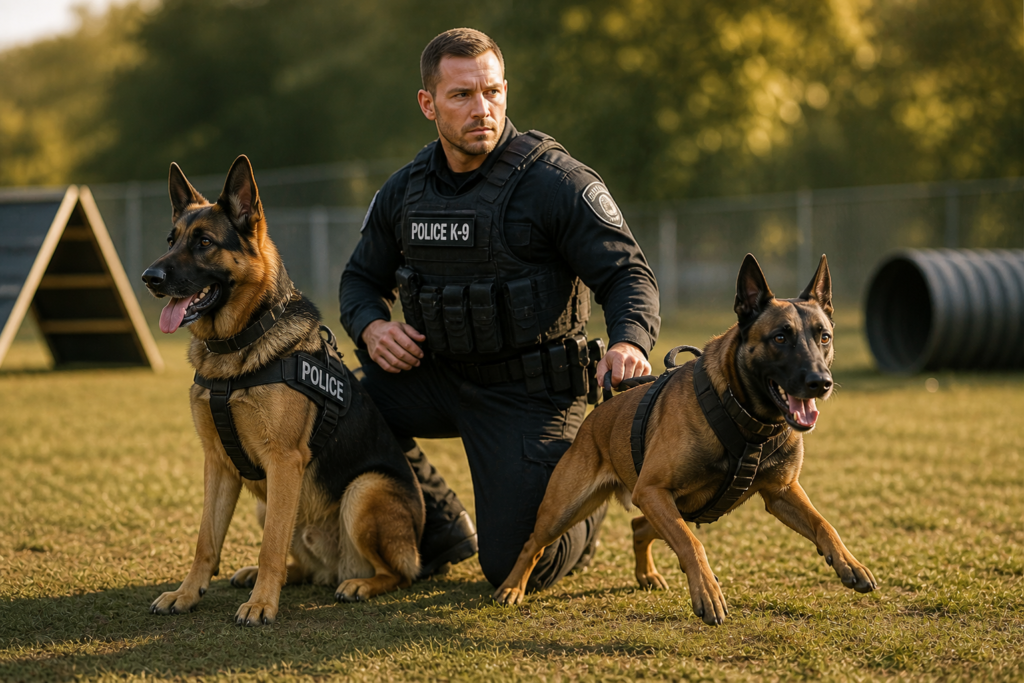
Both are widely used, but Belgian Malinois are often chosen for elite operations because they are:
- Faster
- More agile
- Highly driven
German Shepherds are still preferred in many roles because they are more versatile and easier to manage in different environments.
Exercise and Energy Levels:
Daily Exercise Needs:
- German Shepherd: Around 1 to 2 hours daily
- Belgian Malinois: 2 to 4+ hours daily
Mental Stimulation:
Both need mental activity, but Malinois require advanced training, problem-solving, and regular tasks to stay happy.
What Happens Without Exercise:
Without proper activity:
- German Shepherds may become bored or anxious
- Belgian Malinois may become destructive or overly aggressive
This is one of the biggest differences between the two breeds.
Before choosing between these two active breeds, understand their exact needs: How Much Exercise Does a German Shepherd Need?
Grooming and Maintenance:
Shedding Differences:
- German Shepherd: Heavy shedding year-round
- Belgian Malinois: Moderate shedding
Grooming Requirements:
- German Shepherd: Needs brushing 2 to 3 times per week
- Belgian Malinois: Lower maintenance
Maintenance Costs:
German Shepherds may cost slightly more due to grooming and common health issues.
Health and Lifespan:
Common Health Issues in German Shepherds:
- Hip and elbow dysplasia
- Degenerative myelopathy
Common Health Issues in Belgian Malinois:
Belgian Malinois are generally healthier but may still face hip or eye problems.
Lifespan Comparison:
- German Shepherd: 9 to 13 years
- Belgian Malinois: 12 to 14 years
Family Compatibility and Living Conditions:
Which Dog Is Better for Families?
German Shepherds are usually better for families because they are easier to handle and more patient.
Belgian Malinois can live with families, but only if they get enough training and daily activity.
Apartment vs House Living:
Neither breed is ideal for small apartments:
- German Shepherds can adapt with enough exercise
- Belgian Malinois need more space and freedom
Compatibility with Other Pets:
German Shepherds usually adjust better with other pets.
Malinois may have a stronger prey drive, so early training is important.
Cost Comparison:
Purchase Price:
- German Shepherd: Moderate to high
- Belgian Malinois: Higher for working bloodlines
Monthly Maintenance Costs:
Costs include food, vet care, and training.
Belgian Malinois may cost more due to higher activity and training needs.
Pros and Cons of Each Breed:
German Shepherd Pros:
- Loyal and protective
- Great for families
- Highly trainable
German Shepherd Cons:
- Heavy shedding
- More health issues
Belgian Malinois Pros:
- Extremely intelligent
- Very athletic
- Perfect for working roles
Belgian Malinois Cons:
- Very high energy
- Not beginner-friendly
- Needs constant stimulation
German Shepherd vs Belgian Malinois:
| Feature | German Shepherd | Belgian Malinois |
| Size | Larger | Smaller |
| Energy | High | Extremely high |
| Trainability | Easier | Advanced |
| Grooming | High | Moderate |
| Family Friendly | Yes | Sometimes |
| Best For | Families | Professionals |
Which Breed Should You Choose?
- First-time owners, the German Shepherd is the safer choice
- Highly active people, the Belgian Malinois is a better fit
- Protection work, both are excellent
- Families with kids, a German Shepherd is more suitable
The right choice depends on your lifestyle, not just the breed.
Common Myths About These Breeds:
Belgian Malinois Are Always Aggressive:
Not true, they are just more intense and energetic.
German Shepherds Are Lazy:
They are active dogs, but easier to manage than Malinois.
Both Breeds Are the Same:
They may look similar, but their needs and behavior are very different.
FAQ’s:
Is a Belgian Malinois smarter than a German Shepherd?
Both are highly intelligent, but Malinois often learn faster due to their intense focus.
Are Belgian Malinois harder to train?
Yes, because they require experienced handling and consistent training.
Which breed is better for home protection?
Both are excellent, but German Shepherds are more balanced for family environments.
Do German Shepherds bark more than Malinois?
German Shepherds tend to bark more as part of their guarding behavior.
Can a Belgian Malinois be a family dog?
Yes, but only in highly active households with proper training.
Which breed sheds more?
German Shepherds shed significantly more.
Conclusion:
The difference between a German Shepherd and a Belgian Malinois depends on your lifestyle and experience. German Shepherds are easier to manage and more family-friendly, while Belgian Malinois require high energy and commitment. Choosing the right breed ensures a better bond, proper training, and a happier life for both you and your dog.