At what age should a German Shepherd be? (Complete Guide)
A German Shepherd should be at least 18 to 24 months old before breeding. At this age, the dog is fully developed physically and mentally, reducing health risks. Breeding earlier can cause complications, while waiting ensures stronger, healthier puppies and better overall outcomes.
In this guide, you will learn the safest breeding age, proper timing, health requirements, and the responsible practices that experienced breeders follow.
Understanding German Shepherd Maturity:
Physical Maturity vs Sexual Maturity:
A lot of confusion comes from mixing up these two terms.
- Sexual maturity: When a dog can reproduce (as early as 6 to 12 months)
- Physical maturity: When the dog’s body is fully developed (around 18 to 24 months)
Just because a female can get pregnant doesn’t mean she should.
Breeding too early puts pressure on:
- developing bones
- joints
- internal organs
This is where many beginners go wrong.
If you’re unsure when full physical development is complete, read this detailed guide on What Age Is a German Shepherd Fully Grown?
Growth Timeline of a German Shepherd:
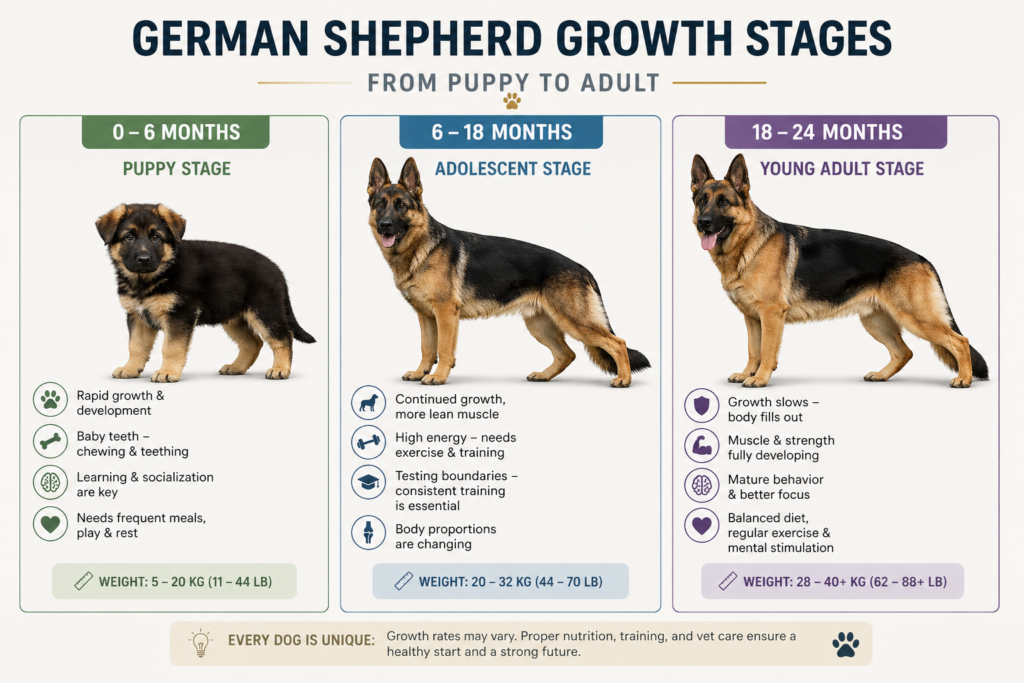
Understanding growth stages makes it clear why timing matters:
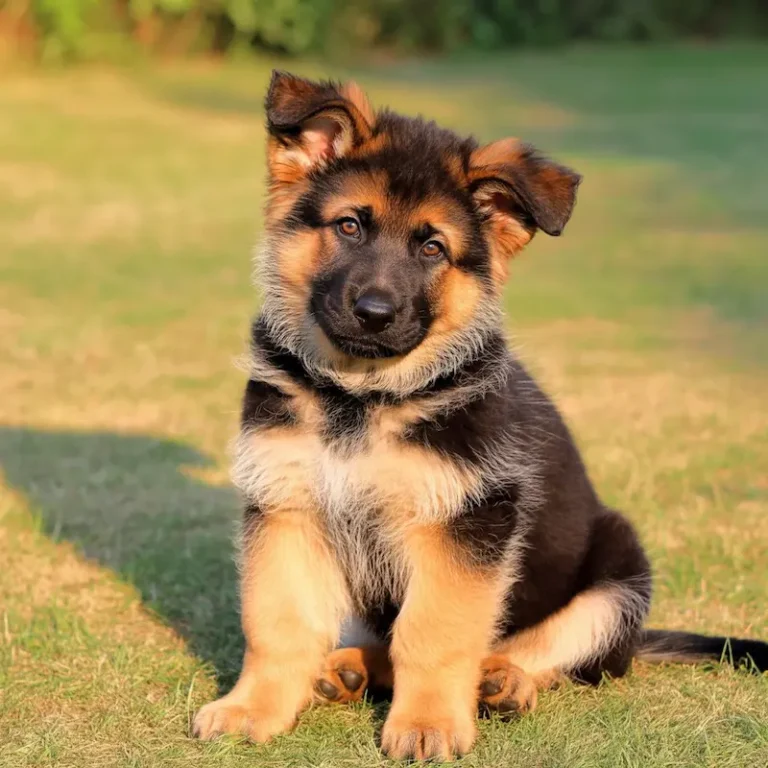
- 0 to 6 months (Puppy Stage)
Rapid growth, no breeding readiness - 6 to 18 months (Adolescence)
First heat may appear, but the body is still developing - 18 to 24 months (Adult Maturity)
Full development is when breeding becomes safer
Ideal Breeding Age for Female German Shepherds:
Recommended Age Range:
The safest and most responsible breeding age is:
Minimum: 18 to 24 months
Best: After the 2nd or 3rd heat cycle
Waiting ensures:
- full skeletal development
- stable hormones
- better maternal instincts
Experienced breeders rarely rush this stage and for good reason.
Why You Should Avoid the First Heat:
Many new breeders feel tempted to breed during the first heat, but this is risky.
At this stage:
- The pelvis may not be fully developed
- The body is still growing
- The risk of birth complications is higher
In simple terms, early breeding might be possible, but it often leads to avoidable problems.
Maximum Breeding Age for Females:
Most experts recommend stopping breeding at:
5 to 6 years old
After this age:
- fertility declines
- pregnancy risks increase
- complications during whelping become more likely
Ideal Breeding Age for Male German Shepherds
When Do Males Become Fertile?
Male German Shepherds can become fertile as early as:
6 to 12 months
But just like females, early fertility does not mean they are ready.
Best Age for Stud Dogs:
The ideal breeding age for males is:
18 months to 6 years
At this stage:
- sperm quality is stronger
- Physical strength is fully developed
- Temperament is more stable
Risks of Breeding Too Young or Too Old:
- Too young: weak sperm, immature behavior
- Too old: lower fertility, higher genetic risks
Heat Cycle and Timing for Breeding:
Understanding the Female Heat Cycle:
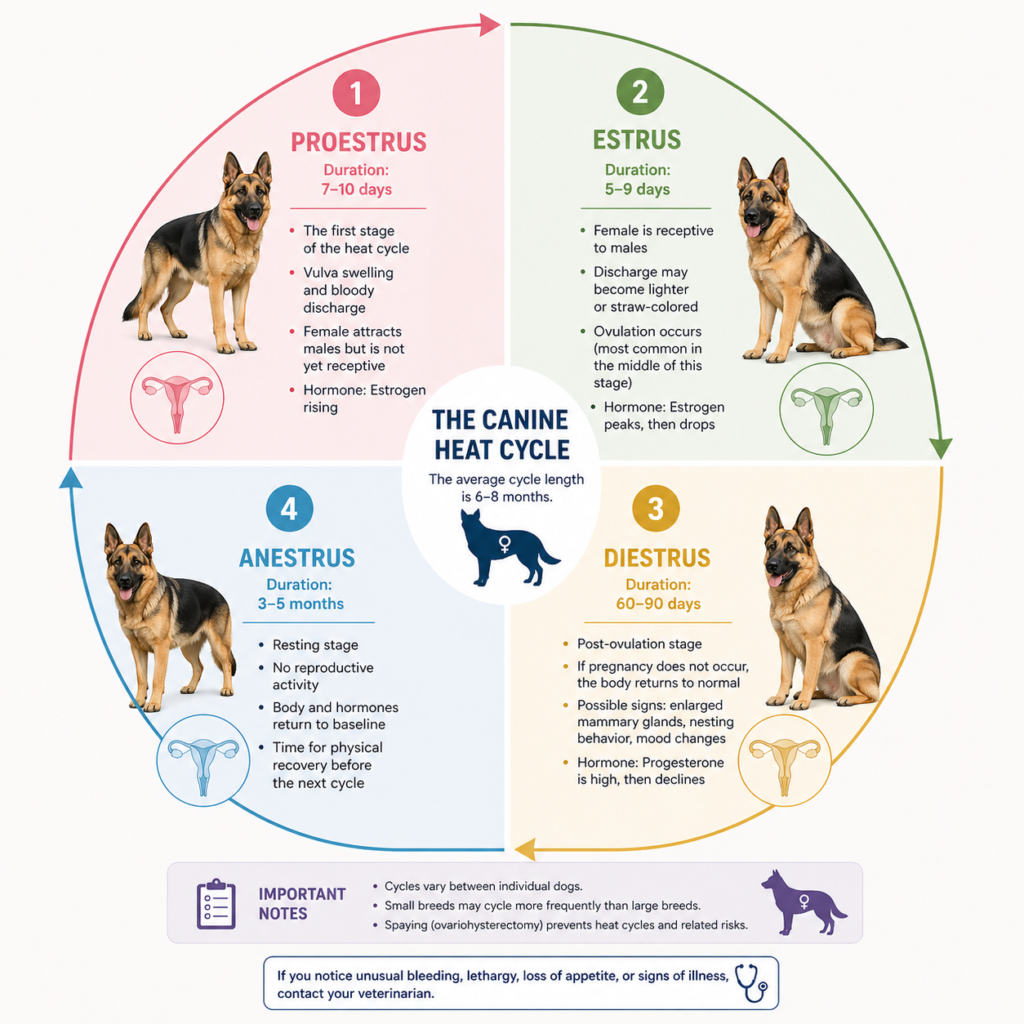
A female German Shepherd typically goes into heat every 6 to 8 months.
Stages include:
- Proestrus (7 to 10 days): swelling and bleeding
- Estrus (5 to 10 days): fertile period
- Diestrus: pregnancy phase
- Anestrus: resting phase
Once breeding is successful, understanding pregnancy duration becomes critical for proper care. How Long Are German Shepherd Dogs Pregnant?
Best Time to Breed:
The ideal breeding window is days 9 to 14 of the heat cycle
Common signs she is ready:
- lighter discharge
- tail moved to the side (flagging)
- increased interest in males
Timing matters more than most people think; missing this window often leads to breeding attempts failing.
Health Requirements Before Breeding:
Skipping health checks is one of the fastest ways to create long-term problems not just for one litter, but for future generations.
According to the American Kennel Club, responsible breeding includes proper health screening, genetic testing, and full maturity before mating.”
Veterinary Health Checks:
Before breeding, make sure your dog has:
- a full physical exam
- updated vaccinations
- no parasites
Working with a veterinarian at this stage can prevent serious complications later.
Genetic Testing:
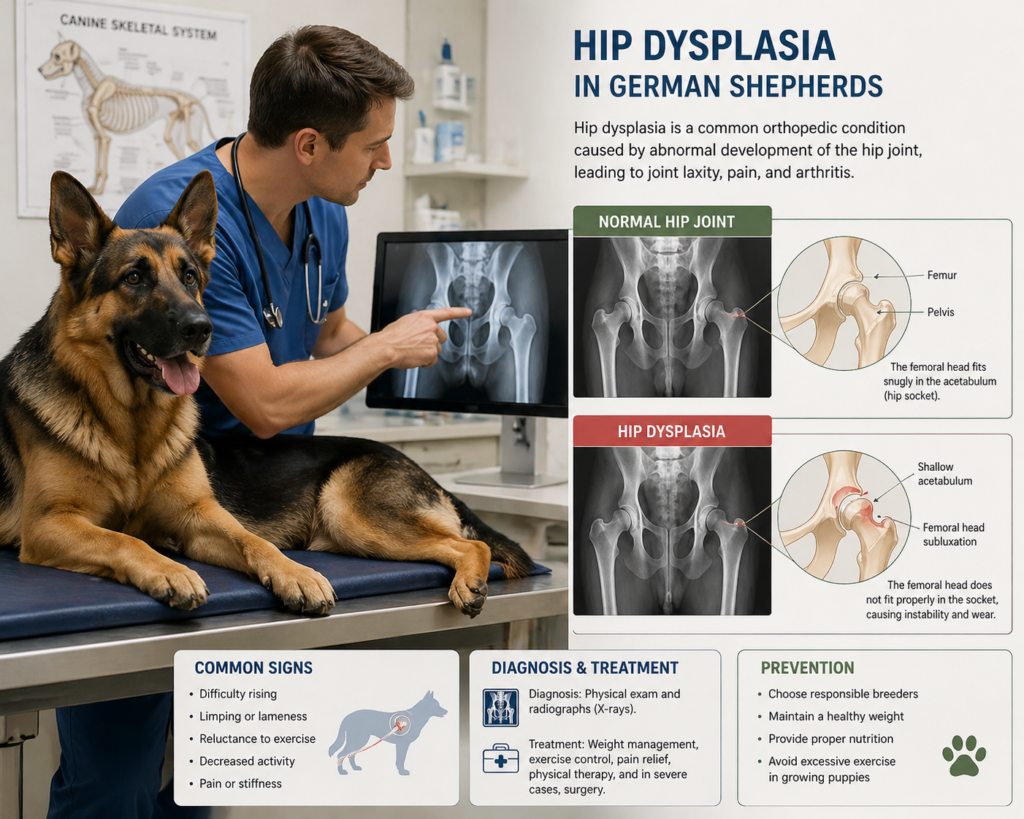
German Shepherds are prone to inherited conditions, so testing is essential.
Responsible breeders check for:
- hip dysplasia
- elbow dysplasia
- degenerative myelopathy
Breeding without testing increases the risk of passing these issues to puppies.
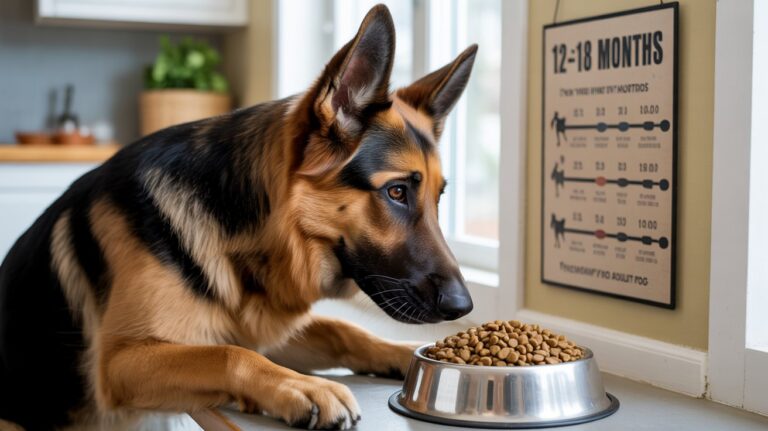
Nutritional Readiness:
Your dog should be:
- at a healthy weight
- eating a high-quality, protein-rich diet
- properly supplemented if needed
Nutrition plays a huge role in both pregnancy and puppy development.
Behavioral and Temperament Considerations:
Why Temperament Matters:
Breeding is not just about physical traits; behavior is passed down, too.
Dogs with poor temperament may produce puppies with:
- aggression
- anxiety
- training difficulties
Signs Your Dog Is Mentally Ready
- calm and stable behavior
- good socialization
- responds to basic commands
If a dog is overly aggressive or fearful, breeding should not be considered.
How Often Can You Breed a German Shepherd?
Recommended Breeding Frequency:
Ethical standard: once per year or less
This allows proper recovery and keeps the dog healthy.
Risks of Overbreeding:
Overbreeding can lead to:
- physical exhaustion
- weaker immune system
- smaller, less healthy litters
When breeding is rushed for profit, quality always suffers.
Signs Your German Shepherd Is Ready for Breeding:
Physical Signs:
- fully grown body
- strong muscles
- healthy coat and energy
Behavioral Signs:
- The female shows clear receptiveness
- The male shows controlled interest
- Both dogs have a stable temperament
When NOT to Breed a German Shepherd:
Health Issues That Disqualify Breeding:
- hip or elbow dysplasia
- chronic illness
- genetic disorders
Temperament Problems:
- aggression
- fearfulness
- unstable behavior
Breeding such dogs spreads problems across generations.
Responsible Breeding Practices:
Choosing the Right Mate:
Look for:
- strong health history
- complementary traits
- balanced temperament
Avoid pairing dogs with similar weaknesses.
Ethical Breeding Guidelines:
Responsible breeders:
- Prioritize health over profit
- limit litters
- Care for puppies properly
- screen buyers carefully
If you are not ready for these responsibilities, breeding is not the right step yet.
Common Mistakes First-Time Breeders Make:
1. Breeding Too Early
Leads to health risks and complications
2. Skipping Health Testing
One of the biggest mistakes in breeding
3. Poor Timing
Missing the fertile window reduces success
4. Lack of Preparation
Whelping requires planning and emergency readiness
FAQ’s:
What age can a German Shepherd get pregnant?
As early as 6 to 12 months, but breeding is not safe at this age.
Is it safe to breed on the first heat?
No, because the body is not fully developed yet.
How many litters can a German Shepherd have?
Usually 3 to 4 litters in a lifetime, depending on health.
Can older German Shepherds breed safely?
After 5 to 6 years, risks increase significantly.
How long is a pregnancy?
About 63 days (9 weeks).
How do I know my dog is ready?
Look for physical maturity, good health, and stable behavior.
Expert Tips for Successful Breeding:
Work With a Veterinarian:
Professional guidance reduces risks and improves outcomes.
Keep Detailed Records:
Track:
- heat cycles
- health tests
- breeding dates
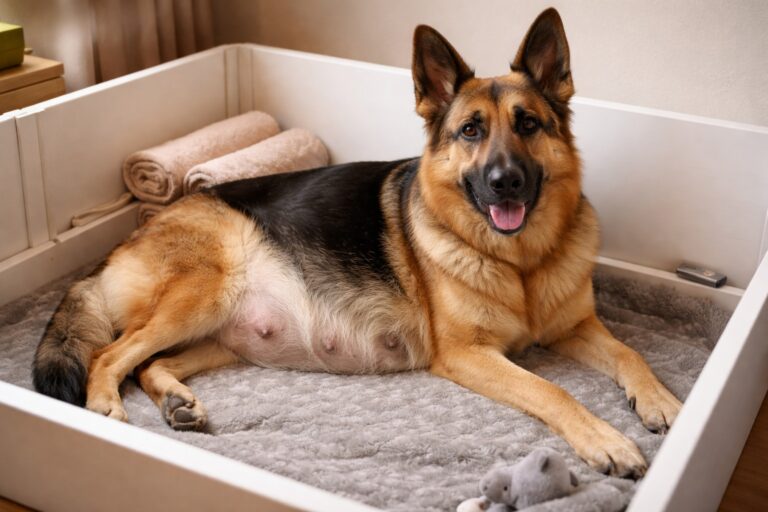
Prepare for Whelping in Advance:
Have ready:
- a clean whelping area
- emergency vet contact
- newborn care supplies
Conclusion:
Choosing the right age to breed a German Shepherd is essential for health and safety. Most experts recommend breeding after 18 to 24 months, once full maturity is reached. Avoid rushing the process, as early or late breeding increases risks. Responsible timing leads to healthier puppies and a stronger bloodline.