Hemangiosarcoma in German Shepherds? (Hemangiosarcoma Guide 2026)
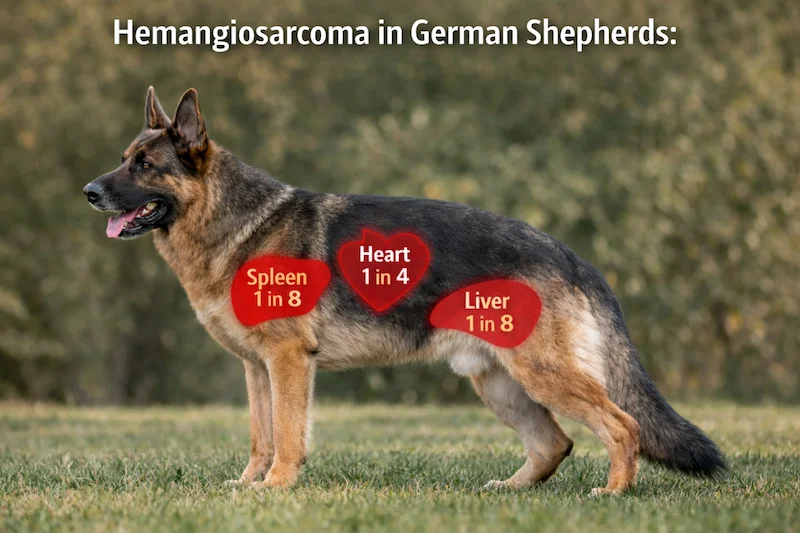
Hemangiosarcoma in German Shepherds strikes without warning, often leading to sudden collapse from internal bleeding. This aggressive cancer, originating from vascular endothelial cells, claims thousands of dogs yearly, with GSDs facing a 1 in 8 lifetime risk in susceptible lines.
In this guide, we will explore causes, diagnosis, treatments, and actionable strategies to protect your loyal companion. Consult your vet today for personalized screening.
What Exactly Is Hemangiosarcoma and Why Does It Love German Shepherds?
Hemangiosarcoma is a malignant tumor arising from the cells lining blood vessels, known as vascular endothelial cells. It manifests in visceral forms primarily affecting the spleen, liver, or right atrium, or dermal variants on the skin. Visceral hemangiosarcoma is particularly insidious, growing silently until tumor rupture causes life-threatening hemorrhage.
German Shepherds are predisposed due to genetic heritability and large-breed factors. Studies show GSDs, alongside Golden Retrievers and Labradors, carry higher-risk alleles that promote abnormal angiogenesis and tumor growth. This breed-specific vulnerability stems from selective breeding, which amplifies mutations in pathways such as the PI3K/AKT pathway.
Unlike benign hemangiomas, hemangiosarcomas metastasize rapidly to the lungs, liver, and other organs, making early intervention critical. For GSD owners, understanding this silent killer is key to vigilance.
Which Breeds Have the Highest Risk of Hemangiosarcoma?
German Shepherds rank among the top breeds for hemangiosarcoma incidence, with epidemiological data from 2025 UK studies estimating a 0.5-1% annual diagnosis rate in primary care settings for large breeds. In high-risk GSD lines, lifetime odds climb to 1 in 8, driven by heritable factors.
Comparatively, Golden Retrievers face a 1 in 5 risk, per Morris Animal Foundation’s Golden Retriever Lifetime Study, where hemangiosarcoma accounts for 70% of cancer deaths. Labradors and Boxers hover at 1 in 10-12, while smaller breeds like Beagles show lower rates, around 0.2%.
A 2025 spay/neuter correlation analysis suggests neutered GSDs may have elevated risks, though causation remains unclear. Bartonella infection links add another layer, with infected dogs showing higher tumor odds.
| Breed | Lifetime Risk | Common Sites |
| German Shepherd | 1 in 8 (high-risk lines) | Spleen (60%), Heart (20%) |
| Golden Retriever | 1 in 5 | Spleen, Liver |
| Labrador Retriever | 1 in 10 | Spleen, Skin |
| Boxer | 1 in 12 | Heart, Skin |
For more on breed health, see our German Shepherd Health Guide.
Want to see how GSDs stack up against other breeds in cancer risk? Check this detailed guide.
Also Read: Are German Shepherds Prone To Cancer?
Early Signs of Hemangiosarcoma in GSDs?
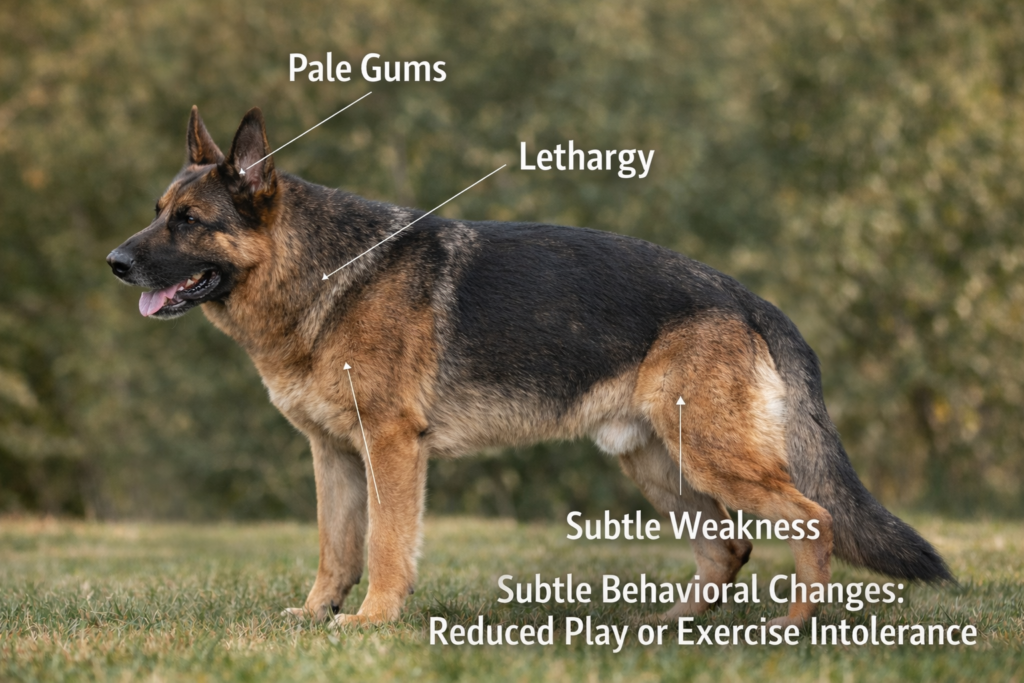
Hemangiosarcoma in German Shepherds often presents subtly, mimicking aging or minor ailments. Intermittent lethargy, exercise intolerance, and pale gums signal early internal bleeding from tumor micro-ruptures.
Visible Symptoms:
Sudden collapse, abdominal distension from hemoperitoneum, and rapid breathing indicate an acute crisis. Owners report dogs acting off days before refusing food or showing weakness in hind limbs.
Subtle Behavioral Changes:
Watch for unexplained weight loss, increased thirst, or reluctance to play. In dermal hemangiosarcoma, raised, bruise-like skin lesions on the abdomen or limbs warrant immediate checks.
PAA Insight: Early signs in GSDs include pale mucous membranes and episodic fatigue, often dismissed as overexertion. Annual ultrasounds for dogs over 6 can catch these before it is too late.
Why Do GSDs Get Hemangiosarcoma?
Hemangiosarcoma arises from mutated stem cells in vascular tissues, fueled by dysregulated PI3K/AKT pathways. A 2026 breakthrough links PIK3CA mutations to immune system disruption, paving the way for targeted inhibitors.
In German Shepherds, heritability studies pinpoint specific loci, with 2025 Cornell research using single-cell omics to map tumor microenvironments. Environmental triggers, such as Bartonella exposure, exacerbate genetic risks.
PAA: Why do GSDs develop hemangiosarcoma? Strong genetic predisposition, amplified by breed inbreeding, is being addressed through ongoing genomic mapping to breed out risk alleles.
For related reading, explore Canine Cancer Prevention Tips.
How Vets Diagnose Hemangiosarcoma in 2026?
Diagnosis begins with an abdominal ultrasound to visualize splenic masses or fluid, which is confirmed by fine-needle aspiration or biopsy. Flow cytometry detects circulating tumor cells for early staging.
2026 innovations include scent-detection by trained dogs, achieving 95% accuracy in Penn Vet trials for hemangiosarcoma odor profiles. Blood tests for PIK3CA mutations offer non-invasive screening.
PAA: Does it show on X-rays? Often, the gold standard is not reached until advanced ultrasound, with new genomic assays enhancing precision.
Learn more at AKC Canine Health Foundation.
How Effective Is Surgery + Chemo for Dogs?
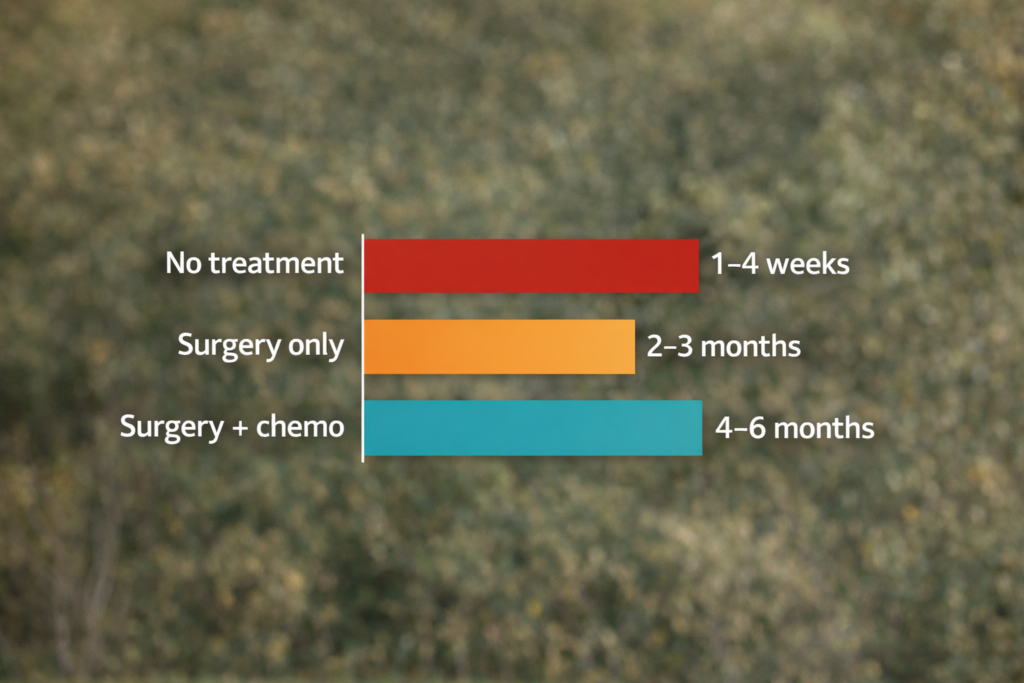
Splenectomy removes the primary tumor, followed by doxorubicin chemotherapy every 2-3 weeks for 5 cycles. Median survival: 4-6 months with this protocol.
For cardiac cases, pericardectomy may stabilize, but the prognosis dips. Without treatment, survival is 1 to 4 weeks post-rupture.
PAA: Survival rate with surgery and chemo? Traditionally, around 20% reach 1 year, but adjuncts like Yunnan Baiyao extend the quality time.
Any New Treatments for Hemangiosarcoma 2025-2026?
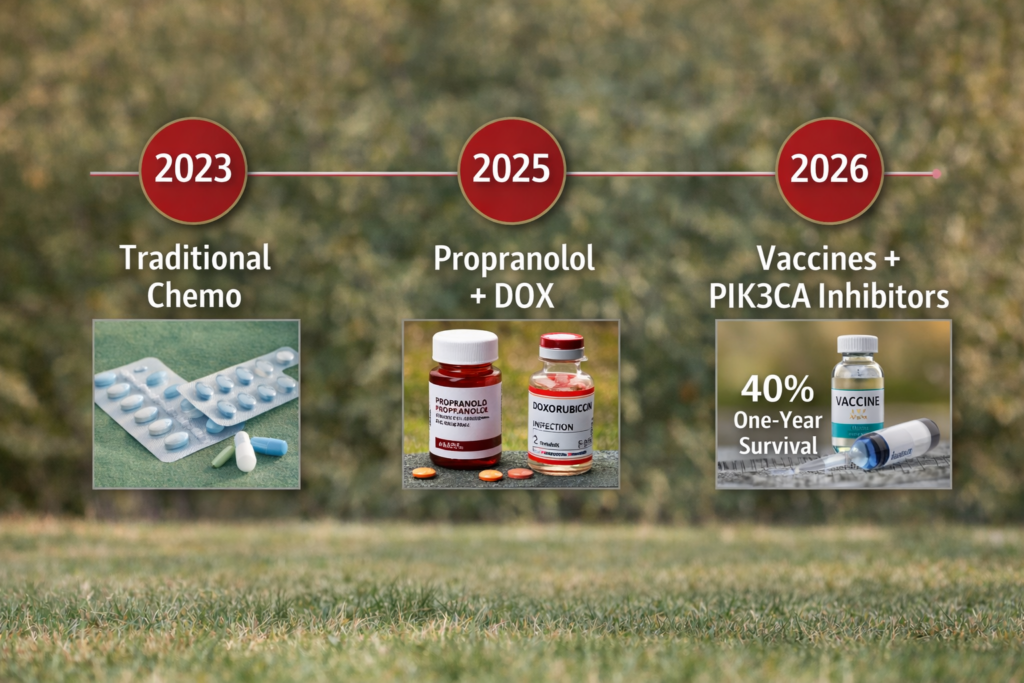
2025-2026 trials revolutionize care: Ethos Discovery’s 450-dog study tests propranolol-doxorubicin combos, boosting 6-month survival to 70%.
The New Drugs Showing 70% 6-Month Survival:
PIK3CA inhibitors address immune evasion, per Vet Candy reports. Paccal Vet pilots show promise in adjuvant settings.
Ongoing Clinical Trials You Can Join:
The SOCH vaccine trial combines immunotherapy with DOX, aiming for a 40% one-year rate. Morris funded five diagnostics-focused projects in 2025.
PAA: New treatments in 2025 to 2026? Yes, vaccines and targeted therapies are shifting from despair to 40% long-term survival in select cases.
How Much Does Hemangiosarcoma Treatment Cost?
Emergency splenectomy: $3,000-$6,000. Full doxorubicin course: $2,500-$4,000. Advanced trials add $1,000 to $3,000, often subsidized.
| Treatment | Average Cost (USD) |
| Diagnosis (Ultrasound + Labs) | $500 to $1,000 |
| Surgery | $3,000 to $6,000 |
| Chemotherapy (5 Cycles) | $2,500 to $4,000 |
| Supportive Care/Supplements | $500 to $1,500 |
| Total (Standard) | $6,500 to $12,500 |
PAA: Cost of surgery? Varies by location, but expect $3k+; insurance covers 70-90% in many plans.
Planning for a GSD? Here is what adoption and care can cost from day one.
Also Read: How Much Does It Cost To Adopt A German Shepherd?
Is Hemangiosarcoma Painful in the Final Stages?
Hemangiosarcoma is painless until rupture; post-crisis, opioids like fentanyl patches manage severe discomfort. Monitor via pain scores: restlessness, whining, or abdominal guarding.
PAA: Is it painful? Yes, in the final stages, euthanasiaoccurs when quality drops, often 1-7 days post-diagnosis if untreated.
Use CBD oils or acupuncture for palliative relief, per vet guidance.
Common Mistakes Owners Make With GSD Cancer?
Delaying vet visits for subtle signs leads to rupture. Skipping chemo post-surgery halves survival. Relying solely on unproven supplements ignores evidence-based care.
PAA: Should I euthanize? When pain overrides joy, discuss with your vet using quality-of-life scales.
Address PAA: Waiting too long risks sudden death; early screening saves lives.
How Can I Prevent Hemangiosarcoma in My GSD?
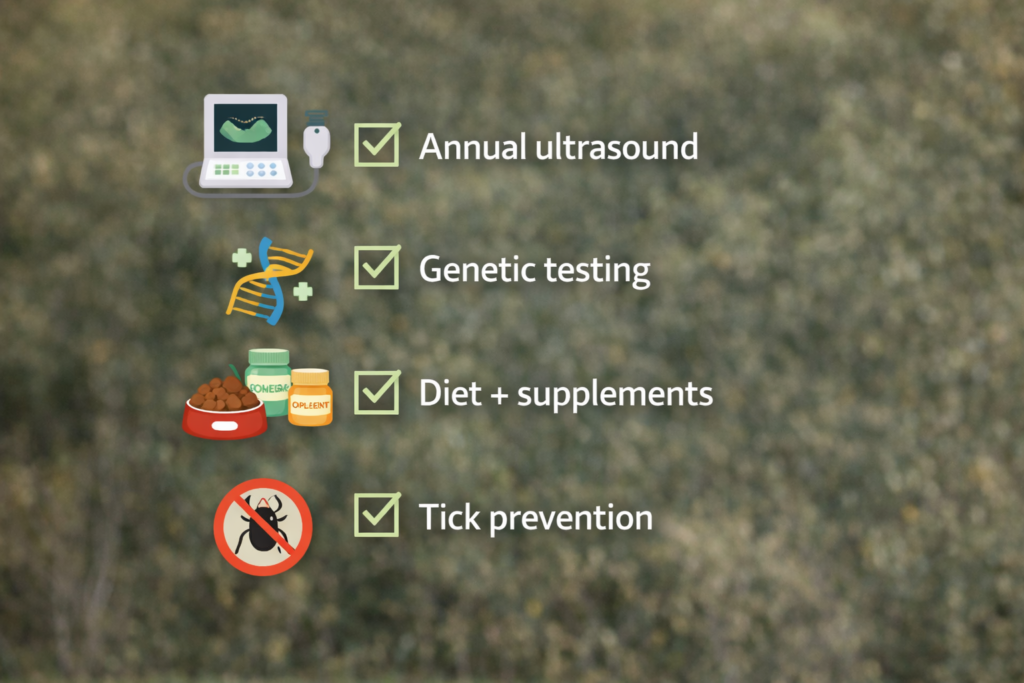
Recommended Screening Schedule for GSDs Over 6:
Annual abdominal ultrasounds and bloodwork; consider genetic testing for PIK3CA.
Supplements That Actually Have Evidence:
Yunnan Baiyao for bleeding control; turkey tail mushrooms (I am-Yunity) as adjuncts.
Lifestyle Changes That May Lower Risk:
Antioxidant-rich diets, Bartonella prevention via tick control. Breed from low-risk lines.
PAA: Can diet help? Evidence supports supplements for support, not a cure; focus on holistic vet care.
Join trials at Morris Animal Foundation.
FAQ’s:
What dog breeds are most prone to hemangiosarcoma?
German Shepherds, Golden Retrievers, Labradors, Portuguese Water Dogs, and Boxers face a 1-in-8 risk in some lines, according to heritability studies.
What are the early signs of hemangiosarcoma in German Shepherds?
Lethargy, pale gums, subtle weakness.
Is hemangiosarcoma in dogs painful?
Minimal until rupture; then acute pain from bleeding is managed with opioids.
What is the survival rate for hemangiosarcoma in dogs with surgery and chemo?
4 to 6 months median; up to 40% one year with breakthroughs.
Are there any new treatments for hemangiosarcoma in 2025 to 2026?
Yes, propranolol combos, vaccines, and PIK3CA inhibitors.
Conclusion:
Hemangiosarcoma in German Shepherds remains challenging, but advances in 2025 to 2026, such as PIK3CA inhibitors and vaccines, offer hope of 40% one-year survival. Prioritize early signs, genetic screening, and trials. Download our free GSD Emergency Checklist and schedule a vet consult now. Your proactive steps could save your dog’s life.