Will German Shepherd Hair Grow Back?(Regrow Now)
Yes, German Shepherds’ hair usually grows back naturally after shedding or hair loss, depending on the cause. If it is due to normal shedding or seasonal changes, hair regrowth happens within a few weeks to months.
We will explore the reasons behind hair loss, which is key to helping your dog’s coat grow back healthy and strong.
What Causes Hair Loss in German Shepherds?
Hair loss in German Shepherds can happen for various reasons:
- Shedding: A natural process that happens, especially during seasonal changes.
- Allergies: Pollen, food allergens, or environmental triggers can cause hair loss.
- Parasites: Fleas, ticks, and mites are common causes of hair loss.
- Infections: Bacterial or fungal infections can damage the hair follicles.
- Hormonal Imbalance: Conditions like hypothyroidism or Cushing’s disease.
- Stress or Anxiety: Excessive stress can lead to temporary hair loss.
- Poor Diet: Nutrient deficiencies, especially of protein or fatty acids, can lead to hair loss.
Also Read: How Common Is Bloat in German Shepherds?
Is German Shepherd Shedding Normal or a Health Issue?
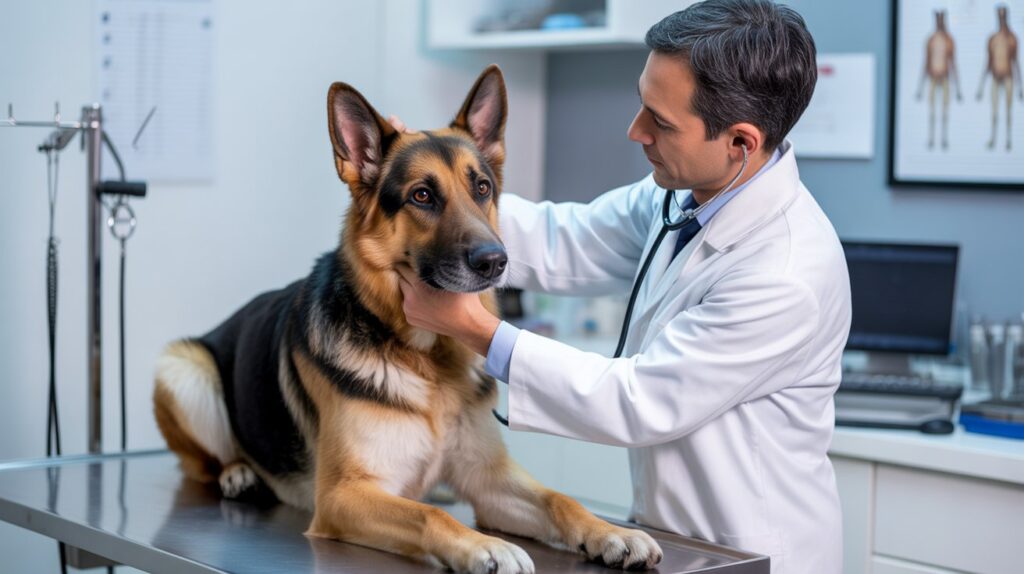
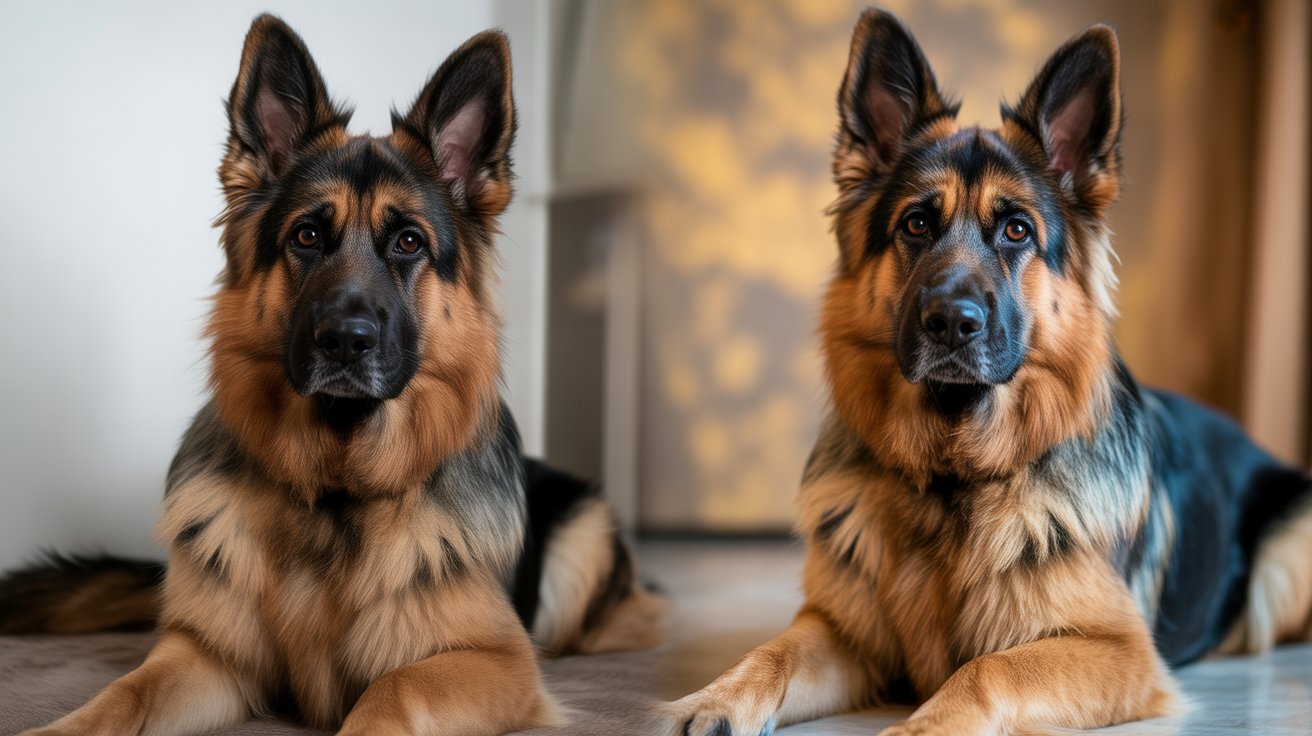
Shedding is normal for German Shepherds due to their double coat. However, excessive shedding or bald patches may be a sign of a health issue. It’s important to monitor for other symptoms, such as skin irritation or itching, which could indicate underlying health problems, such as allergies or infections.
Also Read: What Size Collar For A German Shepherd?
How Long Does German Shepherd Hair Take to Grow Back?
On average, German Shepherd hair takes 3 to 6 months to fully grow back, depending on the cause of the hair loss:
- Normal Shedding: Hair generally regrows within 4 to 6 weeks.
- Injury or Surgery: Hair may take several months to regrow after an injury or surgery.
- Health Issues: Regrowth may be slower if hormonal imbalances or allergies affect the coat.
Does Shaving Affect German Shepherd Hair Regrowth?
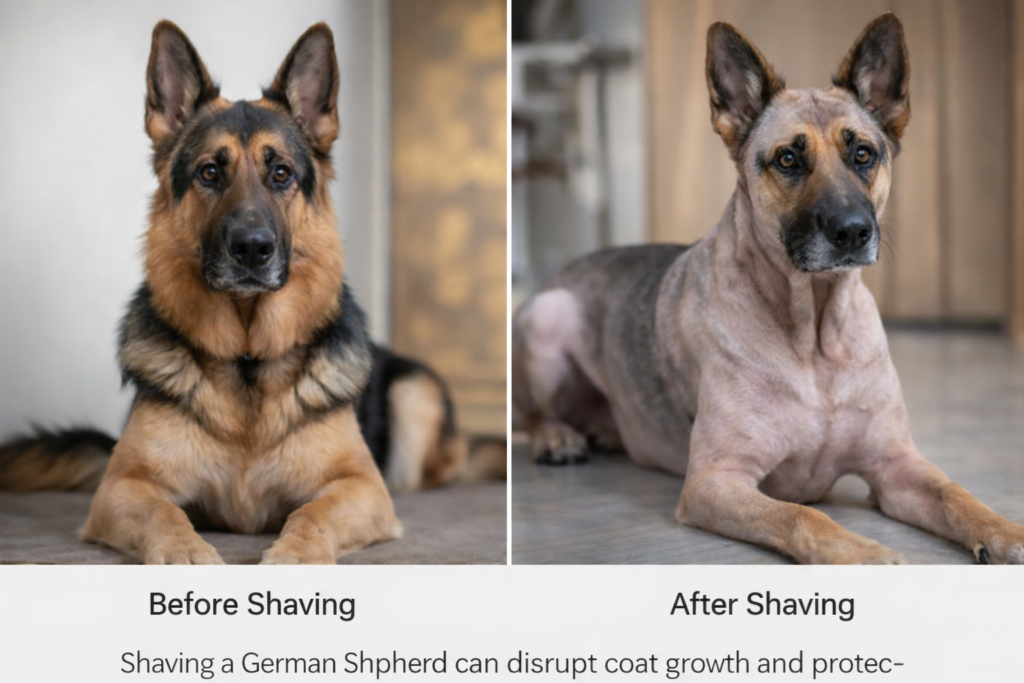
Shaving a German Shepherd is generally not recommended. It can disrupt the natural growth of their coat, leading to uneven regrowth or thinner fur. Shaving also exposes the skin to more sunlight, increasing the risk of sunburn and other skin issues. Instead of shaving, the best grooming practices for German Shepherds are regular brushing and trimming.
Can Allergies Cause Permanent Hair Loss in German Shepherds?
Allergies themselves do not usually cause permanent hair loss. However, chronic itching and scratching from allergic reactions can lead to secondary infections, which might cause permanent damage to the hair follicles. Proper allergy treatment helps the hair grow back once the skin heals.
When Does German Shepherd Hair Not Grow Back?
Hair may not grow back if the hair follicles have been damaged permanently. This can happen due to:
- Severe infections: If an infection severely damages the skin or follicles.
- Scarring: Injuries or surgeries that cause scarring may prevent hair from growing back.
- Hormonal issues: In some cases, untreated hormonal problems can result in permanent hair loss.
Which Areas Regrow Hair Slowest in German Shepherds?
Hair regrows more slowly in areas with significant skin damage or scarring. The common areas include:
- Abdomen: The skin here is more sensitive and may take longer to heal.
- Legs and Paws: These areas have thicker skin, slowing regrowth.
- Frequent-scratching areas: If your dog often scratches or chewsa particular area, hair regrowth may be delayed.
How to Help German Shepherd Hair Grow Back Faster?
To speed up hair regrowth, ensure your German Shepherd gets proper care:
- Balanced diet: Rich in proteins, omega-3 fatty acids, and vitamins to support skin and coat health.
- Regular grooming: Helps remove dead hair and stimulates new growth.
- Vet visits: Regular checkups to detect any underlying health problems.
- Supplements: Omega-3 fatty acids and biotin can help improve hair growth.
To speed up hair regrowth, ensure your German Shepherd gets proper care, including a balanced diet, regular grooming, and vet visits. For more detailed information on German Shepherd care, visit the American Kennel Club’s German Shepherd Care Guide
Best Diet for German Shepherd Hair Regrowth:
A healthy diet can make a huge difference in hair regrowth. Ensure your dog’s diet includes:
- Proteins (chicken, fish, lamb): These are essential for healthy hair follicles.
- Omega-3 fatty acids (salmon, flaxseed): Help nourish the coat and reduce inflammation.
- Vitamins (A, C, E): Promote skin and coat health.
- Zinc: Helps prevent dry skin and supports healthy fur.
Ensure your dog’s diet includes proteins and omega-3 fatty acids to support hair regrowth. Learn more about the best dog food options in What Is Good Dog Food For German Shepherds?.
Do Hormonal Problems Stop Hair Regrowth in German Shepherds?
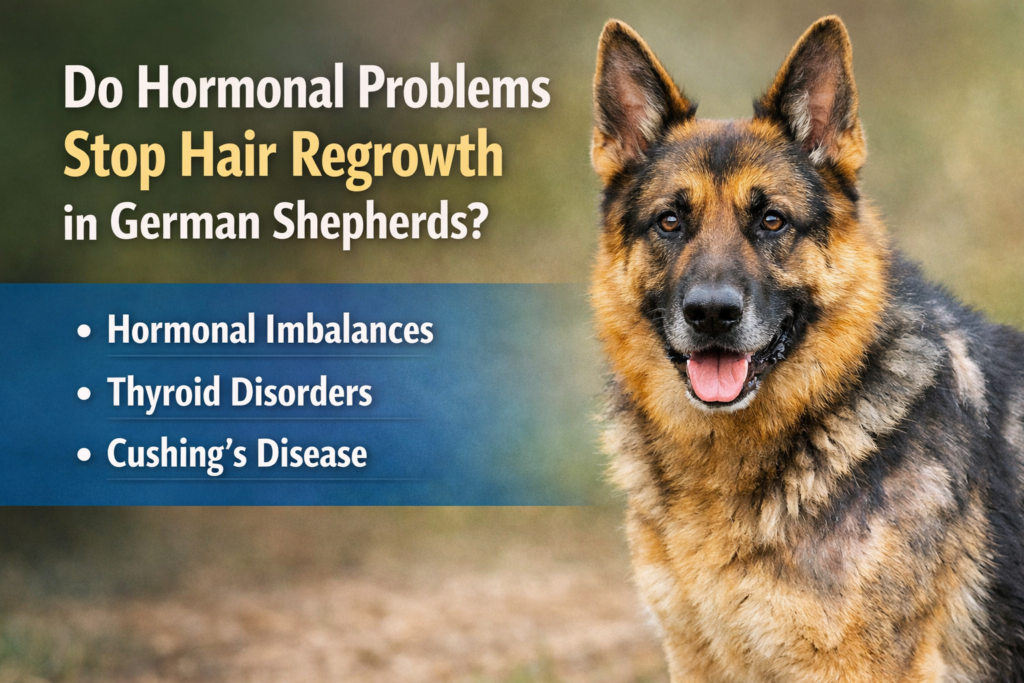
Yes, hormonal imbalances, such as hypothyroidism or Cushing’s disease, can disrupt the natural hair growth cycle. These conditions can lead to:
- Thin or patchy fur.
- Slower regrowth after shedding.
If you suspect a hormonal issue, consult your vet for proper diagnosis and treatment.
Can Stress Cause Hair Loss in German Shepherds?
Yes, stress can cause temporary hair loss in German Shepherds. Dogs under stress may develop:
- Bald patches.
- Excessive shedding.
Common stressors include environmental changes, loud noises, or separation anxiety. Reducing stress and providing a calming environment can help your dog’s coat regrow naturally.
Does Neutering or Spaying Affect Coat Regrowth?
Spaying or neutering a German Shepherd can slightly affect the coat, but these changes are usually temporary. Some dogs may experience:
- Changes in coat texture.
- Thicker or thinner fur.
These changes generally do not lead to permanent hair loss and are often not noticeable after the dog adjusts post-surgery.
Also Read: When To Neuter a German Shepherd?
How to Tell If Hair Loss Is Permanent in German Shepherds?
If your dog’s hair does not start regrowing after 3 to 6 months, it may be permanent. Signs to watch for include:
- No regrowth after several months.
- Skin discoloration or scarring.
- Chronic infections or hot spots.
If you notice these signs, it is important to visit a vet for an accurate diagnosis and treatment.
When to See a Vet for German Shepherd Hair Loss
If your German Shepherd is:
- Losing excessive hair.
- Developing bald patches.
- Having itchy skin or infections.
- Not regrowing hair after several months.
You should consult a vet to determine the cause and create a treatment plan to help your dog’s hair regrow.
FAQ’s:
Does shaving affect German Shepherd hair regrowth?
No, shaving can disrupt the natural growth of their coat, causing uneven regrowth. It is better to avoid shaving unless necessary.
Can stress cause hair loss in German Shepherds?
Yes, stress can lead to hair loss in German Shepherds. Reducing anxiety can help prevent excessive shedding and promote regrowth.
Will German Shepherds’ hair grow back after flea infestation?
Yes, once the fleas are treated, the hair typically regrows, but it might take some time. Treating the skin and coat helps speed up recovery.
Is hair loss in German Shepherds due to allergies permanent?
No, hair loss from allergies can be reversed with proper treatment. Identifying and managing the allergy helps hair grow back healthily.
How long does it take for German Shepherd hair to grow back after surgery?
Hair regrowth after surgery can take several months. Providing a balanced diet and proper care helps speed up the process.
Conclusion:
Whether due to shedding, stress, or health issues, the answer to whether German Shepherd hair will grow back depends on the underlying cause. With proper care and treatment, German Shepherd hair typically regrows naturally. It is important to address any health concerns to ensure your dog has a healthy, full coat.