When Do German Shepherd Puppies Stop Biting? (Training Guide)
If your German Shepherd puppy keeps biting your hands, clothes, or furniture, you are not alone. This is one of the most common problems new owners face. Puppy biting is normal, temporary, and manageable when you handle it the right way.
This guide provides clear timelines, real reasons, and practical steps so you know exactly what is happening and what to do at each stage.
Why German Shepherd Puppies Bite So Much?
When Do German Shepherd Puppies Stop Biting? German Shepherd puppies bite because it is how they explore the world and learn control, not out of aggression. Their mouth works much like a human baby’s hands.
Your puppy bites for these reasons:
• Teething pain makes chewing feel good
• Play behaviour with littermates involves using the mouth
• Curiosity pushes puppies to test everything
• Excitement causes a loss of control
• Lack of bite inhibition means they do not yet understand their strength
German Shepherds are working dogs bred to use their mouths while herding and guarding. That instinct appears early and is stronger than in many other breeds.
Also Read: Is A German Shepherd A Dangerous Dog?
At what age do German Shepherd Puppies Start Biting?
Most German Shepherd puppies begin noticeable biting at 6 to 8 weeks of age. This typically begins soon after they return home. At this age, puppies do not understand bite pressure. They also miss feedback from littermates.
If a puppy leaves the litter before 8 weeks, biting often becomes more frequent and harder to manage because bite inhibition is not fully learned.
Teething Timeline and Biting Stages:
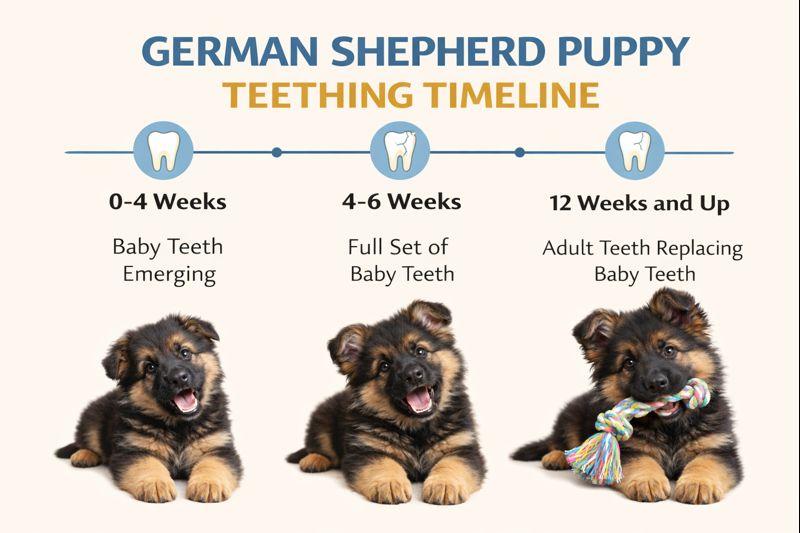
Teething is the biggest reason for puppy biting. Knowing the timeline helps you stay patient and respond correctly.
Age and what to expect
• 8 to 12 weeks. Light mouthing. Puppy explores objects and hands with teeth.
• 3 to 5 months. Peak biting stage. Adult teeth push through the gums and cause discomfort.
• 5 to 6 months. Teething slows down. Biting reduces when training stays consistent.
During the peak stage, puppies bite more often, but this phase is temporary.
Also Read: What Are German Shepherds Allergic To?
When Do German Shepherd Puppies Stop Biting?
Most German Shepherd puppies reduce biting between 5 and 7 months of age. By this time, adult teeth are mostly in place and jaw control improves.
By 8 to 9 months, biting should be rare. It may still happen during excitement, rough play, or stress.
If strong biting persists after 7 months, it usually indicates training gaps, insufficient rest, or excessive stimulation.
Bite Inhibition Explained in Simple Terms:
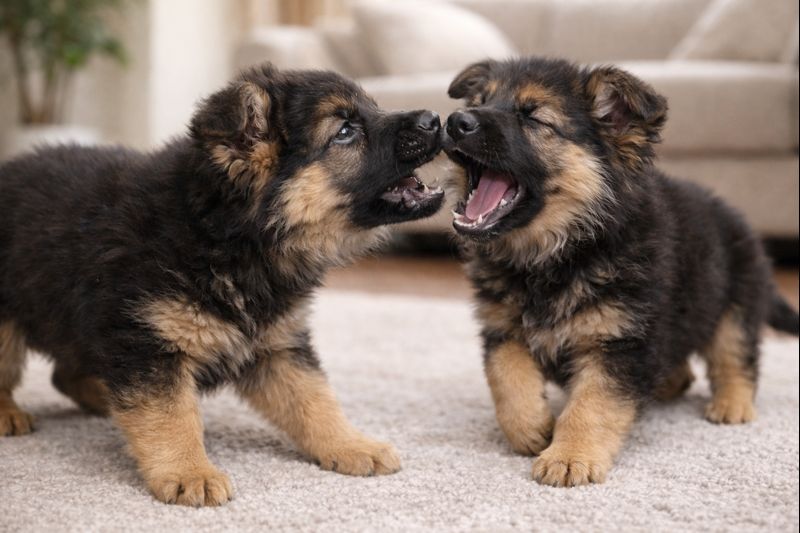
Bite inhibition means your puppy learns how hard is too hard. Puppies learn this naturally from other dogs. When a puppy bites too hard, the other dog stops playing.
You must teach this at home.
Signs your puppy is learning bite inhibition:
• Bites feel softer over time
• Puppy releases quickly when play stops
• Puppy responds to calm verbal correction
A puppy with good bite inhibition is safe around people and children.
How to Stop German Shepherd Puppy Biting?
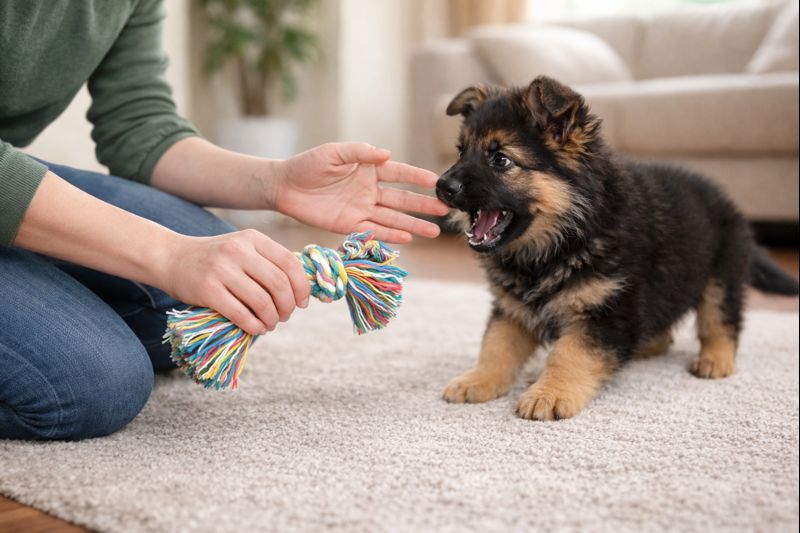
You need daily habits, not punishment.
Stop playing immediately:
When your puppy bites, stop moving and remove your hands. Walk away for 10 seconds. This teaches your puppy that biting ends fun.
Give proper chew items:
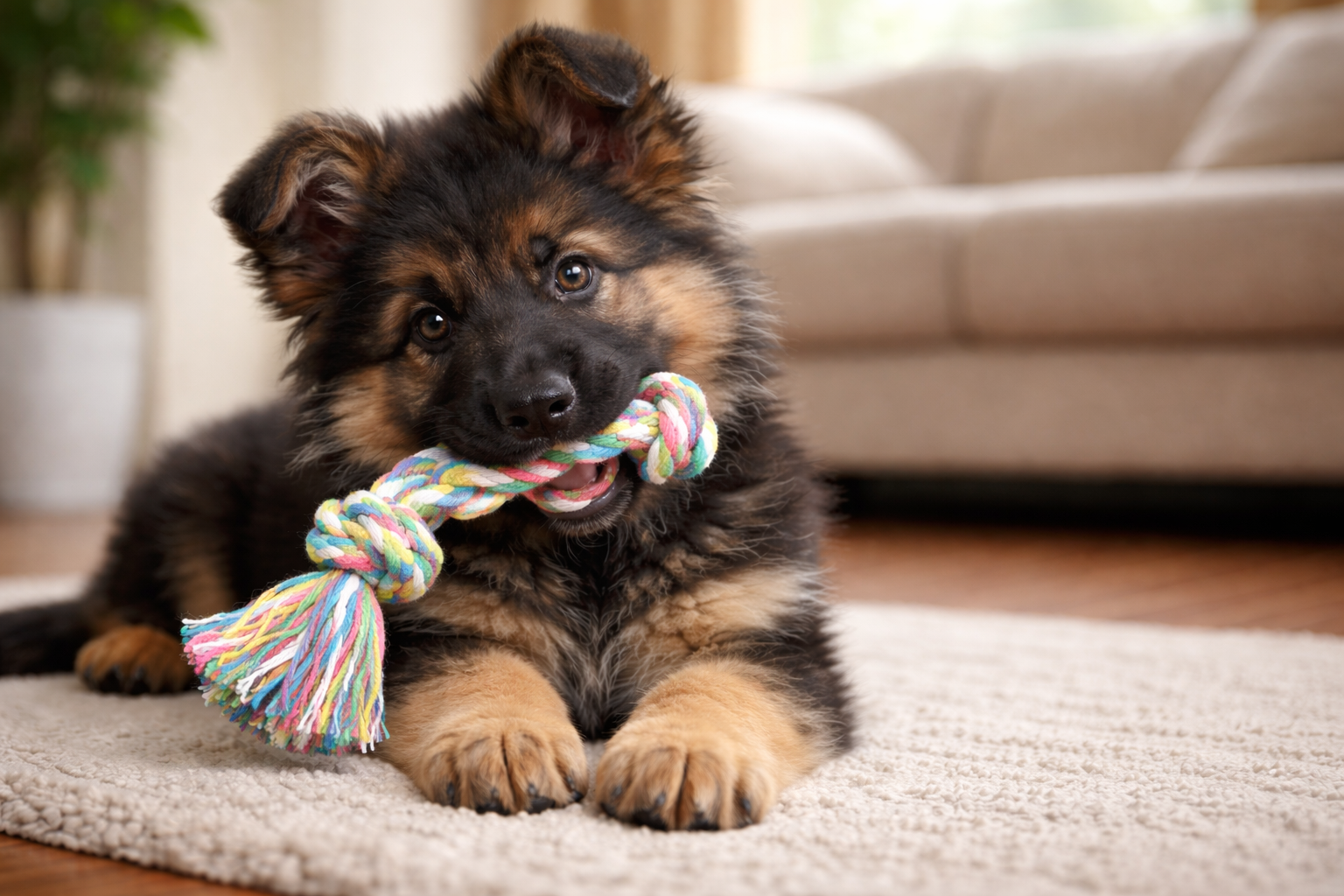
Always keep chew toys nearby. Use rubber toys, frozen teething toys, and safe puppy chews. Redirect your puppy before biting starts.
Use one clear word:
Say No bite or Stop calmly. Use the same word every time. Do not shout.
Control excitement:
Overtired puppies bite more. Make sure your puppy sleeps enough. Young puppies need many naps during the day.
Train basic commands early:
Teach sit, down, and leave it. Short sessions work best. Mental training reduces biting faster than long walks.
According to the American Kennel Club, puppy biting is not bad behaviour; it is a training opportunity if handled appropriately.
Does Exercise Help Reduce Biting?
Yes, but only balanced exercise helps.
Too little exercise causes frustration. Too much exercise increases excitement and biting.
Good daily activity includes
• Short walks based on age
• Training sessions
• Calm play with rules
• Puzzle toys for mental work
Avoid rough play that encourages grabbing hands.
Also Read: How Much Exercise Does a German Shepherd Need?
Is Puppy Biting Aggression
Normal puppy biting is not aggression.
Normal biting looks like:
• Loose body movement
• Playful behaviour
• Stops when play stops
Warning signs that need professional help:
• Stiff body before biting
• Growling with frozen posture
• Biting without play
• Breaking skin repeatedly after 6 months
These cases are rare but should not be ignored.
Male vs Female German Shepherd Puppy Biting:
Gender does not decide biting behaviour. Energy level, training quality, and daily routine matter more.
Some male puppies grow bigger earlier. This can make bites feel stronger, not more aggressive.
What Happens If You Ignore Puppy Biting?
If biting is not corrected early, it can continue into adolescence.
Possible long term problems:
• Poor impulse control
• Unsafe play with children
• Difficulty handling the dog
• Higher risk of behaviour complaints
German Shepherds are strong dogs. Early control protects you and others.
Also Read: When To Switch German Shepherd To Adult Food?
When You Should Get Help?
You should talk to a trainer or behaviour expert if
• Biting causes injuries after 6 months
• Training does not reduce biting
• Puppy shows fear, guarding, or extreme reactivity
Early help prevents serious problems later.
German Shepherd Puppy Biting Timeline:
| Age Range | What You See | What You Should Do |
|---|---|---|
| 6 to 8 weeks | Light mouthing | Start bite rules early |
| 3 to 5 months | Heavy biting | Increase chew toys and training |
| 5 to 6 months | Biting slows | Stay consistent |
| 7 to 9 months | Rare biting | Reinforce calm behaviour |
FAQ’s:
When do German Shepherd puppies stop biting naturally?
Most German Shepherd puppies stop frequent biting between 6 and 9 months with proper training.
Is puppy biting a behaviour problem?
No. Puppy biting is a learning phase. It becomes a problem only when guidance is missing.
Should you allow puppy biting during play?
No. Allowing hand-biting reinforces bad habits and delays the development of bite control.
Does teething make German Shepherd puppies bite more?
Yes. The teething stage between 3 and 5 months is when biting is most common.
Can training alone stop puppy biting?
Training works best when combined with rest, chew toys, and controlled excitement.
Conclusion:
Most owners ask when German Shepherd puppies stop biting because the behaviour can feel overwhelming. In most cases, biting reduces between five and seven months with proper training, rest, and teething support. When you stay consistent and calm, your German Shepherd puppy learns bite control naturally and grows into a well-behaved adult dog.