What Size Collar For A German Shepherd? (Exact Size Guide 2026)
A German Shepherd usually needs a large collar measuring 18 to 24 inches around the neck. Puppies need smaller, adjustable collars, while bigger or working German Shepherds may require extra-large sizes. Always measure your dog’s neck and leave two fingers of space for a safe, comfortable fit.
In this guide, you will learn how to measure your German Shepherd correctly, choose the correct collar size, and ensure a secure yet comfortable fit for daily use, training, and identification.
How Do I Measure a German Shepherd’s Neck?
To measure your German Shepherd’s neck, use a soft measuring tape and wrap it around the base of the neck, just behind the ears, where the collar naturally rests. The tape should sit snugly against the fur but should not press into the skin.
Many owners make the mistake of measuring too loosely or too high on the neck. For accuracy, measure when your dog is calm and standing, then note the size in inches. Add a small allowance for comfort before choosing a collar.
What Is the Two-Finger Rule for Collar Fit?
The two-finger rule means you should be able to slide two fingers comfortably between your German Shepherd’s collar and neck. This ensures the collar is secure without restricting breathing or movement.
- If inserting fingers feels tight, the collar is too small
- If the collar slips over the ears or head, it is too loose
A correct fit prevents rubbing, choking, and accidental collar loss during walks.
German Shepherd Collar Size Chart :(Inches & cm)
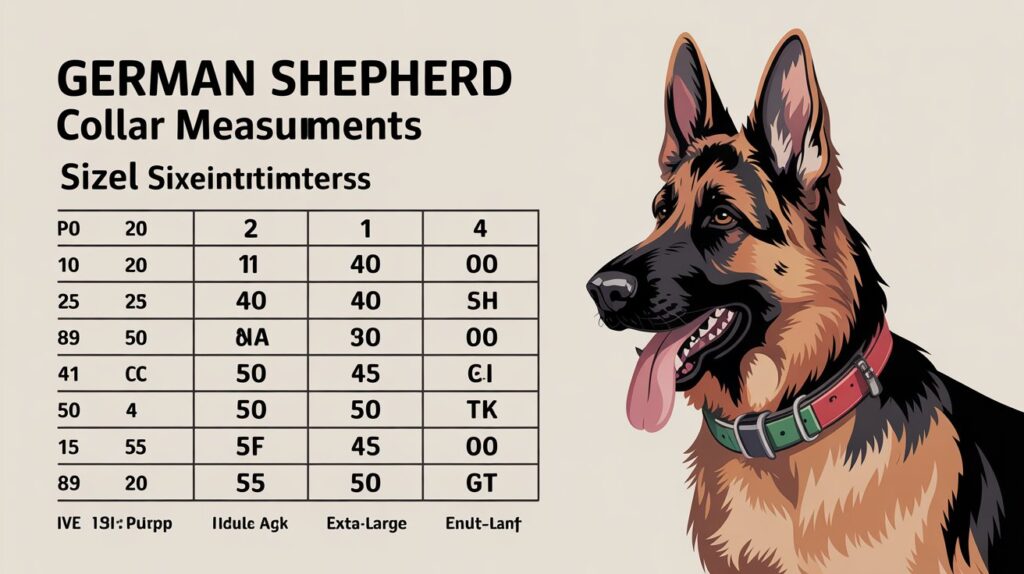
German Shepherds are large, strong dogs, so collar size mainly depends on neck circumference, not weight. Most adult German Shepherds need a large, adjustable collar that allows comfort and control without choking.
German Shepherd Collar Size Table:
| Dog Type | Neck Size (Inches) | Neck Size (cm) | Recommended Collar Size |
| Puppy (3 to 6 months) | 10 to 14 in | 25 to 36 cm | Small |
| Puppy (6 to 12 months) | 14 to 18 in | 36 to 46 cm | Medium |
| Adult Female | 16 to 20 in | 41 to 51 cm | Large |
| Adult Male | 18 to 24 in | 46 to 61 cm | Large / XL |
Important Tips:
- Always choose an adjustable collar to allow for growth and fur changes.
- Measure the neck before buying; breed averages are only a guide.
- If your dog is between sizes, size up, not down
This chart works for daily use collars, walking collars, and most training collars.
Adult German Shepherd Collar Sizes:
Most adult German Shepherds need a large or extra-large collar, depending on gender and build. Males typically have thicker, more muscular necks than females.
- Adult males: 18 to 24 inches (46 to 61 cm)
- Adult females: 16 to 20 inches (41 to 51 cm)
- Large working males may reach 26 inches (66 cm)
Choose a collar that sits snugly without pressing into the neck.
Expert Advice
- Use durable materials and strong buckles
- Avoid narrow collars on adult dogs
- Always confirm fit using the two-finger rule
Puppy German Shepherd Collar Sizes:
German Shepherd puppies grow rapidly, so collar size must be checked often. Lightweight, adjustable collars are safest during growth stages.
Recommended Collar Sizes for German Shepherd Puppies
| Puppy Age | Neck Size (Inches) | Neck Size (cm) | Collar Size |
| 8 to 12 weeks | 10 to 12 in | 25 to30 cm | Small |
| 3 to 6 months | 12 to 14 in | 30 to 36 cm | Small / Medium |
| 6 to 9 months | 14 to 18 in | 36 to 46 cm | Medium |
Expert Tips
- Choose collars with multiple adjustment holes
- Recheck fit every 2 to 3 weeks
- Avoid heavy or thick collars
A puppy collar should feel secure but never tight.
Also Read : When To Neuter a German Shepherd?
How Should a German Shepherd Collar Fit?
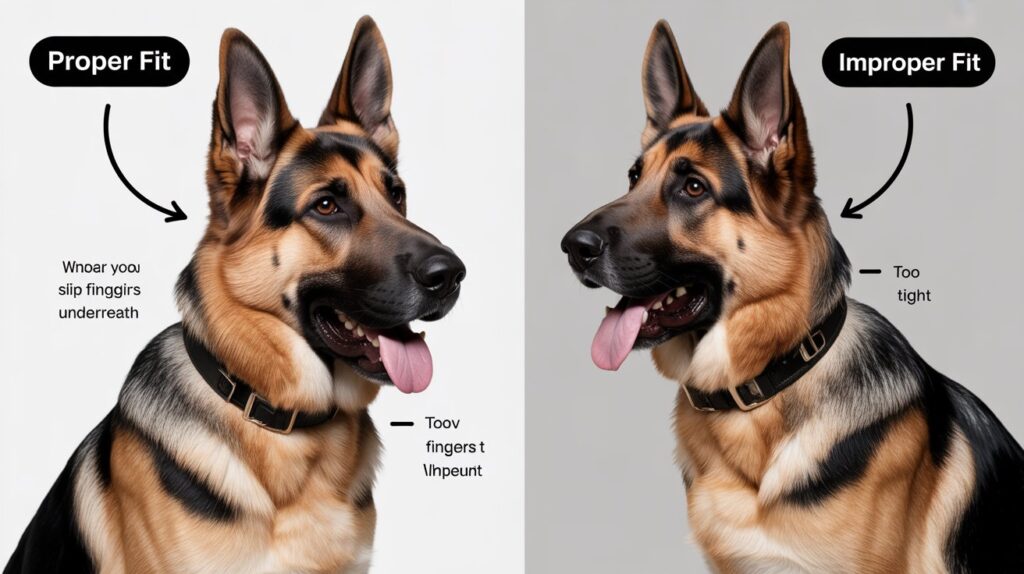
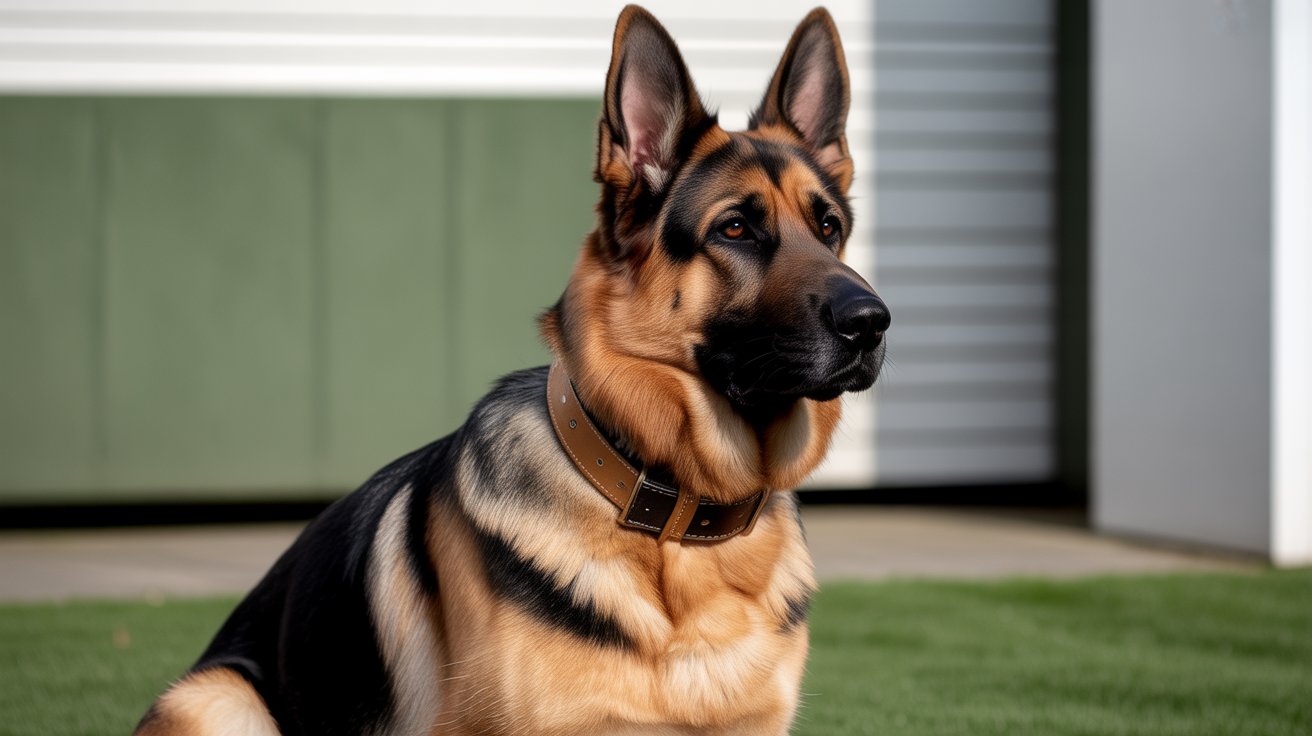
A German Shepherd’s collar should sit high on the neck, remain stable during movement, and never dig into the skin. It should allow full head and neck movement without choking.
A properly fitted collar improves control, comfort, and long-term neck health. Adjustable collars are ideal, especially for dogs with thick coats or seasonal shedding.
A German Shepherd’s collar fit can change as the dog gains muscle or weight, which is why understanding how many calories a German Shepherd needs is important for maintaining a healthy body and neck size.
How Loose Should a Dog Collar Be?
A collar should stay in place while still allowing comfortable movement. Collars that are too tight can cause coughing or skin irritation, while loose collars may slip off or catch on objects.
Check fit regularly, especially for puppies and active dogs. Small adjustments may be needed as your German Shepherd gains muscle or coat density.
What Collar Width Is Best for a German Shepherd?
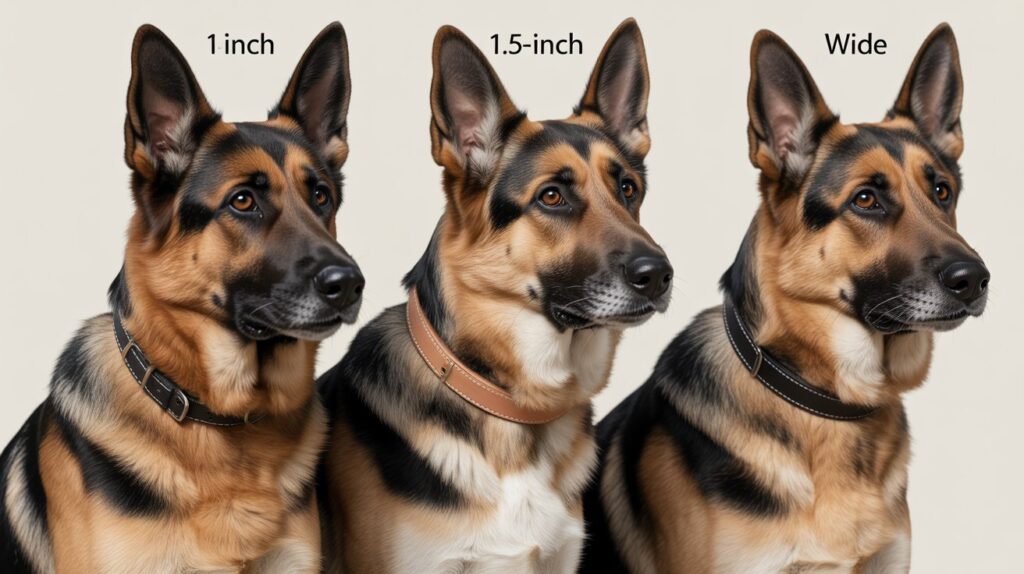
Collar width is just as important as size for German Shepherds. Because they are powerful dogs, a wider collar helps distribute pressure evenly across the neck, reducing strain during pulling or training.
Veterinarians and trainers often recommend wider collars for large breeds, as narrow collars can dig into the skin and increase injury risk. The correct width improves comfort, safety, and control during daily walks.
- Puppies: 0.5 to 1 inch (1.3 to 2.5 cm) lightweight and flexible
- Adult females: 1 to 1.5 inches (2.5 to 4 cm), comfortable and safe
- Adult males / large dogs: 1.5 to 2 inches (4 to 5 cm) provides extra support and control.
Which Collar Types Are Best for German Shepherds?
German Shepherds are active, intelligent, and strong, so choosing the right collar type matters. The ideal collar depends on your dog’s behavior, training level, and daily activities. Flat collars are best for everyday wear and ID tags, while Martingale collars provide added security for dogs that tend to slip out. Training collars, such as prong collars, should only be used under proper guidance and supervision.
Selecting the right collar type ensures effective control without sacrificing comfort.
Flat vs Martingale vs Prong Collars:
Each collar type has a specific purpose. Flat collars are suitable for everyday use, Martingales prevent slipping without choking, and Prong collars are best for controlled training of strong dogs.
Comparison Table of Collar Types
| Collar Type | Best For | Pros | Cons |
| Flat Collar | Daily walks, ID tags | Lightweight, comfortable, adjustable | Can slip off strong dogs |
| Martingale Collar | Training, strong necks | Prevents slipping, safe | Slight pressure when the dog pulls |
| Prong Collar | Advanced training | Strong control for pullers | Must be used carefully, can injure if misused |
Expert Tips
- Flat collars are perfect for puppies and casual walks
- Martingale collars are ideal for dogs who slip out of collars.
- Prong collars should only be used by experienced handlers during training.
- Always supervise your dog when using Martingale or Prong collars.
This comparison helps owners choose the right collar based on behaviour, size, and training needs.
What Is the Best Collar for a Pulling German Shepherd?
For pulling German Shepherds, choose collars that provide control without pain.
- Martingale collars: Prevent slipping, safe for daily walks
- Front-clip or no-pull harnesses: Reduce pulling without neck strain
- Prong collars: Training use only, with proper guidance
Collar Size vs Neck Size: What is the Difference?
Collar size is not always the same as neck size. The collar must fit comfortably around the neck, allowing movement and growth, whereas neck size is just the measurement of the dog’s neck.
- Neck Size:
- Actual measurement around the base of the neck
- Used to determine the starting point for collar selection
- Actual measurement around the base of the neck
- Collar Size:
- Adjustable measurement that includes extra space for comfort
- Accounts for fur thickness and movement
- Adjustable measurement that includes extra space for comfort
Expert Tips
- Always add 1 to 2 inches to the neck measurement for comfort.
- Check that the collar is snug but not tight using the two-finger rule.
- Re-measure regularly, especially for growing puppies or dogs with changing weights.
Understanding this difference ensures your German Shepherd’s collar fits safely, comfortably, and effectively.
Common Mistakes When Choosing a German Shepherd Collar:
Many owners make mistakes when picking a collar, which can cause discomfort or safety issues. Choosing the wrong size, type, or width can lead to chafing, slipping, or even injury.
Most Common Mistakes
- Buying by weight instead of neck size:
- Always measure the neck; weight alone is not accurate.
- Always measure the neck; weight alone is not accurate.
- Choosing collars that are too tight or too loose:
- Use the two-finger rule for proper fit.
- Use the two-finger rule for proper fit.
- Using narrow collars on large dogs:
- Can dig into the skin and strain the neck
- Can dig into the skin and strain the neck
- Ignoring material and durability:
- Weak buckles or thin collars may break with strong pullers.
- Weak buckles or thin collars may break with strong pullers.
- Not adjusting as the dog grows or gains fur:
- Recheck fit regularly for puppies or seasonal coat changes.
- Recheck fit regularly for puppies or seasonal coat changes.
Expert Tips
- Measure before buying and check fit every few weeks.
- Pick wide, durable, adjustable collars for German Shepherds.
- Match collar type to your dog’s behaviour and activity level.
Following these tips helps ensure your German Shepherd stays safe, comfortable, and well-controlled.
FAQ’s:
Can a German Shepherd Wear a Medium Collar?
No. Most adult German Shepherds need large or extra-large collars due to their thick necks and strength.
Is It Safe to Leave a Collar on a German Shepherd All Day?
Yes, as long as the collar fits properly, is lightweight, and does not cause rubbing or irritation.
Should I Size Up if My German Shepherd Is Between Collar Sizes?
Yes. Always choose the larger size and adjust it for a safer, more comfortable fit.
How Often Should I Check My German Shepherd’s Collar Fit?
Check the fit every 2 and 4 weeks, especially for puppies or active dogs, as growth and muscle changes can affect comfort.
Can the Wrong Collar Size Cause Skin or Behavior Problems?
Yes. A tight or narrow collar can cause hair loss, skin irritation, and increased pulling due to discomfort.
Conclusion:
Choosing the correct collar size for your German Shepherd is not just about comfort; it is about safety, training success, and long-term neck health. Measuring correctly, choosing the correct width, and adjusting regularly can prevent common problems and make daily walks enjoyable for both you and your dog.