
What Are German Shepherds Allergic To? (Find Out 2026)
German Shepherds are commonly allergic to pollen, dust mites, mould, flea bites, and certain foods such as chicken, beef, dairy, and wheat. These allergens usually cause itching, skin redness, ear infections, or digestive problems in sensitive dogs.
In this guide, we will explore the main triggers, symptoms to watch for, and practical ways to manage German Shepherd allergies effectively.
Why Are German Shepherds Prone to Allergies?
German Shepherds are genetically more sensitive than many other breeds. Their immune system reacts quickly to allergens, which can cause skin and ear problems earlier in life.
Main reasons include:
- Weaker skin barrier than other breeds
- High exposure due to outdoor activity
- Genetic tendency toward skin and ear issues
According to the American Kennel Club, dogs with genetic sensitivities, like German Shepherds, are far more likely to develop skin and environmental allergies if early symptoms are ignored.
What Are the Common Types of Allergies in German Shepherds?
German Shepherds usually develop four main types of allergies:
Environmental Allergies:
Triggered by:
- Pollen
- Dust mites
- Mold
- Grass
Symptoms often worsen in spring and fall.
Food Allergies:
These occur when dogs react to specific ingredients rather than the entire diet. Common triggers:
- Chicken
- Beef
- Dairy
- Wheat
Food allergies often affect both skin and digestion.
Flea and Insect Bite Allergies:
Some dogs are extremely sensitive to flea saliva. Even one bite can cause:
- Intense itching
- Red skin
- Hair loss
This can happen year-round in warm climates.
Contact Allergies:
Happens when the skin touches irritants like:
- Cleaning chemicals
- Certain fabrics
- Lawn chemicals
Usually affects areas with less fur, like the belly and paws.
What Are the Symptoms of German Shepherd Allergies?
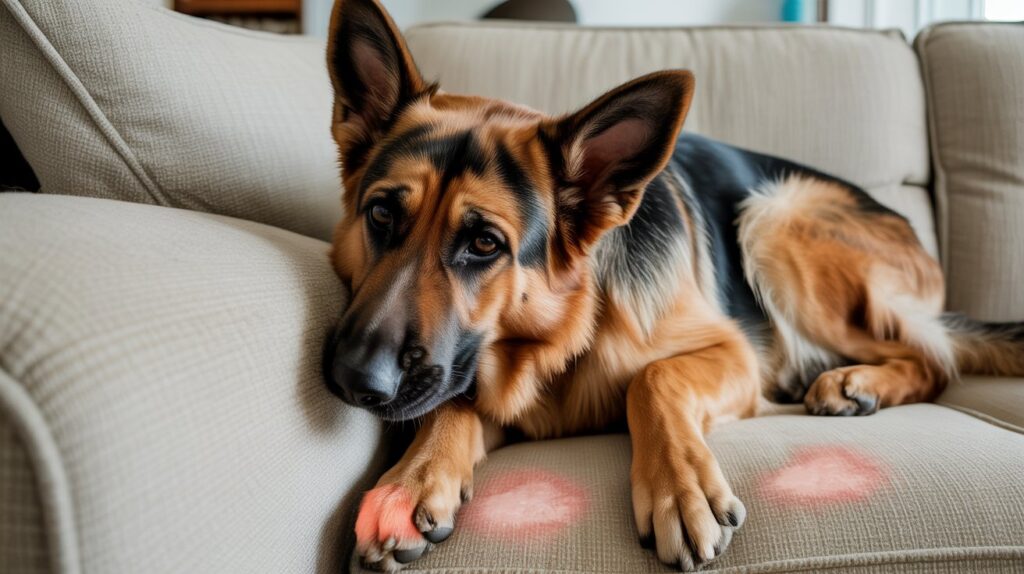
Symptoms vary, but skin issues are the most common:
- Itching and Redness: Dogs scratch, rub furniture, or develop hot spots.
- Ear Infections & Head Shaking: Red or swollen ears, bad odour, frequent shaking.
- Paw Licking & Hair Loss: Licking causes hair loss, darkened skin, or bacterial infections.
- Digestive Problems: Loose stools, vomiting, or gas, especially with food allergies.
Also Read: How Common Is Bloat In German Shepherds?
How Are German Shepherd Allergies Diagnosed?
Proper diagnosis prevents wasted time and money.
Veterinary Examination:
- Review symptoms
- Check skin, ears, and paws
- Rule out parasites or infections
Allergy Testing Methods:
| Test Type | Detects | Best For |
| Blood Test | Environmental allergens | General screening |
| Skin Test | Specific allergens | Severe cases |
| Elimination Diet | Food allergens | Gold standard; slow but accurate |
Elimination Diet Simplified: Feed a limited diet for 8 to 12 weeks, then add ingredients back one at a time. This identifies which foods trigger reactions.
Also Read: How Many Calories Does A German Shepherd Need?
What Is the Best Treatment for German Shepherd Allergies?

There is no permanent cure, but symptoms can be managed effectively.
Apoquel vs Cytopoint:
| Feature | Apoquel | Cytopoint |
| Form | Daily pill | Monthly injection |
| Speed | Fast relief | Very fast |
| Long-term use | Yes | Yes |
Both are vet-prescribed and trusted.
Other Options:
- Steroids & Antihistamines: Quick relief, usually short-term; antihistamines help mild cases.
- Immunotherapy: Slowly trains the immune system to tolerate allergens; effective but gradual.
What Is the Best Diet for German Shepherds With Allergies?
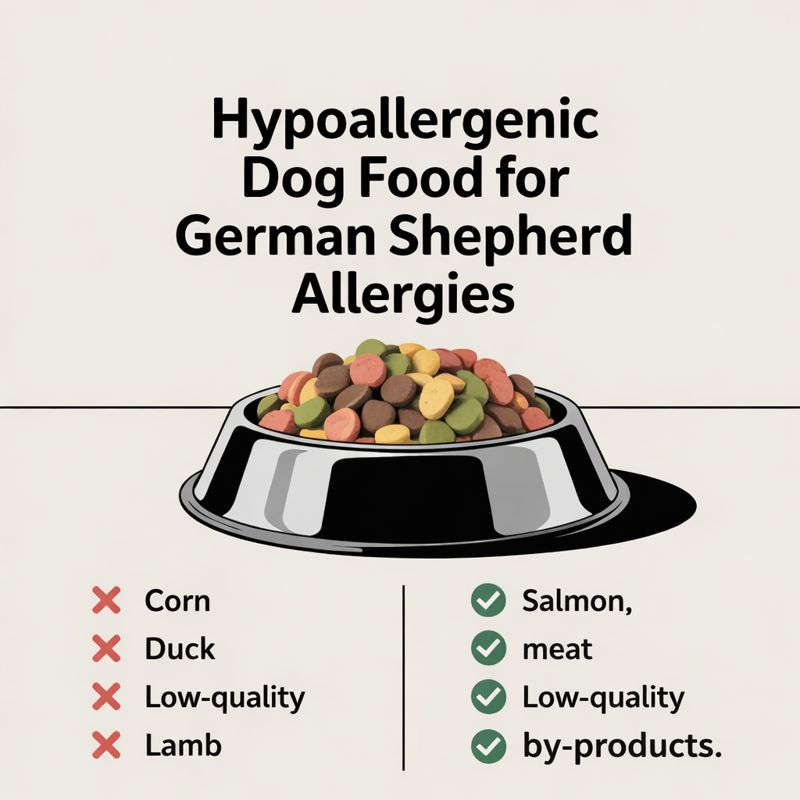
Diet plays a key role in managing allergies.
Hypoallergenic Dog Food:
- Limited ingredients
- Supports skin health
- Reduces immune reactions
Best Protein Choices:
| Protein | Why It Helps |
| Salmon | Anti-inflammatory |
| Duck | Rare protein, less allergic risk |
| Lamb | Gentle on digestion |
Ingredients to Avoid: Artificial colours, corn, soy, and low-quality meat by-products.
Also Read: What Is Good Dog Food For German Shepherds?
Also Read: When To Switch German Shepherd To Adult Food?
Do Natural Remedies Help German Shepherd Allergies?
Natural options support treatment but do not replace veterinary care:
- Omega-3 Supplements: Reduce itching, improve skin and coat health.
- Probiotics: Support gut health, regulate immune responses.
- Medicated or Oatmeal Shampoos: Soothe itchy skin, remove allergens.
How Can You Control German Shepherd Allergies at Home?
Daily care makes a difference:
- Grooming & Bathing: Bathe every 2 to 4 weeks; brush regularly to remove allergens.
- Reduce Indoor Allergens: Use HEPA filters; clean bedding weekly.
- Paw & Bedding Hygiene: Wipe paws after walks; wash bedding often.
Insights from Experienced Owners:
German Shepherd owners report success with:
- Diet changes
- Apoquel or Cytopoint
- Consistent grooming routines
Are German Shepherds Hypoallergenic?
No. German Shepherds shed heavily and produce dander, which can trigger allergies in humans.
Can Allergies Be Managed Long Term?
Yes. With proper diagnosis, treatment, and consistent care, most German Shepherds live healthy, comfortable lives despite allergies.
FAQ’s:
What causes most German Shepherd allergies?
Environmental triggers like pollen and dust mites, followed by food ingredients such as chicken or beef.
At what age do allergies usually start?
Between 6 months and 3 years, though some dogs develop symptoms earlier.
What food is best for allergic German Shepherds?
Limited-ingredient or novel-protein diets, such as salmon or duck, work best.
Is itching always a sign of allergies?
No. Itching can also be caused by fleas, infections, or dry skin. Proper diagnosis is essential.
Can allergies go away on their own?
Most do not disappear but can be well-managed with the right care.
Conclusion:
German Shepherd allergies are common but manageable with the right approach. Understanding the causes, symptoms, and treatment options helps owners control itching, ear infections, and skin problems early. With proper diet, medical care, and home routines, most dogs with German Shepherd allergies can live healthy, comfortable lives without constant discomfort.