
Signs a German Shepherd Is Pregnant: Early to Late Symptoms!
Early signs that a German Shepherd is pregnant include reduced appetite, mild vomiting, swollen nipples, and increased affection. As weeks pass, you may notice weight gain, a firm abdomen, and lower energy levels. A veterinarian can confirm pregnancy through ultrasound or palpation around 3 to 4 weeks.
Recognizing Signs a German Shepherd Is Pregnant changes early allows you to adjust nutrition, reduce stress, and prepare properly for a healthy litter.
When Do Pregnancy Signs Start?
Most German Shepherds begin showing subtle pregnancy signs about 2 to 3 weeks after mating. In large breeds like this, visible belly growth often appears slightly later, typically around week 4 or 5.
Hormone levels, litter size, and whether it is the dog’s first pregnancy can influence how noticeable symptoms are. First-time mothers sometimes show slower physical changes, even though pregnancy is progressing normally.
Weekly observation of appetite, energy levels, and body shape helps detect changes more accurately than relying on one single sign.
Also Read: How Long Are German Shepherd Dogs Pregnant?
Early Signs (Weeks 1 to 3)
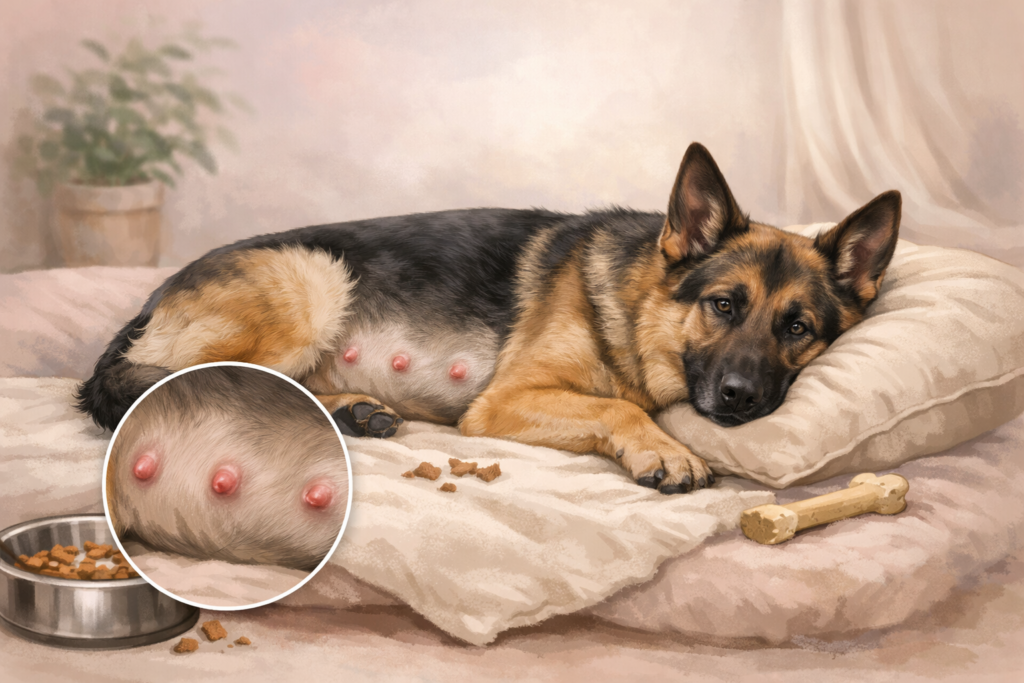
Nipple Enlargement:
One of the earliest physical signs that a German Shepherd is pregnant is enlarged, slightly pink nipples. Increased blood flow prepares the body for nursing. This change is often subtle but consistent.
Appetite Changes:
Some dogs experience mild nausea during the first weeks and may eat less temporarily. Others may show no change at all. Appetite typically stabilizes within a few days.
If appetite loss lasts more than 24 to 48 hours, veterinary advice is recommended.
Behavior Changes:
Hormonal shifts can affect mood and energy. You may notice:
- Increased affection
- More rest or sleep
- Mild clinginess
- Seeking quieter areas
These early behavioral changes are often the first signs owners observe.
Physical Signs (Weeks 4 to 6)
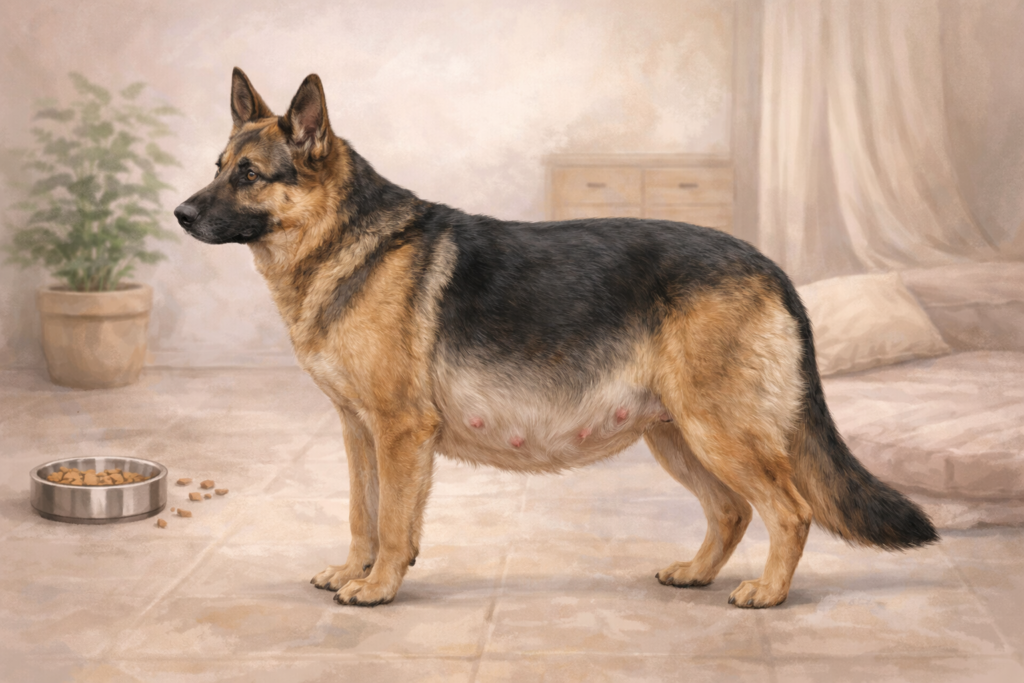
Gradual Weight Gain:
By week 4, steady weight gain becomes more noticeable. Because German Shepherds are deep-chested dogs, weight changes may appear along the ribcage before the belly becomes visibly round.
Calorie needs increase during this stage, but overfeeding should be avoided.
Belly Enlargement:
The abdomen gradually becomes firmer and rounder. Avoid pressing or squeezing the belly to check for puppies. Improper handling can cause harm. A veterinarian can safely perform palpation around day 28 or later.
Reduced Activity:
Pregnant German Shepherds may tire more quickly during walks. Gentle daily exercise supports circulation and muscle tone, but jumping, intense running, and rough play should be limited.
Also Read: How Many Calories Does A German Shepherd Need?
Late Pregnancy Signs (Weeks 7 to 9)
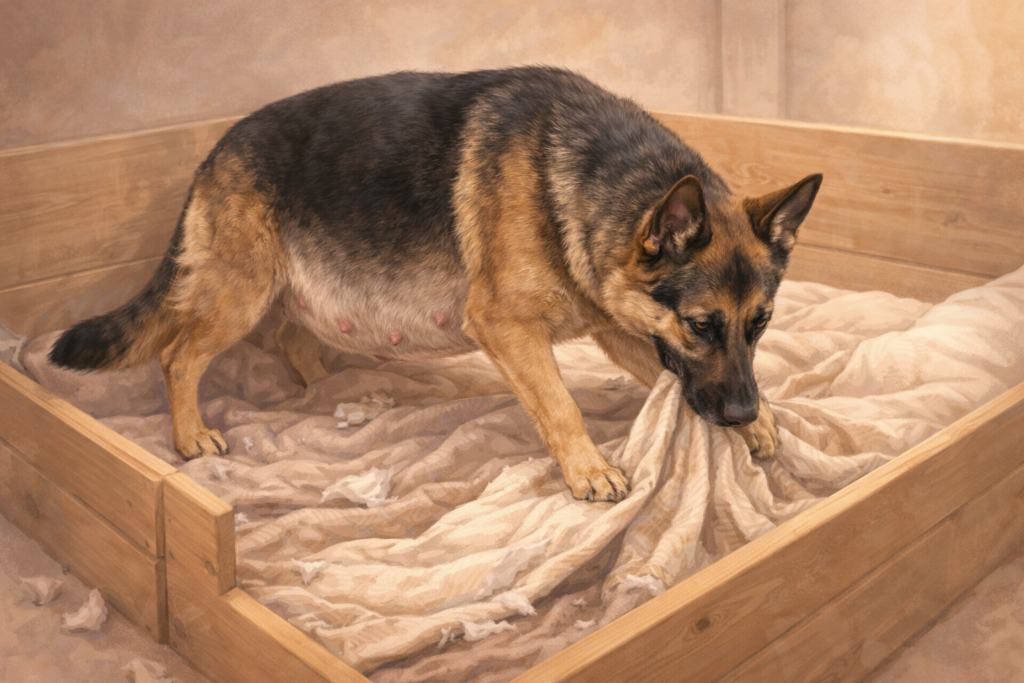
Nesting Behavior:
As delivery approaches, nesting behavior becomes more obvious. You may see:
- Rearranging bedding
- Scratching blankets or floors
- Restlessness
- Searching for quiet corners
Milk production often begins around week 8 or 9, though timing varies. Light puppy movement may be felt during this stage, especially when the dog is resting.
German Shepherd Pregnancy Timeline:
Weeks 1 to 3: Hormonal changes, subtle physical signs
Weeks 4 to 5: Noticeable weight gain, nipple enlargement
Weeks 6 to 7: Clear belly expansion, increased appetite
Weeks 8 to 9: Nesting, milk production, preparation for labor
Gestation averages 63 days, though a variation of a few days is normal.
How to Confirm Pregnancy?
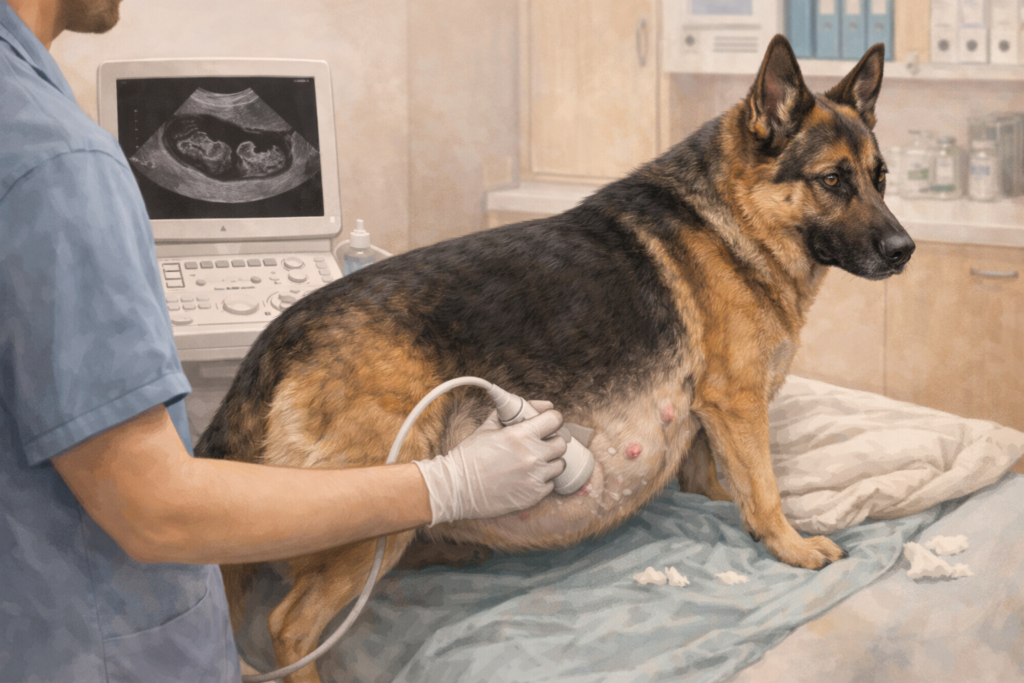
Even if you notice signs that a German Shepherd is pregnant, professional confirmation is essential.
Ultrasound (Day 25 to 30)
This is the safest and most reliable early diagnostic method. It confirms pregnancy and checks fetal development.
Palpation (Day 28+)
A trained veterinarian may gently feel developing puppies. This method requires experience and should never be attempted at home.
X-ray (Day 45+)
X-rays are typically used later in pregnancy to count puppies and prepare for delivery.
Even if you notice signs that a German Shepherd is pregnant, professional confirmation is essential. Trusted veterinary information about dog pregnancy explains that an ultrasound is the safest way to confirm early pregnancy.
False Pregnancy vs Real Pregnancy:
German Shepherds can experience false pregnancy (pseudopregnancy), where hormonal changes mimic real pregnancy.
Signs may include:
- Nesting behavior
- Milk production
- Protective behavior toward toys
- Mood changes
Only imaging tests can confirm a true pregnancy. Relying on symptoms alone can be misleading.
Care Tips for a Pregnant German Shepherd:
Nutrition:
Switch gradually to high-quality puppy food around week 4. Puppy formulas provide increased protein, fat, and essential nutrients required for fetal growth.
Avoid sudden diet changes.
Also Read: What Is Good Dog Food For German Shepherds?
Exercise:
Short, controlled walks are ideal. Maintaining moderate activity helps prevent excessive weight gain and supports easier delivery.
Also Read: How Much Exercise Does a German Shepherd Need?
Whelping Preparation:
By week 7:
- Prepare a quiet whelping box
- Use clean, washable bedding
- Keep the area warm and low-stress
- Limit unfamiliar visitors
Creating a calm environment reduces anxiety and potential complications.
When to Call a Vet:
Seek veterinary care immediately if you notice:
- Appetite loss lasting more than 24 hours
- Persistent vomiting
- Foul-smelling or unusual discharge
- Extreme lethargy
- Active labor lasting more than 24 hours without delivery
FAQ’s:
How soon can you tell if a German Shepherd is pregnant?
Early signs may appear within 2 to 3 weeks, but an ultrasound around day 25 to 30 provides reliable confirmation.
What are the first physical signs of a German Shepherd’s pregnancy?
Enlarged pink nipples, mild shifts in appetite, and increased sleep are common early indicators.
Can a German Shepherd show pregnancy signs after 1 week?
No, Visible signs rarely appear before 2 to 3 weeks after mating.
Do pregnant German Shepherds eat more?
Yes, Appetite usually increases after week 4 as puppies grow.
Can you feel puppies in a pregnant German Shepherd?
Only later in pregnancy. A veterinarian may detect them around day 28+, and movement is more noticeable after week 7.
Conclusion:
Recognizing the early signs that a German Shepherd is pregnant allows you to adjust the diet, monitor health changes, and prepare for delivery responsibly. From subtle nipple enlargement in the first weeks to nesting behavior near labor, each stage reflects steady puppy development. Careful observation, proper nutrition, and veterinary guidance together ensure a safer pregnancy and healthier litter.