
How Much Exercise Does a German Shepherd Need? (Ultimate Guide)
A German Shepherd needs 1 to 2 hours of exercise daily. This includes walks, playtime, and mental stimulation. Puppies require less, while older dogs may need gentler activities. Regular exercise keeps them healthy, fit, and happy.
In this guide, we will explore the ideal exercise requirements for German Shepherds at different life stages, the best types of exercise, and how you can tailor their workout routine to suit their needs.
Why Exercise Is Essential for German Shepherds
German Shepherds are a high-energy working breed, originally developed for herding and protection. Without sufficient activity, they are prone to physical and behavioural issues.
Benefits of Regular Exercise:
- Prevents obesity and related heart problems
- Supports joint and muscle health, reducing hip and elbow dysplasia risk
- Reduces anxiety and stress, common in intelligent, high-drive breeds
- Improves obedience and focus, especially during training
Exercise is not optional for German Shepherds; it is a biological need.
How Much Exercise Does a German Shepherd Need Per Day?
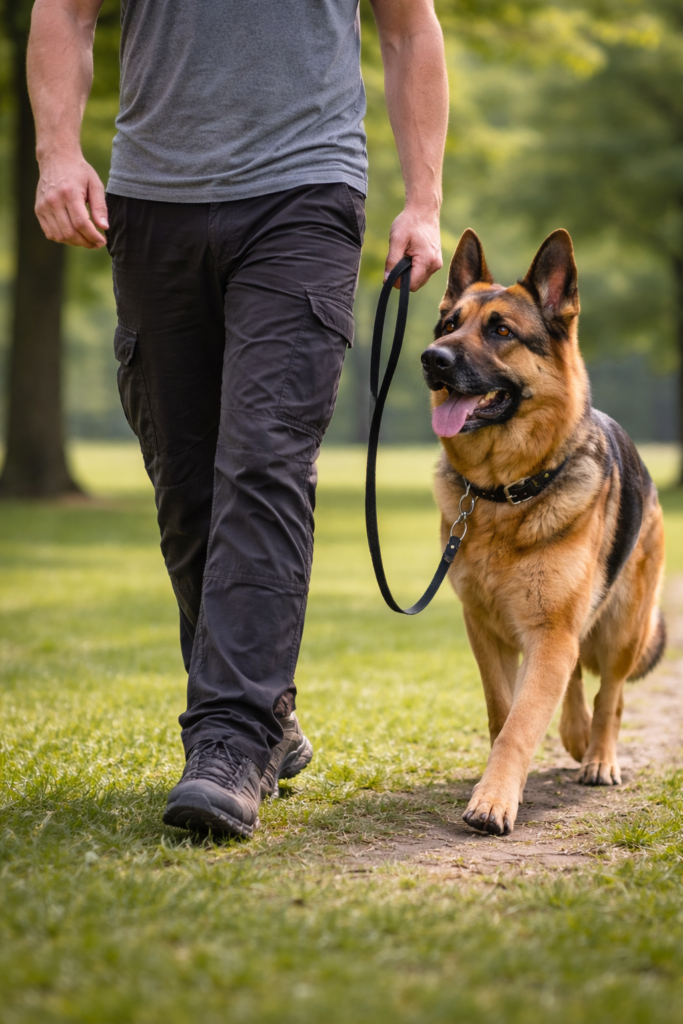
The ideal amount depends on age, health, and energy level.
| Life Stage | Daily Exercise Requirement |
| Puppy (under 1 year) | 30 to 60 minutes (split sessions) |
| Adult (1 to 7 years) | 1 to 2 hours |
| Senior (8+ years) | 30 to 60 minutes (low impact) |
This includes physical activity + mental engagement, not just walking.
Many owners underestimate how much daily activity their German Shepherd requires. For trusted guidance on exercise and activity for dogs of all breeds, including high energy working dogs like German Shepherds, read this expert resource from the American Kennel Club: How Much Exercise Does a Dog Need Every Day?
Age-Based Exercise Needs Explained:
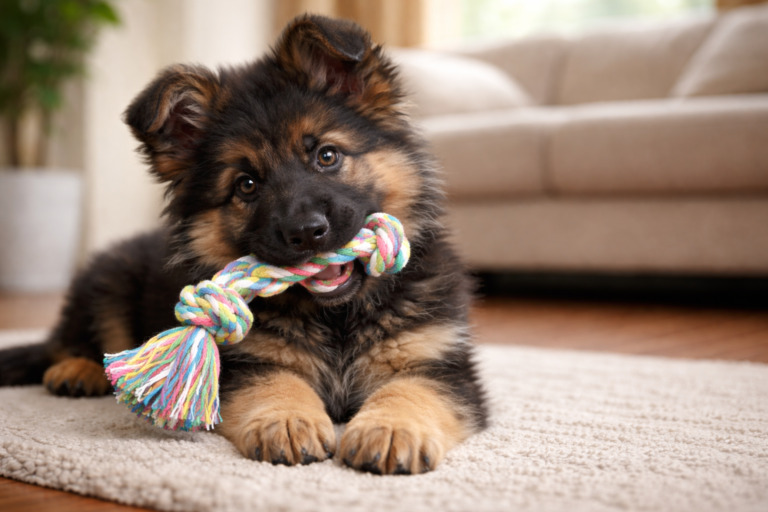
German Shepherd Puppies:
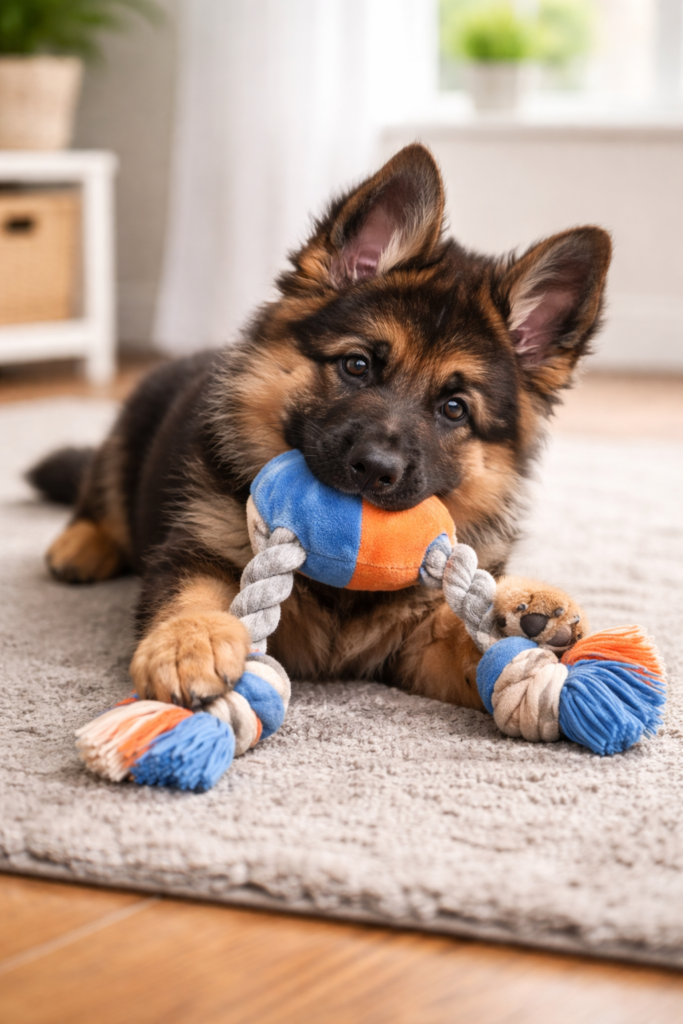
Puppies have developing bones and joints.
- Short walks
- Controlled play
- Basic training games
Avoid forced running or jumping to prevent joint damage.
Also Read: What Age Do German Shepherd Ears Stand Up
Adult German Shepherds:
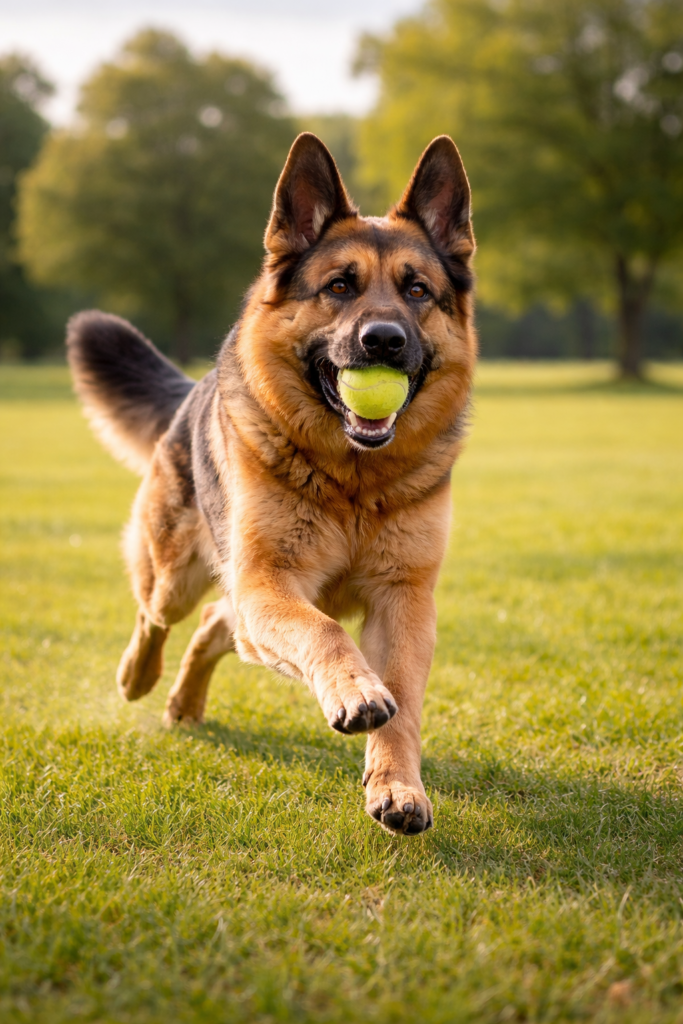
Adult dogs have the highest energy demand.
- Running, hiking, or agility
- Structured training sessions
- High-intensity play (fetch, tug)
A lack of exercise at this stage often leads to destructive behaviour.
Senior German Shepherds:
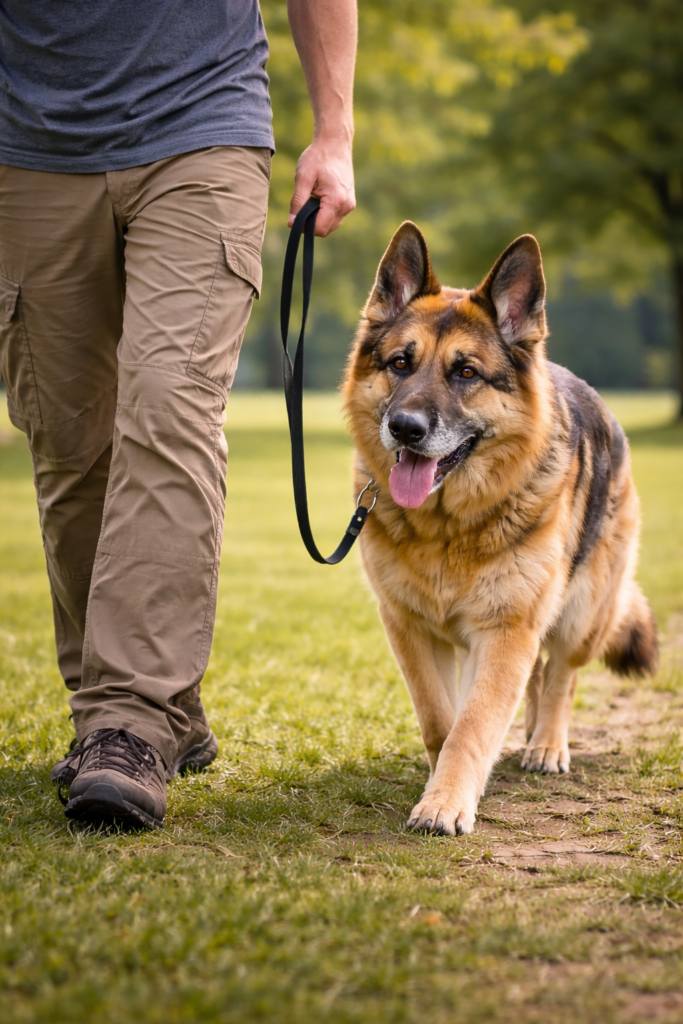
Older dogs still need movement, but with reduced intensity.
- Gentle walks
- Swimming
- Light mental challenges
Exercise helps manage stiffness and cognitive decline.
Best Types of Exercise for German Shepherds:
Physical Activities:
- Walking & Jogging: builds endurance
- Running: ideal for high-drive dogs
- Fetch & Tug-of-War: burns energy quickly
- Agility Training: physical + mental workout
- Swimming: joint-friendly, full-body exercise
Mental Stimulation (Equally Important)
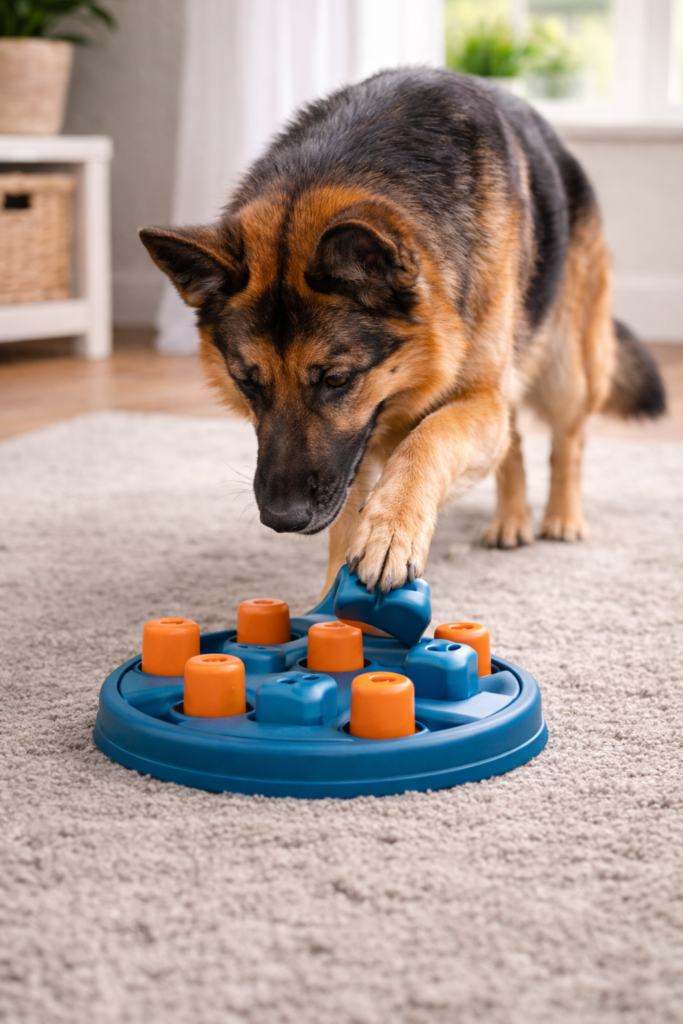
German Shepherds tire faster mentally than physically.
- Puzzle toys
- Obedience training
- Scent work and tracking games
- Learning new commands
Mental exercise prevents boredom-related anxiety.
Is Walking Enough for a German Shepherd?
No. Walking alone does not meet the exercise needs of a working breed. German Shepherds require varied activities that challenge both their bodies and minds.
Common Exercise Mistakes to Avoid:
- Skipping warm-ups
- Over-exercising puppies or seniors
- Exercising in extreme heat
- Ignoring hydration
- Repetitive activities without mental challenge
Balance matters more than intensity.
Signs Your German Shepherd Is Over-Exercised:
Watch for:
- Limping or stiffness
- Excessive panting or drooling
- Slowed pace or refusal to continue
- Behavioral withdrawal
If symptoms persist, consult a veterinarian.
Also Read: How Common Is Bloat In German Shepherds?
Indoor Exercise Options for German Shepherds:
When outdoor activity is not possible:
| Activity | Benefit |
| Tug of war | Energy release |
| Indoor fetch | Physical movement |
| Puzzle toys | Mental stimulation |
| Obedience drills | Focus and discipline |
Indoor exercise should supplement, not replace, outdoor activity.
Nutrition and Exercise: How They Work Together?
Proper diet fuels activity and recovery.
- Protein supports muscle repair
- Carbohydrates provide energy
- Healthy fats sustain endurance
An under-fueled dog cannot perform or recover properly.
Also Read: How Many Calories Does A German Shepherd Need?
Exercise and Behaviour: What’s the Connection?
Well-exercised German Shepherds are:
- Calmer indoors
- Less destructive
- More trainable
- Less anxious
Many behaviour problems stem from insufficient activity, not temperament.
When to Seek Professional Advice:
Contact your vet if you notice:
- Persistent limping
- Breathing difficulties
- Sudden fatigue
- Behavioural changes after exercise
Underlying health issues may require adjustments to exercise.
Exercise Tips for Senior German Shepherds:
- Short, frequent walks
- Swimming for joint relief
- Low-impact play
- Cognitive games to prevent mental decline
Consistency matters more than duration.
FAQ’s:
Can German Shepherds exercise in hot weather?
Avoid intense exercise in the heat. Walk early in the morning or late in the evening and provide water.
How much exercise does a German Shepherd puppy need?
About 30 to 60 minutes daily, split into short sessions.
Can a German Shepherd be over-exercised?
Yes. Overexercise can cause joint damage, fatigue, and injuryes pecially in puppies and seniors.
Does mental stimulation replace physical exercise?
No. Mental stimulation complements physical activity but does not replace it.
What happens if a German Shepherd does not get enough exercise?
They may develop anxiety, aggression, obesity, or destructive behaviour.
Conclusion:
Proper exercise is essential for your German Shepherd’s overall health and happiness. By understanding their unique needs and providing a balanced mix of physical and mental activities, you can ensure they stay fit, active, and well-behaved throughout their lives. Regular exercise helps build a strong bond and promotes a long, healthy life.