Does a German Shepherd’s Bad Odor Come From Diet? (Fix Diet)
Many German Shepherd owners notice a persistent odour that returns even after regular bathing. This can be frustrating and confusing. In many cases, the real cause is not hygiene; it is diet. What your German Shepherd eats directly affects skin oils, digestion, and odor production.
Understanding how diet affects your German Shepherd’s body is the first step toward eliminating bad odor and improving overall health.
Why Does Diet Cause Bad Odour in German Shepherds
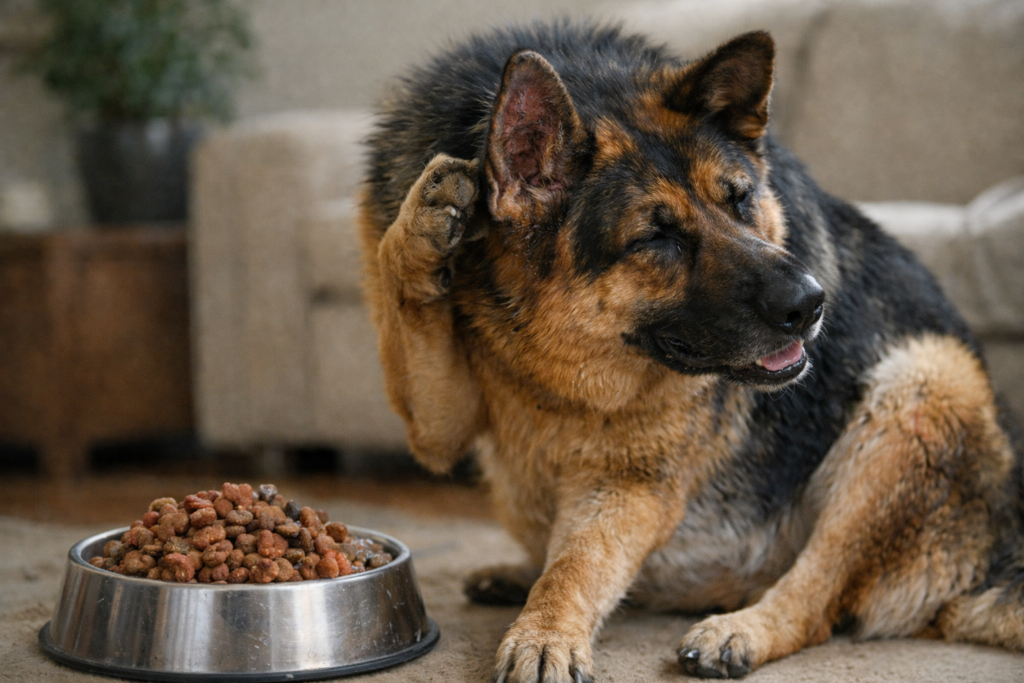
Many owners ask: Does a German Shepherd’s bad odor come from its diet? In many cases, yes. Diet plays a direct role in skin health, coat condition, gut bacteria, and gland function. When a German Shepherd eats low-quality food, the body pushes excess waste and oil through the skin and ears. This results in a noticeable musty or fishy odour.
German Shepherds are known for sensitive digestion. Poor-quality ingredients often trigger inflammation, leading to oily fur, ear odour, and a persistent odour even after bathing. Once the diet improves, the digestive system stabilizes, and the coat becomes noticeably fresher.
Many owners notice their dog smells worse:
- After switching to cheap kibble
- After eating table scraps
- When food lacks healthy fats
Correct nutrition restores balance and addresses the root cause, rather than masking odour with grooming.
Veterinarians often explain this as a gut skin connection. When digestion is poor, the body tries to release excess waste through the skin and ears. This creates an oily buildup and encourages yeast growth, resulting in a strong, unpleasant odour.
Also Read: What Is Good Dog Food For German Shepherds?
American Kennel Club Veterinary experts agree that a dog’s diet directly affects skin health, digestion, and body odor, not just coat appearance.
What Most German Shepherd Owners Miss About Diet and Odor
Many owners focus only on protein quality and ignore fat balance. Even premium food can cause odor if omega-3 and omega-6 fats are out of balance. Without sufficient omega-3s, the skin becomes inflamed and produces excess oil, creating an ideal environment for odor-causing bacteria.
Also Read: What Are German Shepherds Allergic To?
Common Diet-Related Causes of German Shepherd Odour:
Low-Quality Protein:
Dog foods containing by-products or vague meat sources are harder to digest. Poor digestion can cause gas, skin irritation, and a strong odor. High-quality animal protein supports clear skin, stronger immunity, and reduced body odour.
Grain Fillers and Additives
Corn, soy, and wheat fillers can trigger sensitivities. These ingredients often cause itchy skin, yeast growth, and musty odor. Removing heavy fillers improves coat condition and overall freshness.
Fatty Acid Imbalance
Without omega-3 fatty acids, skin becomes dry or overly greasy. Both conditions lead to odor buildup. Balanced fats help maintain a healthy skin barrier and prevent bacterial growth.
Food Sensitivities
Some German Shepherds react to certain proteins like chicken or dairy. These sensitivities cause inflammation, leading to ear smell, paw licking, and overall body odor. Identifying trigger foods helps eliminate recurring smell issues.
Signs the Diet Is Causing Your Dog’s Bad Smell
These symptoms often point to issues with gut health, skin barrier function, and immune response.
If odor is diet-related, it usually appears alongside other symptoms:
- Persistent smell after bathing
- Oily or greasy coat
- Frequent ear odor
- Gas or loose stool
- Scooting or gland smell
- Dull fur and shedding
When several signs appear together, food quality is often the main trigger.
Also Read: Do German Shepherd Ears Smell Bad?
Best Diet to Eliminate German Shepherd Odor:
Many owners try shampoos first, but without fixing the diet, odor usually returns within days.
High-Quality Animal Protein
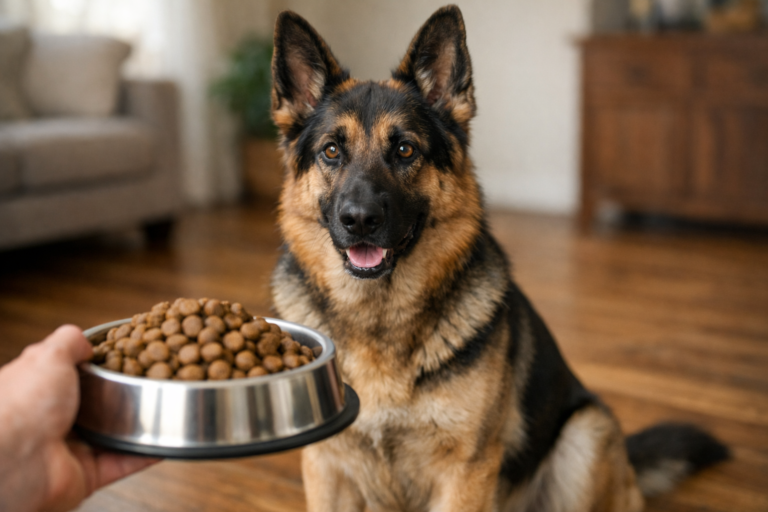
Choose dog food where real meat is the first ingredient. Lamb, fish, and beef are easier to digest and improve coat quality.
Omega-3 Rich Fats
Fish oil supports skin health and reduces yeast growth. Dogs receiving balanced fatty acids usually smell cleaner and have shinier coats.
Limited-Ingredient Formulas
Simple ingredient lists reduce allergies and stabilise digestion. Fewer ingredients mean fewer chances for odor-causing reactions.
Probiotics for Gut Health
Probiotics improve digestion and reduce gas-related smell. A healthy gut leads to healthier skin and reduced overall odor.
Foods That Make German Shepherds Smell Worse
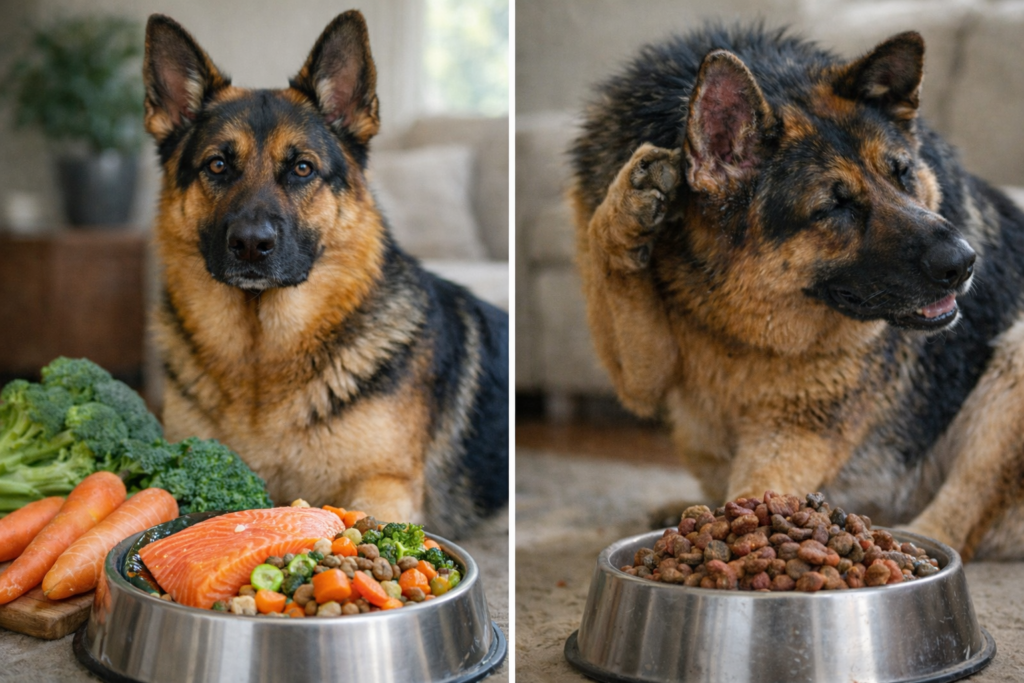
Certain ingredients consistently make the odor stronger:
- Artificial preservatives
- Meat by-products
- Excess grains
- Sugary treats
- Low-quality kibble
- Dairy (for sensitive dogs)
Removing these from the diet often results in noticeable improvement within a few weeks.
Also Read: Can German Shepherds Eat Blueberries?
How Long After a Diet Change Does Odor Improve?
Most German Shepherds show reduced odor within 2 to 3 weeks after switching to high-quality food. Coat health continues improving over 6 to 8 weeks as new hair grows and skin oils rebalance.
Consistency matters. Frequent food changes can delay results.
Step-by-Step Diet Plan to Remove Odor:
- Transition to premium dog food over 7 to 10 days
- Add an omega-3 fish oil supplement
- Introduce probiotics
- Remove low-quality treats
- Monitor coat and smell for 30 days
- Maintain a consistent feeding routine
Owners who follow this plan usually notice a cleaner smell and healthier coat within one month.
When Odor Is Not Only Diet-Related:
Diet is a major factor, but not the only one. Bad odor can also come from:
- Ear infections
- Dental problems
- Skin infections
- Anal gland buildup
However, poor nutrition often worsens all of these. Improving diet strengthens immunity and reduces recurring odor issues.
Also Read: Do German Shepherds Get Sick Easily?
Expert Tips to Keep Your German Shepherd Smelling Fresh:
- Feed consistent, high-quality food
- Avoid frequent diet changes
- Provide clean water daily
- Brush coat weekly
- Clean ears regularly
- Use supplements when needed
Small improvements in nutrition often lead to major improvements in odor control.
FAQ’s:
Does a German Shepherd’s bad odor come from diet?
Yes, poor-quality food and nutrient imbalance can cause digestive problems and excess skin oil, which leads to persistent body odor in German Shepherds.
Why does my German Shepherd smell even after a bath?
If the diet is poor, skin oils and yeast return quickly after bathing, causing a persistent odor.
What food helps reduce the German Shepherd’s smell?
High-protein, limited-ingredient dog food with omega-3 fatty acids improves coat health and reduces odor.
How can I stop my German Shepherd from smelling bad?
Switch to premium food, add fish oil, maintain grooming, and support gut health with probiotics.
How long does a diet change take to remove odor?
Most dogs show improvement within 2 to 4 weeks after switching to a better diet.
Conclusion:
A German Shepherd’s bad odor often starts with diet quality and digestive health. When we provide high-protein nutrition, healthy fats, and clean ingredients, odor naturally decreases. Balanced nutrition supports skin health, stabilises gut bacteria, and prevents recurring smell issues. Maintaining a consistent, high-quality diet is the most effective long-term way to keep a German Shepherd fresh, healthy, and odor-free. Addressing diet first reduces the need for frequent bathing and helps prevent recurring odor issues over time.