
Are Male Or Female German Shepherds More Protective? (See Comparison)
Both male and female German Shepherds can be protective. Males often guard territory, while females focus on family protection. Ultimately, training, socialisation, and an individual’s temperament matter more than gender in determining how protective a German Shepherd will be.
In this guide, these differences help owners select the right German Shepherd and ensure their pet becomes a loyal, alert, and reliable guardian.
Can Female German Shepherds Be Effective Guard Dogs?
Yes, female German Shepherds can be just as effective as their male counterparts as guard dogs. Despite some differences in temperament, both genders share traits such as loyalty, intelligence, and protective instincts, which make them excellent guardians.
Strengths of Female German Shepherds:
- Intelligence: Female German Shepherds are quick learners, making them highly trainable for a variety of guarding tasks.
- Loyalty: Females form strong bonds with their families and are naturally protective of their loved ones.
- Calm Demeanour: Generally, females exhibit a calm, composed nature, which is beneficial in situations that require controlled responses.
That said, individual characteristics often determine a dog’s guarding ability, and both genders can be trained to become excellent guard dogs.
Are Male German Shepherds Naturally More Protective Than Females?
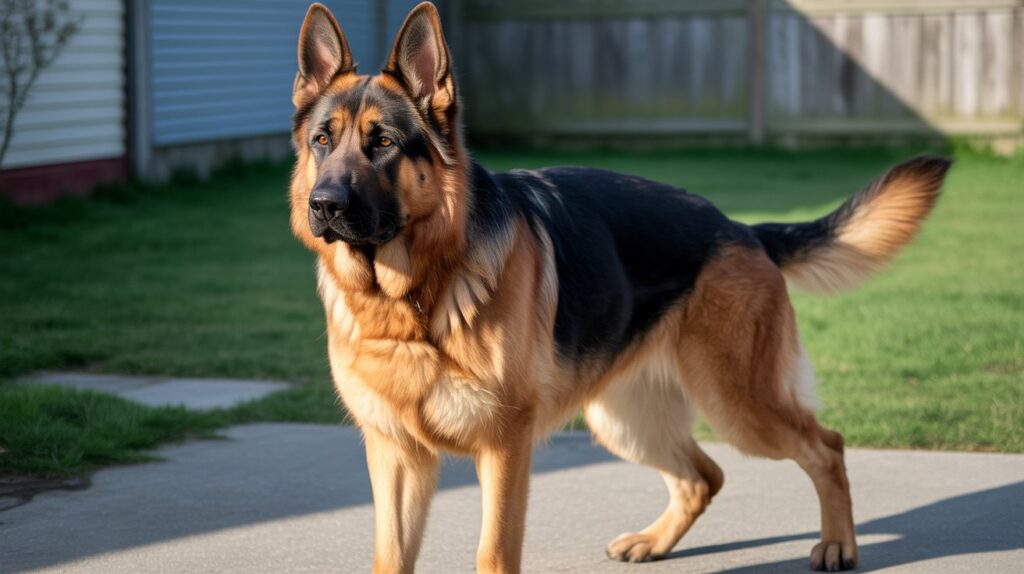
Male German Shepherds are often thought to be more protective than females due to certain factors. However, this is not always the case:
- Higher Testosterone Levels: Male dogs tend to have higher testosterone levels, making them more territorial and assertive, which can lead to stronger guarding instincts.
- Size and Strength: Males are generally larger and stronger, which can make them more imposing and better able to defend a territory physically.
But the difference in protection abilities between males and females is often not as significant as expected. A well-trained female German Shepherd can be just as effective as a male when it comes to protecting family and property.
Also Read: When To Neuter a German Shepherd?
What Really Determines Guarding Ability in German Shepherds?
Several key factors shape a German Shepherd’s ability to guard effectively:
- Genetics: Some bloodlines are specifically bred for protection work, influencing a dog’s instinctual guarding abilities.
- Training: Proper training transforms a dog’s natural instincts into controlled and reliable protective behaviour.
- Socialization: Dogs exposed to various people and environments early on tend to be less fearful and better able to assess threats.
- Temperament: Calm, confident dogs are often better protectors because they don’t overreact to situations.
A balanced diet plays a key role in maintaining a calm and confident temperament.
Also Read: What Is Good Dog Food For German Shepherds?
Difference Between Territorial Guarding and Family Protection:
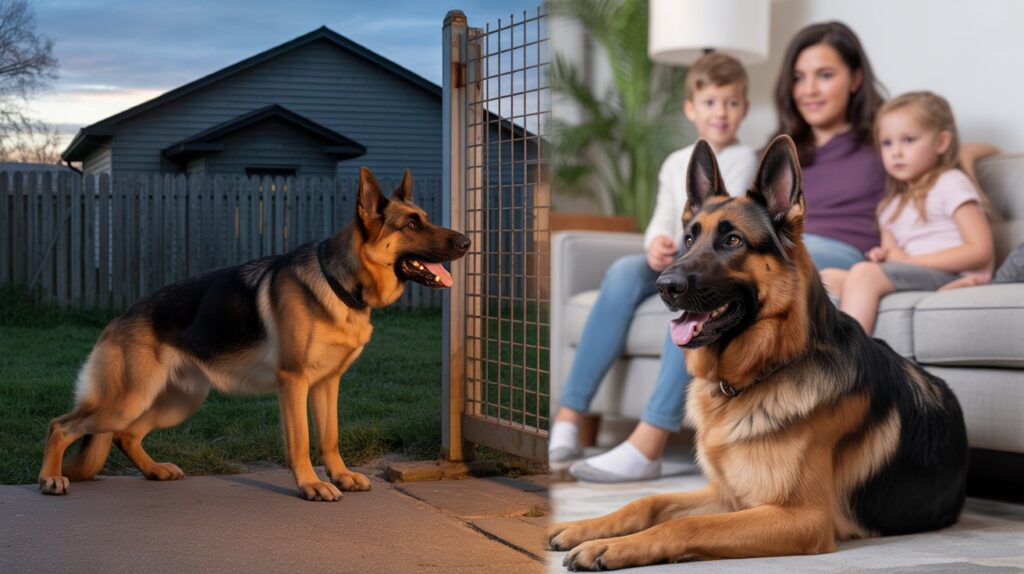
There is a significant difference between territorial guarding and family protection:
- Territorial Guarding: Involves defending property, objects, or a specific area. Typically, this includes barking or confronting intruders.
- Family Protection: Focuses on protecting human family members, where the dog actively assesses threats to its loved ones.
Male GSDs are typically more focused on territorial defence, while female GSDs are better suited for family protection. Training is essential for both types of guarding to ensure that the dog does not become over-aggressive.
Temperament Differences Between Male and Female German Shepherds:
The temperament of male and female German Shepherds can differ in the following ways:
| Trait | Male | Female |
| Energy | High, sometimes restless | Slightly lower, but more focused |
| Aggression | May be more dominant | More alert and cautious |
| Bonding | Strong with family | Extremely family-focused |
| Trainability | Responds well to firm leadership | Responds well to structured guidance |
While gender influences guarding styles, individual personality and training are far more important.
Also Read: How Many Calories Does A German Shepherd Need?
How Training Influences Protective Behaviour More Than Gender?
The protective instincts of a German Shepherd are shaped largely by training and socialization, not just gender. Key methods to enhance a dog’s protective instincts include:
- Positive reinforcement for controlled alertness
- Obedience commands to reduce unwanted aggression
- Socialization with strangers and other animals
Even a less naturally protective dog can become an excellent guardian with proper training.
Do Female German Shepherds Protect Owners and Children Better?
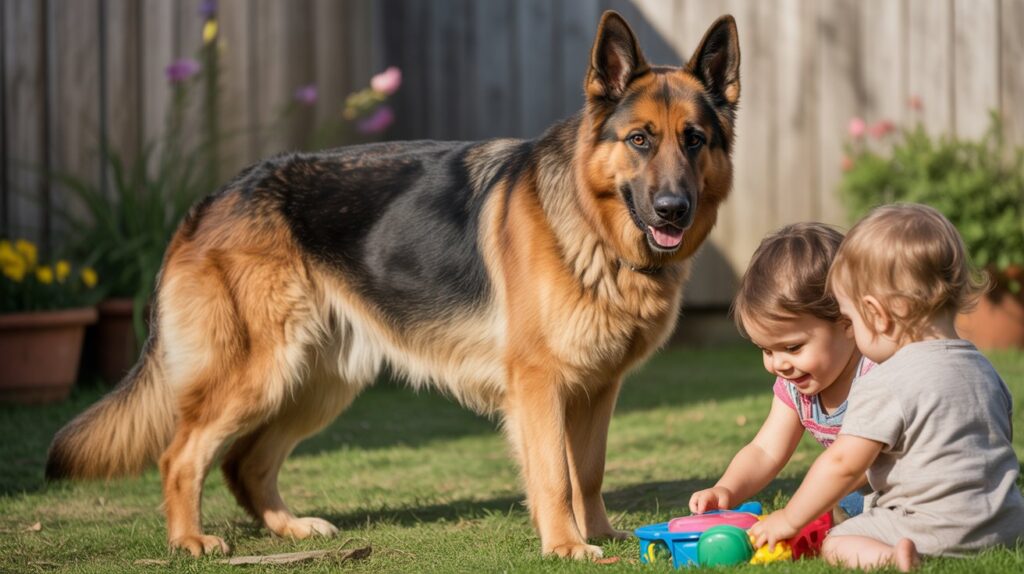
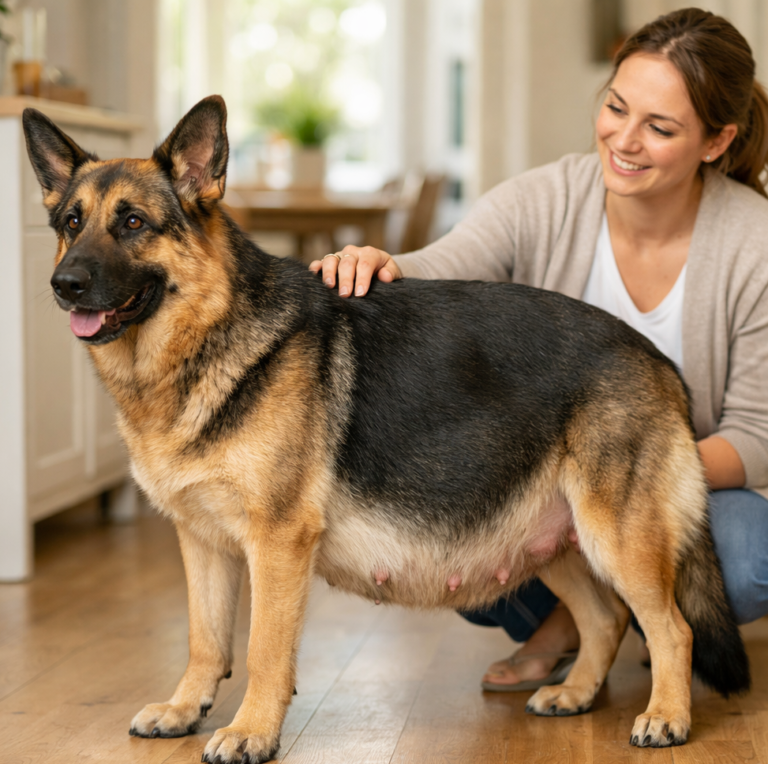
Female GSDs are often more attentive and nurturing, making them great protectors of family members, particularly children. They:
- Notice unusual behaviour quickly
- Respond faster to potential threats
- Stay close to family members when assessing danger
While male GSDs are equally capable, females often respond more quickly and more calmly to threats, especially those involving children.
Does Spaying or Neutering Affect Guarding Instincts?
Hormones do play a role in behaviour, but spaying and neutering don’t eliminate a dog’s protective instincts. Here is how:
- Intact males may show more territorial aggression.
- Neutered males and spayed females may experience reduced dominance, but their protective instincts are generally unchanged.
- Training and socialization can compensate for any hormonal changes that might affect guarding behaviour.
Tip: Focus on the dog’s temperament and training, rather than reproductive status, when assessing guarding ability.
Also Read: What Age Do German Shepherd Ears Stand Up
At What Age Do German Shepherds Develop Protective Instincts?
- 8 to 12 weeks: Early socialization begins.
- 6 to 12 months: Basic protective instincts emerge.
- 12 to 24 months: Full behavioural maturity and guarding potential.
Proper guidance during puppyhood ensures healthy, controlled, protective behaviour.
Learn what truly shapes a German Shepherd’s protective instincts beyond gender.
Also Read: Are German Shepherds Protective by Nature or Training
Is a Trained Female German Shepherd Better Than an Untrained Male?
Absolutely. Training plays a more significant role than gender. Even though males may have stronger territorial instincts, an untrained male could act unpredictably, while a well-trained female will be a reliable and protective companion.
Which German Shepherd Gender Is Better for Home security?
- Males: Strong, imposing, and territorial, making them great for guarding larger properties or outdoor security.
- Females: Alert, quick to respond, and family-oriented, excelling in protecting smaller homes and families.
Recommendation: If you have children or require close family protection, a female German Shepherd may be a better choice. However, for larger properties or outdoor security, males could be more beneficial. Ultimately, training and temperament matter far more than gender.
Common Myths About Gender and Aggression in German Shepherds:
- Myth: Males are always more aggressive.
Fact: Training and temperament are more important than gender when it comes to aggression. - Myth: Females can’t guard property.
Fact: Female German Shepherds are just as capable of guarding property, though they tend to focus more on family protection. - Myth: Neutered/spayed dogs lose all protective instincts.
Fact: While hormones affect behaviour, training and temperament are the main factors in guarding ability.
How Environment and Socialization Shape Protective Behaviour?
Exposing German Shepherds to various environments and experiences can reduce fear-based aggression and help them become calm and confident protectors. Early socialization with strangers, animals, and various settings is key to shaping a balanced, protective dog.
How to Choose the Right German Shepherd for Guarding Needs?
To choose the right dog for guarding, consider:
- Family vs. property protection: Female GSDs are often better for family protection, while males excel in territorial defence.
- Size and strength: Consider these factors if intimidation is important for your security needs.
- Temperament testing: Look for calm, alert, and trainable dogs.
- Breeder background: Working-line dogs often have stronger protection instincts.
Tip: Pair your decision with professional training for the best results.
Male vs Female German Shepherd: Final Verdict Based on Real Behaviour
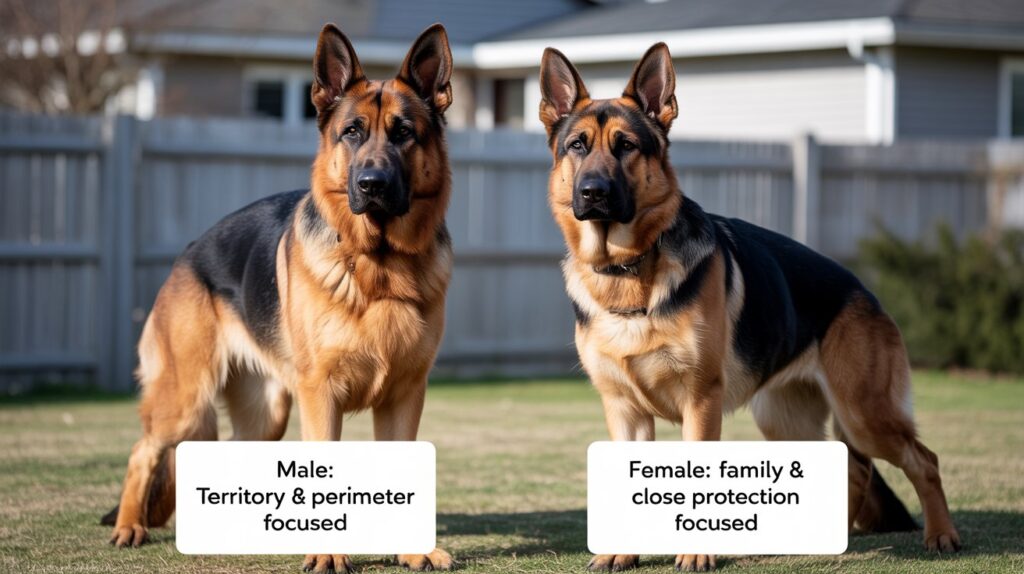
- Gender: Influences style, not capability.
- Males are more territorial; females excel in family protection.
- The most important factors are training, socialisation, and temperament.
FAQ’s:
Can female German Shepherds be as protective as males?
Yes, female German Shepherds can be equally protective when properly trained and socialised. Their instincts often focus more on family protection.
Are male German Shepherds naturally better guard dogs?
No, male German Shepherds are not always better guards; training, temperament, and socialisation play a bigger role than gender alone.
Does spaying or neutering affect a German Shepherd’s protective instincts?
Partially, yes: hormones can influence behaviour, but male vs female German Shepherds’ protective ability mostly depends on training and personality.
Which German Shepherd gender is better for family protection?
Female German Shepherds often excel in family protection due to their attentiveness and alertness. However, differences between male and female German Shepherds are minor if both are properly trained.
How do male and female German Shepherds differ in guarding property?
Male German Shepherds tend to be more territorial, while female German Shepherds focus on protecting people. Training and socialisation ensure both genders guard effectively.
Conclusion:
The choice between a male and female German Shepherd ultimately depends on the dog’s temperament, training, and environment. Both genders can be loyal, alert, and protective companions. The key is matching the dog’s natural tendencies with your household’s specific needs and ensuring proper training for the best results.